


Written Answers to WP's Oral Questions
Mr Abdul Muhaimin Abdul Malik
Feasibility Studies For Transit Priority Corridors Connecting Central Area To Towns Along North East Line
Mr Abdul Muhaimin Abdul Malik asked the Acting Minister for Transport (a) whether the Ministry has conducted feasibility studies for implementing Transit Priority Corridors (TPCs) connecting the Central Area to towns along the North East Line, such as Punggol, Sengkang, Hougang and Serangoon; and (b) if not, whether the Ministry will consider studying the feasibility of implementing TPCs along these routes.
Mr Jeffrey Siow: There are no plans for a continuous Transit Priority Corridor in the North East Region along the North East Line, as there is insufficient road space. Nonetheless, the Land Transport Authority has been implementing features like continuous bus lanes, wider footpaths, and dedicated cycling paths or shared paths, where feasible.
Holding Bicycle-Sharing Operators Accountable For Bicycles Parked Outside Designated Zones
Mr Abdul Muhaimin Abdul Malik asked the Acting Minister for Transport (a) what enforcement measures are in place to hold bike sharing operators accountable when they fail to prevent their bicycles from being parked outside designated bicycle parking zones; and (b) whether penalties are imposed on bike sharing operators when their bicycles are found obstructing public spaces, including walkways, void decks, and MRT station entrances.
Mr Jeffrey Siow: Bicycle-sharing operators are required to ensure their shared bicycles are parked at designated bicycle parking spaces, rather than indiscriminately parked and obstructing public spaces. In 2025, 95% of shared bicycle trips ended at designated parking areas.
Operators must integrate LTA's QR code parking system with their mobile applications, remove indiscriminately parked bicycles within a stipulated timeframe, impose a fee of $5 on users who fail to park properly, and ban repeat offenders. If they fail to do so, operators can have their fleet size reduced, or their licence suspended or revoked entirely. They may also face financial penalties of up to $100,000 or 10% of their annual turnover, whichever is higher. Operators’ applications to renew their licence and expand their allowable fleet size are also assessed based on their track record in managing indiscriminate parking.
Further Professionalising Bus Captain Roles To Attract Younger Singaporeans
Mr Abdul Muhaimin Abdul Malik asked the Acting Minister for Transport (a) what the Ministry’s plans are to further professionalise bus captain roles; and (b) what the Ministry’s plan is to encourage more young Singaporeans to take up bus captain positions.
Mr Jeffrey Siow: Bus captains receive structured training by bus operators and the Singapore Bus Academy to ensure that they have a common set of skills to handle their work responsibilities. The Land Transport Authority (LTA) also works with bus operators and the National Transport Workers’ Union to review career progression pathways so that bus captains have the opportunity to progress into training or mentorship roles, or manage other aspects of bus operations.
To attract more locals to join the industry, the public transport operators have introduced sign-on bonuses of up to $20,000 and have been improving working conditions through better rest facilities as well as optimisation of duty rosters. They have also introduced more flexible work arrangements and part-time opportunities to cater to a more diverse profile of prospective bus captains. The Government is also reviewing starting salaries to improve recruitment of new drivers.
Mr Kenneth Tiong Boon Kiat
Extending Subsidy And Permission To Use Medisave To Patients With Polyclinic Referrals To Hospitals' Emergency Departments
Mr Kenneth Tiong Boon Kiat asked the Coordinating Minister for Social Policies and Minister for Health given that patients referred to Emergency Department by general practitioners (GPs) under GPFirst receive a $50 subsidy (a) why are polyclinic referrals to Emergency Department excluded from this subsidy and are unable to use MediSave when not admitted; and (b) whether the Ministry will extend these benefits to polyclinic referrals to ensure equitable access.
Mr Ong Ye Kung: The GPFirst programme anchors care with GPs, especially in encouraging patients to visit their GPs in the evenings for less severe ailments, instead of rushing to the Emergency Departments (ED). The $50 subsidy will help offset the initial GP consultation fee should the patient be referred to the ED for further treatment. On the other hand, polyclinics are not opened in the evenings, and consultation fees are already heavily subsidised.
As for MediSave, it is healthcare savings for a rainy day. It is generally meant to help Singaporeans co-pay for costly hospitalisation and day surgery episodes, MediShield Life and health insurance premiums, but with some flexibilities to pay for selected outpatient bills.
Legal Protections For Individuals Reporting Security Vulnerabilities In Government-Contracted Systems
Mr Kenneth Tiong Boon Kiat asked the Minister for Digital Development and Information (a) what legal protections exist for individuals reporting security vulnerabilities in Government-contracted systems; (b) why the Vulnerability Disclosure Programme explicitly provides no exemption from civil or criminal liability, discouraging good-faith research; and (c) whether the Ministry will implement a bug bounty programme with legal protections to incentivise responsible disclosure.
Mrs Josephine Teo: The Government recognises that members of the public, including independent cybersecurity researchers, can play a constructive role in strengthening cybersecurity, and we welcome their responsible disclosure of vulnerabilities via the Vulnerability Disclosure Programme (VDP).
The VDP does not provide exemptions from civil or criminal liability because this could unintentionally legitimise intrusive testing or activities that may disrupt services or compromise sensitive data. Providing such exemptions may also be abused by malicious attackers attempting to disguise their activities through the VDP.
Instead, the Government adopts a calibrated approach. Members of the general public can report vulnerabilities discovered through the VDP and these will generally be viewed in good faith by the authorities. More in-depth security testing is conducted through structured programmes such as the Government Bug Bounty Programme and Vulnerability Rewards Programme, where the scope of authorised access and permissions are clearly defined.
This approach allows the Government to benefit from responsible disclosure by the cybersecurity community, while safeguarding public systems and maintaining clear boundaries on the degree of cybersecurity testing which is permissible.
Collecting Disability Employment Data Disaggregated By Disability Type
Mr Kenneth Tiong Boon Kiat asked the Minister for Manpower (a) whether the Ministry currently collects disability employment data disaggregated by disability type such as intellectual disabilities, autism spectrum disorder, and physical disabilities; (b) if not, whether the Ministry will commit to collecting and publishing such granular sub-sector data; (c) whether effective interventions can be designed without such breakdown in data and if so, how.
Dr Tan See Leng: The Ministry of Manpower (MOM) collects and publishes employment statistics for persons with disabilities using data from the annual Comprehensive Labour Force Survey. MOM does not further disaggregate the published figures by specific types of disability, as this can lead to wide margins of error and significant year-to-year fluctuations given the relatively small proportion of persons with disabilities out of our total population.
The needs of persons with disabilities in workplaces are diverse and are not solely determined by the nature of their disabilities. MOM receives feedback from persons with disabilities, employers and other stakeholders through the Ministry of Social and Family Development (MSF) and SG Enable on existing policies, including how best to support employment for persons with disabilities. Together with administrative data, such feedback can help to inform reviews of existing policies and support the development of recommendations. The Taskforce on Assurance for Families with Persons with Disabilities will develop recommendations to provide greater opportunities and assurance to persons with disabilities and their families, including how to better support persons with disabilities and employers in a fast-changing employment landscape and build resilience for persons with disabilities in the workplace.
Mr Chua Kheng Wee Louis
Data On Various Payouts And Income Received By Each Decile Of Resident Households When Determining Households’ Market Income In 2025
Mr Chua Kheng Wee Louis asked the Deputy Prime Minister and Minister for Trade and Industry in determining households’ market income in 2025, what are the amounts in (a) non-employment income by (i) investment income (ii) rental income (iii) contributions from other households (iv) pensions (v) annuities (vi) royalties and (vii) regular insurance payouts; (b) regular Government contributions; (c) ad hoc Government contributions; and (d) transfers-in-kind, received by each decile of resident households based on household income.
Mr Gan Kim Yong: The household income data on DOS’ website provides a breakdown of household market income for each income decile into major types of non-employment income. This includes investment income, rental income, payouts from the CPF Retirement Sum Scheme and Lifelong Income for the Elderly (LIFE), as well as regular government transfers. As other types of non-employment income are smaller and subject to larger sampling errors, they are not published separately.
Administrative Data Used To Compile Wealth Data In Occasional Paper Of 9 February 2026
Mr Chua Kheng Wee Louis asked the Prime Minister and Minister for Finance regarding the Occasional Paper published on 9 February 2026 (a) what is the list of administrative data used to compile wealth data; (b) whether assets and investments located overseas are included in the calculation of households’ income and wealth; and (c) if so, what is the value of assets and income for each decile as broken down by local versus overseas contributions.
Mr Jeffrey Siow: This question has been answered in the answer to Questions No 1 and 2 in the Parliament Sitting on 25 February 2026.
Mr Fadli Fawzi
Data For Malays Granted Permanent Residency And Citizenship
Mr Fadli Fawzi asked the Coordinating Minister for National Security and Minister for Home Affairs what is the number of Malays granted Permanent Residency (PR) and citizenship for each year since 2010.
Mr K Shanmugam: We do not publish data on the grant of PR and Singapore citizenship (SC) by nationality, ethnicity, religion, and other such attributes. The SC population by ethnicity is published annually, and the current ethnic mix as of June 2025 are:
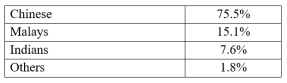
The basis on which SCs and PRs are granted have been explained. Our low and declining birth rate means that we are not replacing ourselves. Without immigration, our population will decline, it will be increasingly difficult to meet our national security and defence needs, and our city and economy will lose the dynamism that makes us exceptional. Fewer births also mean fewer working people over the next two to three decades, and a smaller working-age population to support a rapidly growing elderly population.
Our first priority will always be to support and encourage Singaporeans to start families and have more children. But to complement that, we will continue to take a careful and measured approach towards immigration while stepping up integration efforts.
Number Of Singapore Citizens In 25th, 50th And 75th Percentile Income Bands Of Top 1,000 Earners
Mr Fadli Fawzi asked the Prime Minister and Minister for Finance for the Year of Assessment 2024, what was the 25th percentile, median and 75th percentile income of the top 1,000 earners who are Singapore Citizens.
Mr Jeffrey Siow: For the Year of Assessment 2024, the 25th percentile, median and 75th percentile income of the top 1,000 earners who are Singapore citizens are $2.5 million, $3.1 million, and $4.5 million respectively.
Mr Dennis Tan Lip Fong
Compatibility Issues Between ERP 2.0 On-Board Units And Some Car Park Gantry Systems
Mr Dennis Tan Lip Fong asked the Acting Minister for Transport (a) whether the Ministry is aware of compatibility issues between ERP 2.0 on-board units and certain carpark gantry systems; (b) if so, how many such incidents have been reported since ERP 2.0 rollout; and (c) what steps are being taken to ensure seamless interoperability between ERP 2.0 and all parking gantry systems islandwide.
Mr Jeffrey Siow: All ERP 2 On-Board Units (OBUs) are compatible with the existing Electronic Parking System carparks. However, motorists may sometimes encounter problems accessing such carparks because the OBU antenna in their vehicles are not within range of the carpark antenna. This can be remedied either by repositioning the vehicle, or in other situations, recalibrating the position of the affected antenna. This issue exists for ERP 1 as well.
Mr Gerald Giam Yean Song
Assessing Trend Of Declining Job Creation Per Dollar Of Investment
Mr Gerald Giam Yean Song asked the Deputy Prime Minister and Minister for Trade and Industry (a) whether the Ministry assesses the current trend of declining job creation per dollar of investment to persist over the next five years; (b) if so, why or if not, why not; and (c) whether the Ministry can provide a breakdown of how many of the 15,700 jobs expected over the next five years are entry-level roles versus senior management roles.
Mr Gan Kim Yong: As outlined at the mid-term update on the Economic Strategy Review, economic growth will be harder to achieve in a more challenging external environment. Moreover, technological change means we can no longer assume that growth will generate the same number of jobs as before.
Despite a more economically fragmented and uncertain global environment, EDB secured in 2025, investment commitments comparable to recent years. The lower number of jobs committed in 2025 relative to 2024 reflects two factors. First, companies are more conservative in their hiring projections, given the challenging and uncertain environment. Second, many of the projects secured are more technology and capital-intensive and therefore require relatively fewer workers, but each worker generates a higher value-add to the economy.
Most of the 15,700 jobs committed over the next five years are for Professional, Manager, Executive and Technician (PMET) roles, with two-thirds expected to command a gross monthly salary above S$5,000. We do not have a breakdown of the number of entry-level versus senior management roles.
These investments also generate positive spillovers for the broader economy. A 2025 MTI study published in the Economic Survey of Singapore found that firms that are linked to EDB-supported companies enjoyed higher value-added per worker, local employment, and local wages.
Written Questions
Mr Fadli Fawzi
Plans To Issue New Banknote Series With Updated Safety And Anti-Counterfeiting Features
Mr Fadli Fawzi asked the Prime Minister and Minister for Finance whether there are any plans to issue a new series of banknotes for the Singapore dollar with updated safety and anti-counterfeiting features, given that the current Portrait series has been in circulation for over 25 years, longer than any previous series of banknotes.
Mr Gan Kim Yong (for the Prime Minister): The Monetary Authority of Singapore (MAS) monitors the incidences and methods of counterfeiting, and assesses the robustness of the security features of our notes against these techniques. While new security features available are an improvement, we have assessed that the existing security features remain effective against prevailing counterfeiting techniques. MAS also tracks the counterfeit rate of Singapore currency notes, which is very low compared to those of key global currencies. We cannot be complacent and will be vigilant to counterfeiting risks, ensuring that our security features continue to be effective.
Review On Proportion Of Singapore's Gold Reserves Stored Overseas
Mr Fadli Fawzi asked the Prime Minister and Minister for Finance (a) what proportion of Singapore's gold reserves is stored outside Singapore, if any; and (b) if there any overseas gold reserves, whether this proportion will be reviewed in light of recent geopolitical tensions.
Mr Jeffrey Siow: Our gold reserves are diversified across geographies to ensure accessibility and resilience in the event of geopolitical and economic shocks. For security reasons, we do not disclose the proportion of gold stored in any particular jurisdiction.
The Government regularly reviews its portfolio to ensure appropriate diversification through periods of economic and geopolitical uncertainty.
Mr Kenneth Tiong Boon Kiat
Feasibility Study Of Establishing Domestic Rare Earth Processing Capabilities
Mr Kenneth Tiong Boon Kiat asked the Deputy Prime Minister and Minister for Trade and Industry (a) whether the Ministry has assessed the feasibility of establishing rare earth processing capabilities in Singapore given their strategic importance to aerospace and defence supply chains; (b) what environmental and regulatory barriers exist, particularly regarding radioactive byproduct disposal; and (c) what alternative strategies Singapore is pursuing to secure access to critical rare earth materials.
Mr Gan Kim Yong: Our producers primarily import intermediate or final products containing rare earth rather than its raw form. While they have not raised immediate concerns, we are monitoring developments regarding the supply of rare earths.
More broadly, we adopt a multi-pronged approach to strengthen Singapore’s supply chain resilience. This includes supporting a rules-based international trading system, deepening bilateral partnerships with trusted partners, and encouraging our essential firms to diversify their sources of critical supplies. Where necessary and economically viable, local production capabilities may also be considered, taking into account competing national priorities and resource constraints
We would welcome interest from industry to undertake rare earth-related projects in Singapore. Like all heavy industrial activities with environmental impacts including radioactive waste generation, these projects would need to comply with Singapore’s environmental and safety regulatory frameworks. These include requirements stipulated in the Radiation Protection Act (RPA) and Environmental Protection and Management Act (EPMA). For instance, the RPA ensures workers are protected from radiation exposure and that radioactive waste is managed properly. Similarly, the EPMA requires businesses to abide by pollution control requirements.
Integrating P-Tau217 Early Detection Blood Tests In National Dementia Strategy
Mr Kenneth Tiong Boon Kiat asked the Coordinating Minister for Social Policies and Minister for Health given the approval by US Food and Drug Administration of blood-based p-tau217 tests that can predict Alzheimer's disease risk up to 20 years before symptoms (a) whether the Ministry has assessed cost effectiveness of subsidising such tests for high-risk individuals; (b) what is the estimated eligible population in Singapore; and (c) whether the Ministry will consider including such screening in the national dementia strategy.
Mr Ong Ye Kung: P-tau217 as a biomarker for diagnosing Alzheimer’s disease is still being tested in local research trials. The FDA has indicated that the test is not intended as a stand-alone screening or diagnostic test. The Ministry of Health (MOH) will continue to monitor developments in this field.
Mr Chua Kheng Wee Louis
Data On Formula One Singapore Grand Prix Cess Collection, Incurred Expenses And Contribution To GDP
Mr Chua Kheng Wee Louis asked the Deputy Prime Minister and Minister for Trade and Industry for each of the past four editions of the Formula One Singapore Grand Prix, what is the (i) total cess collected under each edition’s respective cess collection order (ii) total expenditure incurred by the Government and (iii) contribution to Singapore’s gross domestic product.
Mr Gan Kim Yong: For the 2022 to 2025 editions of the F1 Singapore Grand Prix, an average of S$30 million of cess has been collected. The annual cost of organising the race for the same period of time is estimated at S$140m1.
Since its inception in 2008 until 2024, the race generated more than S$2.2 billion in incremental tourism receipts. The Government does not assess individual tourism events for their contribution to national GDP.
Note(s) to Question No(s) 6:
1 Figure for 2025 is being finalised.
Allowing Private Healthcare Providers Access To Medications Not Found On Healthier SG Medication List
Mr Chua Kheng Wee Louis asked the Coordinating Minister for Social Policies and Minister for Health (a) whether the Ministry plans to allow private healthcare providers to procure drugs not included in the Healthier SG Medication List from the Government’s central healthcare procurement agency, Agency of Logistics and Procurement Services (ALPS); (b) if so, what is the timeline for implementation; and (c) if not, why not.
Mr Ong Ye Kung: The Ministry of Health has no plans to allow private healthcare providers to procure drugs not included in the Healthier SG (HSG) Medication List from the Agency of Logistics and Procurement Services (ALPS), because this can be construed as a centralised national healthcare procurement strategy.
For a small market like Singapore, this can have significant consequences. It may mean less favourable prices being secured through negotiations for subsidised patients, less incentive for pharmaceutical companies to enter the market and hence limiting the range of drugs available in Singapore.
Implementation Of Daily Or Monthly Transport Fare Caps For Adult Commuters
Mr Chua Kheng Wee Louis asked the Acting Minister for Transport whether LTA is studying the possibility of introducing daily or monthly fare caps for commuters who pay adult transport fares.
Mr Jeffrey Siow: The regulation of public transport fares is under the purview of the Public Transport Council (PTC).
As the cost of concession schemes, including monthly passes and fare caps, is generally cross-subsidised by other fare-paying commuters, PTC will have to carefully consider any new fare products, to strike a balance between extending discounts to some commuters against the additional fares that will need to be borne by other commuters.
Ms He Ting Ru
Data On Enforcement Challenges Faced By Traffic Police Related To Non-Standard Number Plates In Last Three Years
Ms He Ting Ru asked the Coordinating Minister for National Security and Minister for Home Affairs (a) whether the Traffic Police has faced difficulties in identifying vehicles as a result of non-standard number plates, such as reflective or small plates; and (b) if so, how many instances have this occurred in each of the last three years.
Mr K Shanmugam: The Traffic Police (TP) has encountered instances where non-standard registration plates have made the identification of vehicles challenging. TP refers such cases to the Land Transport Authority (LTA) for enforcement. It is an offence to use vehicle licence plates that do not conform to the specifications set out in the Road Traffic (Motor Vehicles, Registration and Licensing) Rules. We do not track the number of such instances.
Enforcement Mechanisms To Monitor Compliance Of Foreign-Registered Vehicles Entering Singapore
Ms He Ting Ru asked the Coordinating Minister for National Security and Minister for Home Affairs (a) what are the specific tools, if any, outside of joint operations, that the Traffic Police use to ensure foreign-registered vehicles entering Singapore are checked for payment of composition fines and compliance with court summonses; and (b) what is the threshold of outstanding fines that will result in a foreign vehicle being barred entry.
Mr K Shanmugam: Foreign-registered vehicles with outstanding fines exceeding a certain threshold may be denied entry into Singapore at the land checkpoints. These outstanding fines must be paid before the foreign-registered vehicle is allowed entry. We do not reveal the threshold for operational reasons.
The Police will issue a Police Gazette against persons who fail to comply with court summonses for traffic offences. They may be stopped at the checkpoints or during Police checks.
Data On Prevalence Of Mental Health And Neurodevelopmental Conditions In Children Under 18 And Treatment Provided In Last Five Years
Ms He Ting Ru asked the Coordinating Minister for Social Policies and Minister for Health in each of the last five years (a) what percentage of children under the age of 18 were diagnosed with (i) mental health and (ii) neurodevelopmental conditions; and (b) what percentage of children throughout the population were prescribed medication for these conditions.
Mr Ong Ye Kung: From 2021 to 2025, the unique numbers of school-going children up to 18 years old with a diagnosis of a mental health disorder or a neurodevelopmental condition in public hospitals are shown in Table 1. The data comprises newly diagnosed and existing cases seen each year at the public hospitals. The incidence rate is not available as the Ministry of Health (MOH) does not track the data of children diagnosed and managed in the private healthcare sector.
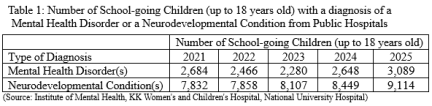
About half of the diagnosed cases in the public hospitals receive medications for their conditions.
Collaboration Guidelines Between Social Service Agencies And Town Councils For Community Outreach Awareness
Ms He Ting Ru asked the Minister for Social and Family Development whether there are any guidelines or prohibitions on social service agencies working with town councils to collaborate on initiatives to enhance reach within the communities and promote greater awareness of their services and programmes to support families and individuals in need.
Mr Masagos Zulkifli B M M: Town Councils were established to control, manage, maintain and improve the common property of Housing and Development Board (HDB) housing estates. While Social Service Agencies funded by the Ministry of Social and Family Development can work with Town Councils on estate management issues, this does not include outreach, community engagement and service delivery which fall outside the scope of the Town Council’s mandate.
Updated School Guidelines On Adverse Climate Events To Safeguard Student Safety And Well-Being
Ms He Ting Ru asked the Minister for Education (a) whether the Ministry will compile and publish updated and integrated guidelines for schools to safeguard student health and well-being during adverse climate events, such as haze or heatwaves; and (b) how will these guidelines balance student safety and well-being with minimising disruption.
Mr Desmond Lee: The Ministry of Education (MOE) works closely with the Ministry of Sustainability and the Environment (MSE), the National Environment Agency (NEA) and the Ministry of Health (MOH) to draw up guidelines for our schools to manage adverse climate events. These align with Whole-of-Government plans and advisories. These guidelines enable learning to continue with minimal disruption during adverse climate events, while ensuring student safety and well being. For example, schools should modify or, if necessary, suspend physical and outdoor activities when conditions pose risks to student well-being. These guidelines are updated and communicated to schools regularly.
Additionally, schools receive timely reminders on mitigation guidelines before anticipated adverse climate periods. This ensures that schools can implement the necessary measures swiftly when climate conditions deteriorate. Schools also keep parents updated on the measures taken.
Mr Abdul Muhaimin Abdul Malik
Primary 1 Students Enrolled For Tamil As Mother Tongue In Madrasah Irsyad Zuhri Al-Islamiah And Community Outreach Efforts To Encourage Tamil-Speaking Asatizah Development
Mr Abdul Muhaimin Abdul Malik asked the Acting Minister-in-charge of Muslim Affairs (a) how many Primary 1 students enrolled at Madrasah Irsyad Zuhri Al-Islamiah in 2026 opted for Tamil as their Mother Tongue Language (MTL); (b) what outreach efforts are being taken by MUIS among Tamil-speaking Muslim parents to encourage madrasah enrolment; and (c) what other initiatives are in place to nurture local Tamil-speaking Tier 1 asatizah.
Assoc Prof Dr Muhammad Faishal Ibrahim: Currently, six Primary 1 students take Tamil as their Mother Tongue Language at Madrasah Irsyad Zuhri Al-Islamiah. To help Muslim students from Tamil-speaking families prepare for madrasah admission, a Madrasah Preparatory Programme has been introduced at Abdul Gafoor Mosque. Led by Indian Muslim community leaders and supported by the Islamic Religious Council of Singapore (MUIS), this initiative is promoted to Tamil-speaking Muslim parents through the Indian Muslim mosques and Indian Muslim organisations. Beyond language capabilities, those who wish to pursue a career in the religious sector must possess deep religious knowledge, and be able to apply it to Singapore’s multi-racial and multi-religious context. All asatizah, including those who are Tamil speaking, may tap on professional development initiatives offered by MUIS, including the Continuing Professional Education (CPE) programmes.
Proportion Of Singapore Citizen Bus Captain Applicants Pre- And Post-PBIMP Launch
Mr Abdul Muhaimin Abdul Malik asked the Acting Minister for Transport since the launch of the Public Bus Industry Manpower Plan (PBIMP) in 2016 (a) what has been the average annual proportion of bus captain job applicants who are Singapore citizens; and (b) whether this proportion is higher than the average in the 10 years preceding the PBIMP's launch.
Mr Jeffrey Siow: The Sectoral Manpower Plan for the public bus industry was launched in 2016 to strengthen the local workforce of the public transport sector. Since its launch, the public bus operators have introduced initiatives such as improved remuneration, sign-on bonuses and more flexible work arrangements. Operators also made efforts to improve working conditions.
The Land Transport Authority did not track the number of bus captain job applicants before mid-2020. From 2021 to 2025, the proportion of applications made by Singapore citizens varied between 25% and 50%. However, it is not meaningful to compare the number of applications made by Singapore citizens against the total number of applicants, as the number of applications made by foreigners is a function of the residual bus captain manpower needs after accounting for successful local recruitment, as well as the foreign worker quotas that each bus operator has.

