


Written Answers to WP's Oral Questions
Mr Dennis Tan Lip Fong
Impact Of Social Media Platforms' Algorithmic Content Recommendation Systems On Distribution Of Scam Content To Users
Mr Dennis Tan Lip Fong asked the Coordinating Minister for National Security and Minister for Home Affairs (a) whether the Government has conducted assessments on how social media platforms' algorithmic recommendation systems for organic and paid content amplify the distribution of scam content to users; and (b) whether the Government is considering to mandate that social media platforms default to display only content that individuals explicitly follow or search for.
Mr K Shanmugam: Under the Online Criminal Harms Act, the Police impose ex ante anti-scam requirements on online platforms. This includes measures that reduce or remove the circulation of scam content on the platforms, such as advertiser verification and user reporting. We think that this approach is more productive, compared to trying to directly assess and require changes to the platforms’ content distribution algorithms. The latter is not easy to do, and platforms must be responsible to adjust their algorithms, systems or processes as necessary and as they deem appropriate, to comply with the Government’s anti-scam requirements.
We intend to further tighten the anti-scam requirements on platforms and will announce the details in due course. We do not think it is reasonable to stipulate that platforms only display content that individuals explicitly follow or request for. This could prevent legitimate advertising activity, and in any case may not stop the circulation of scam ads if the ads feature content that the user had requested for.
Impact Of AI Translation Tools On Tour Guide Services In Singapore
Mr Dennis Tan Lip Fong asked the Deputy Prime Minister and Minister for Trade and Industry (a) whether the Singapore Tourism Board (STB) can assess the market impact of letting tour guides self-declare their language proficiency without formal testing, given the availability of AI translation tools; and (b) whether STB has studied the adverse impact of such AI translation tools on (i) consumers and (ii) guides who are actually proficient in the respective languages.
Mr Gan Kim Yong: The Singapore Tourism Board (STB) removed the Multi Language Proficiency Test requirement for tourist guides in June 2024. Since then, tourist guides have been able to self-declare their language proficiency and guide in additional languages without formal testing. The change was motivated by a desire to streamline licensing and regulatory requirements, given that tourist guides remain accountable to their hirers, including travel agencies, tour operators and tourists, and will need to demonstrate their language competencies to avoid complaints or implications on their commercial contracts.
Thus far, STB has not received any complaints or negative feedback from visitors, while travel agents and tour operators appreciated the change as it enables them to more easily secure guides who speak foreign languages to meet market demand.
While the increasing prevalence of AI translation tools enables more tourists to independently discover destinations, the human touch remains a critical element in the tourism sector. Tourist guides offer much more than translation services, providing unique and meaningful experiences over and above what AI can provide. STB remains committed to advancing the tourist guide profession to enable guides to leverage technologies such as AI to enhance the experiences they bring to tourists.
Plans For Submission Of National Adaptation Plan To United Nations Framework Convention On Climate Change
Mr Dennis Tan Lip Fong asked the Minister for Sustainability and the Environment (a) whether Singapore plans to submit a National Adaptation Plan to the United Nations Framework Convention on Climate Change; and (b) if so, when, noting that Singapore has previously published an Adaptation Communication and included an adaptation component in its Nationally Determined Contribution.
Ms Grace Fu Hai Yien: As I had announced at COS 2025, we are developing Singapore’s inaugural National Adaptation Plan, or NAP in short, which will serve as our long-term living strategy for Singapore to continue thriving in the face of climate change.
We plan to publish our first NAP in 2027, which will also be submitted as a standalone document to the United Nations Framework Convention on Climate Change (UNFCCC). This builds on our Adaptation Communication and updated Nationally Determined Contributions which were submitted to the UNFCCC in 2022 and 2025 respectively. This will take into account domestic efforts and international developments, such as the framework for indicators[1] to track progress on the Global Goal on Adaptation (GGA) which was recently adopted at COP30. We will share more details on the NAP at COS 2026.
[1] Officially termed the Belém Adaptation Indicators
Mr Abdul Muhaimin Abdul Malik
Affordability Of Utility Bills For Singaporeans Given Rising Energy Costs And Push Towards Green Energy Alternatives
Mr Abdul Muhaimin Abdul Malik asked the Deputy Prime Minister and Minister for Trade and Industry in view of rising energy costs and the national push towards greener energy alternatives, what measures are being taken to ensure the continued affordability of utility bills for Singaporeans.
Mr Gan Kim Yong: Singapore depends on energy imports to meet almost all our energy needs. Therefore, our electricity prices generally reflect movements in imported fuel costs. Nonetheless, the Government remains committed to work with Singaporeans to strike the right balance between sustainability, energy security, and affordability. Households can reduce their utility bills by switching to more energy efficient appliances to reduce their energy consumption. Eligible households can use their Climate Vouchers under the enhanced Climate Friendly Household Programme to defray the costs of switching to such appliances. Households can also adopt energy saving habits such as switching off unused appliances and setting indoor air conditioning temperature at 25 degrees Celsius. To defray the monthly costs of utilities, the majority of Singaporean households living in HDB flats receive U-Save rebates. In 2025, eligible households would have received up to $760 of U-Save rebates. Such measures complement other schemes to support Singaporeans’ daily expenses, like the CDC Vouchers. Businesses can also do their part to invest in energy efficiency. The Government will continue providing grants to support businesses to do so.
Encouraging Solar Panel Installation In Private And Landed Properties
Mr Abdul Muhaimin Abdul Malik asked the Deputy Prime Minister and Minister for Trade and Industry in light of the ongoing efforts to expand solar panel installations in public residential areas, whether similar initiatives or requirements will be extended to private developments and landed properties.
Mr Gan Kim Yong: The Government has taken the lead in accelerating rooftop solar deployment on public properties, through programmes such as the SolarNova programme, because we own the properties. For private developments, the Government will nudge them to do the same by simplifying regulations to facilitate solar deployment. For example, EMA’s Simplified Credit Treatment Scheme or Enhanced Central Intermediary Scheme allows private property owners to register their solar installations with SP Group and be paid directly through their monthly bill.
With the declining cost of solar panels, the current payback period for a residential solar power system could be as short as five years. We are making good progress towards meeting the target of 2 gigawatt-peak (GWp) of solar deployment by 2030, having achieved over 1.7 GWp of installed solar capacity as at June 2025. We will continue to explore ways to facilitate increased adoption of solar on public and private developments.
Mr Chua Kheng Wee Louis
Adequacy Of ATMs For Withdrawing And Depositing Cash Within Existing And New HDB Estates
Mr Chua Kheng Wee Louis asked the Prime Minister and Minister for Finance (a) what is the current number of automated teller machines (ATMs) in each HDB town; and (b) whether HDB works with banks and other Government agencies to ensure adequate provision of cash withdrawal and deposit facilities within walking distance for existing and new HDB BTO estates.
Mr Chua Kheng Wee Louis asked the Prime Minister and Minister for Finance (a) what is the number of (i) off-premise automated teller machines (ATMs) and (ii) bank branches in each of the last 10 years; (b) how does MAS ensure adequate provision of ATMs and banking services through physical bank branches and ATMs; and (c) what are the operational requirements that are prescribed, if any, to banks.
Mr Gan Kim Yong (for the Prime Minister): There are currently more than 1,600 off-premise ATMs and over 150 retail branches operated by the three local banks across Singapore. More than 1,200 of the off-premise ATMs are located within HDB towns. Over the past decade, both the number of off-premise ATMs and bank branches have decreased gradually by an average of around 2% annually, as banks rationalise their ATMs and branch network due to customers increasingly adopting online banking and cashless payments. Banks have also deployed more multi-function ATMs, so customers don’t necessarily need to visit branches.
The Monetary Authority of Singapore (MAS) tracks the number of ATMs and engages banks to ensure they carefully consider customers’ ease of access to banking services. Banks consider various factors when siting ATMs and bank branches, including footfall, transaction volume, population density and proximity to public transport nodes. They prioritise locations that are central to residents' daily activities, such as heartland malls and food centres, to enhance convenience for customers. Banks also monitor the URA masterplan and government tenders to identify where to site new bank branches and ATMs.
ATMs and bank branches are not the only places where consumers can withdraw cash. Banks also partner retail outlets such as 7-Eleven, Giant, and Sheng Siong to enable customers to withdraw cash from their bank accounts when they make purchases at these locations. These outlets are present in mature and non-mature estates.
MAS will continue to work with banks to ensure there is enough ATMs and bank branches for the convenience of customers, and also encourage customers to use digital banking services as an alternative to cash transactions.
Accelerating Deployment Of Additional Vv Chargers At HDB Car Parks
Mr Chua Kheng Wee Louis asked the Acting Minister for Transport (a) whether the Ministry can accelerate the deployment of additional electric vehicle chargers for HDB carparks with higher utilisation rates; and (b) if not, why not.
Mr Jeffrey Siow: There are electric vehicle (EV) chargers installed in all HDB towns. We are scaling up EV charger deployment in tandem with EV adoption, especially in carparks with high charging demand, subject to electrical capacity.
Mr Gerald Giam Yean Song
Data On Local Jobseekers Without Updates From Potential Employers Beyond 45 Days After Interviews
Mr Gerald Giam Yean Song asked the Minister for Manpower (a) whether the Ministry has data on the proportion of local jobseekers not receiving potential employers' updates beyond 45 days after their interviews; (b) if so, what is the proportion in the last two years; and (c) what new initiatives, if any, are being considered to encourage more timely and constructive feedback from employers to jobseekers where practical.
Dr Tan See Leng: The Ministry of Manpower does not collect data on jobseekers receiving updates from potential employers after their interviews.
We recognise that jobseekers can benefit from timely and constructive feedback from employers. The Tripartite Alliance for Fair and Progressive Employment Practices (TAFEP) has published a Fair Recruitment and Selection Handbook which encourages employers to inform candidates during the interview on how the interview results will be communicated, and to subsequently notify candidates of their interview results within a reasonable timeframe.
As conveyed in a reply to a Parliamentary Question in September 2025, we also encourage employers and jobseekers to exchange constructive feedback where practical. The tripartite partners will continue to monitor how to support workers in the job search process.
Enforcement Applications Filed In Respect Of Community Disputes Resolution Tribunal Orders Issued Between 2020 And 2024
Mr Gerald Giam Yean Song asked the Minister for Law (a) how many enforcement applications were filed in respect of the 233 Community Disputes Resolution Tribunal orders issued between 2020 and 2024; (b) what percentage of these applications resulted in an enforcement order; and (c) whether the Ministry will introduce a mechanism for the court to direct agencies to verify and monitor compliance with non-monetary orders on-site.
Mr Edwin Tong Chun Fai: Between 2020 and 2024, 69 applications for Special Directions and 13 applications for Exclusion Orders were filed.
Of these applications filed, 24 Special Directions and 2 Exclusion Orders were made. This means that around 30 percent of enforcement applications resulted in an enforcement order. Due to the small number of applications involved, caution should be exercised in interpreting these percentages which are subject to wide statistical fluctuations.
Orders made by the Community Disputes Resolution Tribunals (CDRT) are Court orders that must be complied with. The breach of a CDRT order constitutes contempt of Court. The breach of a Special Direction or Exclusion Order is also an offence punishable by a fine of up to $5,000 or imprisonment for up to 3 months.
CDRT proceedings are private actions between private parties. As such, the claimants in private actions would typically monitor compliance with court orders issued in their favour, and decide how to proceed. If a CDRT Order has been breached, a claimant can apply for a Special Direction to enforce the CDRT Order. If a Special Direction has been breached, a claimant can further apply for an Exclusion Order to exclude the respondent from his or her residence. In severe noise nuisance and hoarding cases in the pilot town of Tampines, the Community Relations Unit can assist by using its investigation powers to verify the breach of a CDRT Order or a Special Direction.
Assoc Prof Jamus Jerome Lim
Adding Congenital Conditions Into List For Chronic Disease Management Programme
Assoc Prof Jamus Jerome Lim asked the Coordinating Minister for Social Policies and Minister for Health (a) whether the Ministry will consider listing additional congenital conditions such as hypogonadism as chronic conditions under the Chronic Disease Management Programme (CDMP); (b) if not, why not; and (c) what is the rationale for extending Community Health Assist Scheme subsidies to patients under CDMP, but not other publicly-supported subsidies such as Medifund.
Mr Ong Ye Kung: Conditions under the Chronic Disease Management Programme (CDMP) are regularly reviewed by a Clinical Advisory Committee (CAC), comprising Family Physicians and specialists from the public and private sectors. In assessing the inclusion of conditions onto the CDMP, the CAC consults clinical experts in various healthcare settings, and considers factors such as disease burden, potential benefits of early interventions to patient outcomes, the cumulative cost to the patient from long-term treatment, and the availability of evidence-based clinical guidelines for appropriate care of the condition.
The management of congenital conditions such as hypogonadism are largely specialist-led, involves complex therapies, and is not routinely managed in primary care. They are also less prevalent in the general population. As such, they are not suitable for inclusion under the CDMP.
Subsidies and Medisave use for chronic disease management are available at both polyclinics and private GP clinics. At GP clinics, the subsidies are available under the Community Health Assist Scheme (CHAS).
MediFund is an additional financial assistance available to needy patients, over and above regular subsidies. It is extended only to institutions which the Ministry of Health (MOH) has greater financial governance oversight and more stringent controls over. It is therefore available for management of chronic conditions only in the polyclinics and public hospitals. CHAS patients who need additional financial assistance such as MediFund can be managed at Polyclinics for their chronic diseases.
Making A Declaration When ICA Applications For Visas, Permanent Residence Or Citizenship Are Prepared By Third Party
Assoc Prof Jamus Jerome Lim asked the Coordinating Minister for National Security and Minister for Home Affairs whether the Ministry has considered requiring applicants who had their ICA application documentation for visas, permanent residence or citizenship prepared by a third party to indicate this via a declaration.
Mr K Shanmugam: The Immigration & Checkpoints Authority (ICA) does not support or endorse services offered by commercial entities or consultants who claim that they are able to help applicants improve their success in obtaining long-term immigration facilities such as Permanent Residence or Singapore Citizenship.
Applicants who choose to engage the services of any third party in the preparation of their immigration application are advised to exercise caution. The onus is always on the applicant to ensure that the information submitted in the application is true, accurate and complete. If the application contains false declaration(s), the applicant will be held responsible, regardless of whether a third party had helped prepare the application. The applicant is required to confirm that the facts stated in the application are true, and will have to take personal responsibility for it.
Thus from ICA’s perspective, it is not relevant whether an application has been prepared by a third party. In law the responsibility for the application remains with the applicant. To deviate from that principle will lead to endless possibilities of applicants raising spurious defences to try and avoid responsibility for false statements.
Possible Increase In Statutory Minimum Starting Annual Leave Entitlement To OECD Average
Assoc Prof Jamus Jerome Lim asked the Minister for Manpower whether the ongoing review of the Employment Act will specifically consider increasing the statutory minimum starting annual leave entitlement of seven days to a norm closer to the OECD average of 20 days, instead of benchmarking to Hong Kong and Taiwan, which are on the lower end of the global distribution.
Dr Tan See Leng: The Employment Act stipulates that employees are entitled to a statutory minimum of seven days of annual leave in their first year of service. With each year of service, an employee's statutory annual leave entitlement increases by one day, up to an entitlement of 14 days.
As mentioned in an earlier reply to a PQ on 6 November 2025, the majority of resident employees already receive more annual leave days than statutorily required. In 2024, over 90% of full-time resident employees aged 25 to 64 were entitled to more than seven days of annual leave, and 68.2% were entitled to more than 14 days of annual leave.
Annual leave entitlements can be supplemented by other entitlements and practices that support employees in balancing their work and personal needs, such as parental and childcare leave. We also take reference from the practices of other economies within our region. This allows us to support workers while enabling businesses to continue generating good job prospects for Singaporeans.
The tripartite partners will review our employment provisions holistically based on what works best for Singapore’s context.
Mr Kenneth Tiong Boon Kiat
Proposal To Extend Subsides For Shingles Vaccination To Those Aged 50-59 As Dementia Prevention Measure
Mr Kenneth Tiong Boon Kiat asked the Coordinating Minister for Social Policies and Minister for Health given findings that shingles vaccination reduces dementia, including the May 2025 Nature study showing Zostavax causally reduces diagnoses by 20% and the July 2024 Nature Medicine study showing Shingrix is associated with 164 added dementia-free days, whether the Ministry will (i) include dementia prevention savings into cost-benefit analyses for shingles vaccines and (ii) consider extending shingles vaccine subsidies to persons aged 50-59.
Mr Ong Ye Kung: The two cited studies are based on observational data that suggest a potential association between shingles vaccination and reduced risk of dementia. Additional research is required to establish causality and the underlying biological mechanisms, to determine the vaccine's effect on dementia risk. The Ministry of Health (MOH) will continue to monitor the emergence of such scientific evidence. In the meantime, we will maintain the age criterion for Shingles vaccination subsidies, on the basis that the incidence of shingles rises steeply after age 60, approximately three to four times that of individuals aged 50 to 59 years.
Possible Amendment Of Prevention Of Corruption Act To Prevent Liability Evasion By Senior Management Of Large Corporations
Mr Kenneth Tiong Boon Kiat asked the Prime Minister and Minister for Finance whether, following Public Prosecutor v China Railway Tunnel Group, the Government will amend the Prevention of Corruption Act to (i) broaden the legal test for corporate attribution beyond the "directing mind and will" doctrine in common law or (ii) introduce a "failure to prevent" offence similar to the UK Bribery Act, ensuring large corporations cannot evade liability for corruption by senior management.
Mr Chan Chun Sing (for the Prime Minister): The Prevention of Corruption Act is a key instrument in our fight against corruption. CPIB regularly and proactively reviews the Act. This is to ensure that our laws remain robust and effective against the ever-evolving corruption threat.
CPIB is looking into potential legislative gaps associated to the case cited by the Member in his query. If there is a need to come back to parliament, we will do so.
Mr Fadli Fawzi
Assistance For Those Living In One- To Two-Persons Households At Risk Of Social Isolation Or Who Need Post Hospitalisation Home Care
Mr Fadli Fawzi asked the Coordinating Minister for Social Policies and Minister for Health given the growing share of seniors living alone or in one- or two person HDB households, what expansion to existing schemes will be considered to address the higher number of those who over time will be at risk of social isolation and mental health, in need of emergency support in event of falls and other medical emergencies, and post-hospitalisation home care.
Mr Ong Ye Kung: This is a key concern that the Government has been working on for many years, given our ageing population. To build a strong support network for seniors, the Ministry of Health established the Agency for Integrated Care (AIC), recruited Silver Generation Ambassadors (SGAs) to reach out to seniors, and established many Senior Activity Centres. Under Age Well SG, these have evolved into a comprehensive support network of Active Ageing Centres, which engage seniors with needs or at risk of social isolation. Age Well SG also includes enhanced support for those in need of care, such as the Home Personal Care service.
We will continue to strengthen our outreach efforts by working with volunteer groups and community organisations to engage, befriend, and support vulnerable and isolated seniors.
Designating Areas For Busking Without A Licence
Mr Fadli Fawzi asked the Acting Minister for Culture, Community and Youth (a) whether certain areas can be designated in localities such as Chinatown for community groups to perform in public without a busking licence; and (b) if not (i) why not and (ii) whether such groups can be granted a busking licence.
Mr David Neo: The Public Entertainments Act provides the regulatory frameworks for public entertainment and arts entertainment. These frameworks ensure that the performances and works staged uphold public interest and, at the same time, that public safety, public order and community norms are preserved.
In the case of busking, the Public Entertainments (Exemptions) Order requires prospective buskers to apply for a Letter of Endorsement (LOE) from the National Arts Council (NAC), in place of a Public Entertainment License (PEL) or Arts Entertainment License (AEL).
Through the LOE regime, NAC maintains oversight of the quality of busking activities and manages the use of designated busking spaces in land-scarce Singapore. NAC works with venue owners and authorities to designate locations suitable for busking activities, so as to enhance vibrancy without causing local disamenities. This framework has worked well in helping to prevent and pre-empt disagreements among buskers, as well as between buskers and different community groups, over the use of space.
Community groups who are interested in busking at NAC-designated busking locations may apply for LOE through auditions with NAC. NAC will continue to work with venue owners to review the list of designated busking locations.
Mr Low Wu Yang Andre
Negotiations With Malaysian Agencies On Cross-Border Industrial Pollution From Johor
Mr Low Wu Yang Andre asked the Minister for Sustainability and the Environment (a) whether Singapore is negotiating any memorandum of understanding or protocol with Malaysian agencies regarding cross-border industrial pollution from Johor; and (b) whether these discussions include real-time sharing of hazardous air pollutant data and Volatile Organic Compounds (VOCs) concentrations, and mutual assistance protocols during industrial emergencies.
Ms Grace Fu Hai Yien: The Member’s queries have been addressed in the combined written reply to Parliamentary Question No. 69 at the 13 January 2026 Parliament sitting.
Hit-And-Run Cases Where Offenders Were Cyclists Or AMD Users
Mr Low Wu Yang Andre asked the Coordinating Minister for National Security and Minister for Home Affairs (a) for each of the last three years, what was the number of reported hit-and-run accidents where the offending party was a cyclist
or active mobility device user; (b) how many of these cases resulted in injuries to pedestrians; and (c) what percentage of these cases were solved.
Mr K Shanmugam: There were 12 hit-and-run accidents between 2023 and November 2025 on the roads, where the alleged offending party was a cyclist or active mobility device (AMD) user. Of these, eight resulted in injuries to pedestrians. In one of the cases, a suspect has been identified. Investigations into hit-and-run cases involving cyclists or AMD users can be more complex, as there may not be registration numbers which the Police can use as investigation leads, and the accidents may occur in locations with limited camera coverage.
Data Of Median Net Monthly Income Of Residents Engaged As Direct Selling Distributors
Mr Low Wu Yang Andre asked the Minister for Manpower (a) whether the Ministry tracks the median net monthly income of residents engaged as distributors for entities in the direct selling industry and those utilising multi-level compensation structures; (b) if so, what is the most recent median income figure; and (c) if not, whether the Ministry will consider requiring such entities to report earnings data to ensure income transparency.
Dr Tan See Leng: The Ministry of Manpower (MOM) does not track the median net monthly income of own account workers based on their business models. This is because the labour market income statistics collected by MOM follows standard international classifications of industry that are not based on business models.
For income data on own account workers, the Member may refer to statistical tabulations published on MOM’s website.
Written Questions
Ms He Ting Ru
Update On Political Salaries Review Postponed From 2023
Ms He Ting Ru asked the Prime Minister and Minister for Finance for an update on when he will conduct a review of political salaries which was deferred in 2023.
Mr Chan Chun Sing (for the Prime Minister): This question has been addressed by the written reply to Question 2 on the Order Paper for the 12 January 2026 Parliamentary Sitting.
Statutory Fund To Financially Support Workers During Corporate Liquidations And Bankruptcies
Ms He Ting Ru asked the Minister for Manpower whether the Ministry will study the feasibility for a statutory fund to provide financial support without means testing to workers of all nationalities during periods of corporate liquidations and bankruptcies.
Dr Tan See Leng: The Government and tripartite partners have various schemes in place to provide financial support to workers who have lost their jobs, including as a result of their company winding up. These schemes are means-tested and subject to eligibility criteria to ensure accountability and to direct limited public resources to
those who need them most.
Local workers who are involuntarily unemployed and actively looking for a job may obtain temporary financial assistance under the SkillsFuture Jobseeker Support scheme. Lower-income households who require financial assistance to meet basic needs may also approach their Social Service Office. Foreign workers may approach the Migrant Workers’ Centre set up by the tripartite partners for financial assistance.
Breakdown Of Existing COE Holder Bidding Patterns Based On Certificate Expiry Timeline
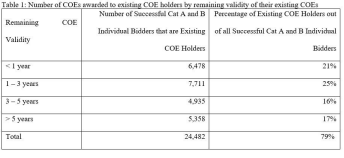
Ms He Ting Ru asked the Acting Minister for Transport in respect of new COE registrations awarded to existing COE holders in the first three quarters of 2025, what is the breakdown in absolute numbers and percentages by the remaining validity of their previous COE at the point of bidding with a breakdown by (i) within one year
(ii) one to three years (iii) three to five years and (iv) over five years. Mr Jeffrey Siow: The breakdown of the new COEs awarded to existing COE holders for Categories A and B in the first three quarters of 2025, for each of the four validity periods the Member outlined, is provided in Table 1 below.
Data Validation Of Mean Kilometres Between Failure Reports And Verification Processes To Address Potential Reporting Oversight
Ms He Ting Ru asked the Acting Minister for Transport given that Mean Kilometres Between Failure (MKBF) tracks only rail service delays exceeding five minutes (a) who determines whether each incident meets this threshold for inclusion; (b) what audit and verification processes apply to these determinations; and (c) whether LTA independently tracks delay durations or it relies on data reported by rail operators.
Mr Jeffrey Siow: The Land Transport Authority (LTA) determines whether an incident meets the threshold for being included in the calculation of Mean Kilometres Between Failure (MKBF). LTA identifies delays exceeding five minutes by independently reviewing data on all train movement, which is automatically logged by the train control system of each line and provided in full to LTA.
Mr Kenneth Tiong Boon Kiat
Status Changes Of Tax Residency Among Singapore Citizens And Breakdown Of Retention Rates By Age And Gender From 2014 To 2024
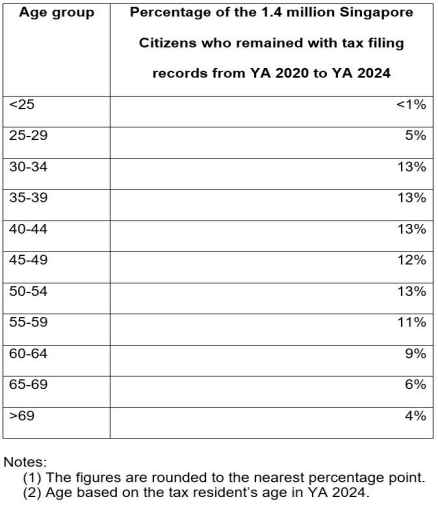
Mr Kenneth Tiong Boon Kiat asked the Prime Minister and Minister for Finance for each year over the past decade (a) how many Singapore citizens have transitioned from being tax residents to non-residents and vice versa; (b) what is the breakdown (i) by gender and (ii) by five-year age groups; and (c) what proportion of Singapore citizen tax residents in 2014 have remained so in 2024, as broken down by gender and age.
Mr Jeffrey Siow: Singapore Citizens who reside in Singapore except for temporary absences are assessed as tax residents. We do not have data on Singapore Citizens who have transitioned from being tax residents to non-residents and vice versa.
There were about 1.6 million Singapore Citizens with tax filing records in the Year of Assessment (YA) 2020. Of these, about 1.4 million had tax filing records in YA 2024. Those who dropped out could have done so due to a variety of reasons, such as death, retirement, unemployment, or relocation overseas. Of the 1.4 million, about 55% were male and 45% were female. The breakdown by age group is as follows:
Reviewing Current Animal Management Contractor Protocols And Training Standards
Mr Kenneth Tiong Boon Kiat asked the Minister for National Development in light of the death of a dog captured at Seletar West Farmway 8 (a) whether the Ministry will review the “acceptable parameters” of force, as outlined in the AVS statement of 16 November 2025, and training standards for animal management contractors; and (b) whether the Ministry will formalise collaboration with animal welfare groups to ensure humane handling while maintaining public safety.
Mr Chee Hong Tat: This question was addressed in the Ministry of National Development's reply to the question asked by Ms Lee Hui Ying on 12 January 2026.
Mr Gerald Giam Yean Song
Asbestos Testing And Investigations Of Coloured Play Sand Products With Safety Measures Following International Recalls
Mr Gerald Giam Yean Song asked the Deputy Prime Minister and Minister for Trade and Industry (a) whether the Consumer Product Safety Office has tested coloured play sand products in Singapore for asbestos following recalls in Australia and New Zealand; (b) whether investigations into local supply chains originating from affected manufacturers of such items are underway; and (c) if so, whether the Ministry will issue interim safety guidelines to preschools and indoor playgrounds pending these findings.
Mr Gan Kim Yong: The Consumer Product Safety Office (CPSO) under the Competition and Consumer Commission of Singapore (CCS) oversees the safety of general consumer goods, including children’s toys such as coloured play sand. Under the Consumer Protection (Consumer Goods Safety Requirements) Regulations, children’s toys must comply with relevant requirements on physical safety and harmful substances such as heavy metals.
Specifically for asbestos, the National Environment Agency’s (NEA's) Environmental Protection and Management Act regulates its import, manufacture and sale.
Following the overseas product recalls of coloured play sand containing asbestos, CPSO and NEA have conducted checks and found that none of the affected products are sold by major physical retailers locally. Two e-commerce platforms that were found to be selling the affected products have been informed by NEA to take down the product listings. NEA has also conducted selective testing of other coloured play sand products in the local market and no asbestos content was detected.
As there are no significant safety risks posed by coloured play sand products locally, there is no need to issue interim safety guidelines to local preschools and indoor playgrounds. The Government will continue to monitor the situation, and engage retailers and relevant stakeholders should there be potential product safety concerns.
Regional Coordination Strategy For Monitoring Emergence Of New Psychoactive Substances
Mr Gerald Giam Yean Song asked the Coordinating Minister for National Security and Minister for Home Affairs (a) whether Singapore has tabled proposals within ASEAN or the UN Commission on Narcotic Drugs to schedule etomidate analogues; (b) how does the Government coordinate with international bodies to monitor the emergence of new psychoactive substances in the region; and (c) what is Singapore's strategy in ensuring that regional scheduling keeps pace with the rapid proliferation of such analogues.
Mr K Shanmugam: Etomidate is not listed in any international drug convention. Under international drug control conventions, a substance may be listed only after scientific assessment by the World Health Organisation Expert Committee on Drug Dependence finds sufficient evidence of abuse liability, health harms, and international public-health concern, and the Commission on Narcotic Drugs (CND) has voted on it. That process has not taken place for etomidate, internationally. The Institute of Mental Health is currently collating and studying the evidence relating to the full negative impact and consequences arising from etomidate abuse, as well as its legitimate medical uses. At this stage, therefore, Singapore has not tabled a proposal to schedule etomidate or its analogues under any international drug convention.
Singapore’s listing of etomidate under the Misuse of Drugs Act (MDA) is a temporary arrangement as explained in our reply to Mr Vikram Nair published on 26 September 2025. Singapore works with international partners to monitor emerging drug threats. Singapore is an active member of the CND, which is the policymaking body at the United Nations (UN) for global drug control. Global trends on new psychoactive substances are discussed at the CND platform, and members decide on the scheduling of substances under the UN drug conventions.
Singapore also works with the UN Office on Drugs and Crime. Its Global SMART Programme plays a role in identifying emerging psychoactive substances and provides an early warning mechanism for countries to share data and information in a timely manner, to support international monitoring and responses.
At the regional level, Singapore engages ASEAN counterparts on drug matters regularly at the ministerial and senior officials levels. These platforms facilitate the exchange of intelligence, enforcement experiences and best practices.
Mr Dennis Tan Lip Fong
Deployment Of AI, Augmented Reality Or Extended Reality-Based Multilingual Narration At Tourist Spots While Safeguarding Tourist Guides Position
Mr Dennis Tan Lip Fong asked the Deputy Prime Minister and Minister for Trade and Industry (a) whether the Singapore Tourism Board (STB) is deploying artificial intelligence, augmented reality or extended reality based multilingual narration at tourist spots; (b) if so, whether such deployment is intended to supplement or substitute licensed tourist guides; and (c) how will the STB ensure that its licensing framework for tourist guides remains meaningful in light of such technologies.
Mr Gan Kim Yong: The Singapore Tourism Board (STB) encourages the adoption of new and innovative technologies in the tourism sector. For example, in 2024, STB piloted “Merli’s Immersive Adventure” on Google Maps – an augmented reality (AR) tour to iconic spots such as the Victoria Theatre and Concert Hall and Maxwell Food Centre. STB is also piloting solutions involving AI and Generative AI that enhance visitor experience, such as through chatbots and multilingual translators.
STB also provides grants to businesses seeking to adopt innovative technologies via the Experience Step-Up Fund. For instance, STB supported Woopa Travel’s initiative to launch an AR feature within their application for walking tours. The feature facilitates interactions between tourists and key points of interests, and allows tourist guides to create enhanced guiding experiences with the AR technology.
We expect technological advancements to play an increasing role in shaping visitor experiences. STB is committed to advancing the tourist guide profession through capability building so that they can leverage these technologies to adapt to market needs. For example, STB upskills tourist guides through live workshops at the annual Travel Agents and Tourist Guides Industry Forum (TATGIF), including how to enhance their profiles and create unique itineraries with AI.
An updated tourist guide licence renewal framework, termed “Learn + Do”, will take effect from 1 March 2026. The updated framework encourages tourist guides to take ownership of their learning, including in technology adoption and digitalisation, to deliver unique and meaningful experiences to tourists.
Independent Testing To Verify Cybersecurity Capabilities Of Electric Public Bus Manufacturer And Plans To Share Findings
Mr Dennis Tan Lip Fong asked the Acting Minister for Transport (a) whether LTA has conducted independent testing to verify the claims by a manufacturer that its electric public buses used in Singapore cannot be remotely controlled or deactivated; and (b) if so, to commit to share the findings publicly.
Mr Jeffrey Siow: The Land Transport Authority (LTA) has conducted technical reviews with the Original Equipment Manufacturers (OEMs), who have provided assurance that the existing electric buses do not possess remote-control capabilities. LTA is conducting additional independent technical assessments to further verify this.
The Government does not publicly share details of such cybersecurity findings, given the security implications.
Mr Abdul Muhaimin Abdul Malik
Plans To Enhance Existing Security Measures At Places Of Worship With Installation Of Police Cameras
Mr Abdul Muhaimin Abdul Malik asked the Coordinating Minister for National Security and Minister for Home Affairs whether the Ministry plans to install Police Cameras to the surrounding vicinities of all places of worship to supplement the existing security measure in such places.
Mr K Shanmugam: The Police plan to deploy over 200,000 police cameras (PolCams) islandwide by the mid-2030s. PolCams will be located at and focused on public areas, including at all public housing blocks and multi-storey carparks, public
areas in the neighbourhood and town centres, and selected entertainment and commercial districts. More focus will be given to areas with high footfall and crowd congregation. In these plans, the vicinity of some places of worship will be covered.
Efforts to improve the security of places of worship go beyond the deployment of PolCams. The Government has put in place various measures and programmes to ensure that places of worship are safe and secure. The Police and the Singapore Civil Defence Force work with building owners and managers across Singapore via the Safety and Security Watch Group, which includes religious organisations, to conduct security audits, share best practices and deliver training on building safety and security awareness. Exercises are regularly conducted to test contingency response plans and ground readiness in the event of emergencies. As part of the SGSecure movement, religious organisations are provided additional support, such as assistance with security self-assessments and to develop contingency plans, access to counter terrorism seminars, and training for their employees and volunteers in skills such as psychological first aid through the Ministry of Culture, Community and Youth’s Crisis Preparedness for Religious Organisations programme.
Beyond these efforts, building up public vigilance is key. To that end, the SGSecure movement engages members of the public on how to spot and report suspicious activity, and how to respond to a terrorist attack, at touchpoints such as roadshows and grassroot events.
Immigration Status Granted For Individuals Aged 65 And Above Since June 2024
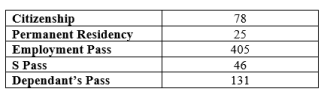
Mr Abdul Muhaimin Abdul Malik asked the Coordinating Minister for National Security and Minister for Home Affairs since June 2024, how many individuals aged 65 and above were granted (i) Singapore Citizenship (ii) Permanent Residency (iii) Employment Pass (iv) S Pass and (v) Dependant’s Pass.
Mr K Shanmugam: The number of Citizenships and Permanent Residency granted, as well as Employment Passes, S Passes and Dependant’s Passes issued to individuals aged 65 and above for the period June 2024 to December 2024 is reflected in the table below. The figures for 2025 are not yet available.
Mr Low Wu Yang Andre
Recovery Of Concert Ticket Scam Losses From January To October 2025 And Legal Actions Taken
Mr Low Wu Yang Andre asked the Coordinating Minister for National Security and Minister for Home Affairs regarding the $615,000 lost to concert ticket scams from January to October 2025, (a) what percentage of these losses has been successfully recovered; and (b) how many individuals have been prosecuted for such scams.
Mr K Shanmugam: The Police seized more than $190,000 from bank accounts linked to concert ticket scams reported between January and October 2025. Some of the monies in these bank accounts could have originated from sources other than the concert ticket scams.
We do not actively track the number of offenders prosecuted specifically for concert ticket scams.
Cross-Border Industrial Pollution Coordination And Transboundary Environmental And Air Quality Monitoring Standards
Mr Low Wu Yang Andre asked the Minister for Sustainability and the Environment (a) how frequently do Singapore and Malaysia agencies meet to coordinate industrial pollution monitoring; (b) whether joint sampling or validation exercises have been conducted in the last three years; and (c) what the key outcomes of these exchanges have been in mitigating cross-border pollution risks to Singapore.
Ms Grace Fu Hai Yien: The Members' queries have been addressed in the combined written reply to Parliamentary Question No. 69 at the 13 January 2026 Parliament sitting.
Ms Eileen Chong Pei Shan
Data On Compliance Inspection Of Buildings With PWD Holding Points And Measures To Enforce Retrofitting Of PWD Holding Points
Ms Eileen Chong Pei Shan asked the Coordinating Minister for National Security and Minister for Home Affairs (a) how many buildings that are required to have Persons With Disabilities (PWDs) holding points under SCDF's Fire Code 2023 have been inspected for compliance; (b) how many were found non-compliant; (c) what enforcement actions have been taken; and (d) what percentage of buildings built prior to such PWD requirements have been retrofitted with PWD holding points.
Mr K Shanmugam: At the completion of building works, the Singapore Civil Defence Force (SCDF) requires building owners to appoint a Registered Inspector to certify that all fire safety measures comply with the Fire Code, before the building may be occupied. This certification includes verifying compliance with requirements in the Fire Code for persons with disabilities (PWD) holding points. Thereafter, SCDF carries out routine enforcement checks to verify that the building owners adhere to fire safety requirements. This includes ensuring that escape routes, including access to PWD holding points, remain unobstructed. Based on its enforcement checks, SCDF did not detect any non-compliance related to PWD holding points in the last five years (2021 – 2025).
The SCDF does not track whether buildings built prior to the current PWD holding point requirements in the Fire Code have been retrofitted with PWD holding points.
Inclusion Of Verification Of PWD Holding Points And Accessibility Checks In Fire Certificate Inspections And Audits, And Complaints Received On Non-Functional PWD Holding Points In Past Five Years
Ms Eileen Chong Pei Shan asked the Coordinating Minister for National Security and Minister for Home Affairs (a) whether Fire Certificate inspections include specific verification of PWD holding point functionality including communication systems and clear access; (b) how many complaints have been received in the past five years regarding non-functional PWD holding points; and (c) whether SCDF audits include accessibility checks.
Mr K Shanmugam: Under the Singapore Civil Defence Force's (SCDF’s) Fire Certificate Scheme, building owners are required to appoint external parties to conduct annual inspections, which include verifying the functionality of communication devices and visual alarm systems at persons with disabilities (PWD) holding points.
The SCDF conducts audits to ensure the integrity of these inspections. Additionally, SCDF carries out routine enforcement checks to verify that building owners adhere to fire safety requirements. This involves ensuring that escape routes, including access to PWD holding points, remain unobstructed.
The SCDF has not received any complaints regarding non-functional PWD holding points in the last five years (2021 – 2025).
Cross-Border Industrial Pollution Coordination And Transboundary Environmental And Air Quality Monitoring Standards
Ms Eileen Chong Pei Shan asked the Minister for Sustainability and the Environment (a) beyond the six pollutants measured for the Pollutant Standards Index (PSI), what other hazardous air pollutants and volatile organic compounds are continuously monitored in Singapore's northern and north-eastern regions; (b) what are the (i) sampling frequencies (ii) analytical methods and (iii) minimum detection limits for each monitored pollutant.
Ms Eileen Chong Pei Shan asked the Minister for Sustainability and the Environment (a) what specific ambient air quality standards or safe exposure limits has Singapore adopted for volatile organic compounds (VOCs) and hazardous air pollutants beyond the six Pollutant Standards Index (PSI) pollutants; and (b) how these standards compare with WHO Air Quality Guidelines, EU Ambient Air Quality Directives, and US Environmental Protection Agency National Ambient Air Quality Standards.
Ms Grace Fu Hai Yien: The Members' queries have been addressed in the combined written reply to Parliamentary Question No. 69 at the 13 January 2026 Parliament sitting.
Statistics On Waitlist For Enrolment Into Adult Disability Homes And Day Activity Centres, And Outcomes Of Alternative Placements Through Sg Enable’s Referral System
Ms Eileen Chong Pei Shan asked the Minister for Social and Family Development (a) what are the current waitlist numbers and average waiting times for enrolment in (i) Adult Disability Homes and (ii) Day Activity Centres; (b) what is the maximum wait time experienced for those facilities with no vacancies; and (c) what is the success rate of SG Enable's referral system in placing applicants at alternative facilities.
Mr Masagos Zulkifli B M M: Adult Disability Homes (ADHs) provide residential care for adults with disabilities who have no alternative accommodation. As of December 2025, over 1,000 persons with disabilities reside in 11 ADHs funded by the Ministry of Social and Family Development (MSF), most of which operate at utilisation rates of over 80%.
Admission into ADHs is considered as a last resort and only when it is in the individual’s best interest. Placement depends on factors such as the individual’s readiness and the suitability of available spaces. As of December 2025, there are 100 individuals on the ADH waitlist, with an average waiting time of about nine months from referral to enrolment.
Day Activity Centres (DACs) provide day care and engagement for adults with disabilities living in the community. As of December 2025, there are 32 MSF-funded DACs with a total capacity of over 1,800 places, and an overall utilisation rate of about 90%. There are 370 individuals on the waitlist, with an average waiting time of about eight months to enrolment. Over half of them are undergoing or pending screening and assessments. Some have declined available placements and remain on the waitlist for their preferred centre, and may thus experience a longer waiting time.
For suitable individuals on the waitlist pending enrolment, SG Enable facilitates referral to other facilities with available capacity or supports continued engagement through activities at the Enabling Services Hub (ESH) and the Supported Transition and Engagement Programme (STEP) for graduates of special education (SPED) schools in the interim.
MSF is progressively increasing DAC capacity by 500 places by 2030, and piloting additional community living options such as the Enabled Living Programme (ELP) to better support persons with disabilities to live in the community.
Mr Fadli Fawzi
Data On Food Wastage Generated By Meals Rejected From Senior Citizen Food Delivery Programmes And Efforts To Address Wastage
Mr Fadli Fawzi asked the Coordinating Minister for Social Policies and Minister for Health (a) whether food delivery services for senior citizens track the amount of food waste created daily due to rejection of the taste or type of food by recipients; (b) if so, whether the Government has data on how many meals per day on average are rejected and thrown away since 2022; and (c) what have the service providers done to address this wastage.
Mr Ong Ye Kung: The Ministry of Health does not track food waste data for meal delivery services for senior citizens. Instead, meal delivery service providers funded by the Government minimise food waste by matching delivery times to clients’ schedules and offering meals that cater to their dietary needs.
Statistics On HDB Rental Vacancy Over Last Three Years And Potential Policy Adjustments To Reduce Vacancies
Mr Fadli Fawzi asked the Minister for National Development (a) what is the number and percentage of HDB rental flat units that are currently vacant as of 31 December 2025; (b) how does this compare year-over-year over the last three years; (c) whether the Ministry has any plans to relax HDB rental requirements to reduce vacancies; and (d) if not, why not.
Mr Chee Hong Tat: As of 31 December 2025, there are about 2,000 (3.2%) vacant rental flats undergoing sprucing works after the previous tenants had moved out, and about 1,600 (2.6%) vacant rental flats to be included in upcoming allocation exercises. The number and percentage of such vacant flats have reduced from about 4,800 (7.7%) in December 2023 and 4,000 (6.5%) in December 2024.
There are no plans to change the eligibility criteria for the Public Rental Scheme. The criteria are set to ensure fair and prudent use of public resources, which are funded by taxpayers, and it should not be conflated with rental flat vacancies. The Housing and Development Board (HDB) takes a needs-based approach and reviews all requests for rental housing holistically. For households that do not meet the eligibility criteria, HDB will look into their individual circumstances and assist them with rental housing if they are unable to buy a flat and have no other housing options and no family support.
Assoc Prof Jamus Jerome Lim
Feasibility Of Opting Out Of Using Retirement Account Top-Up Contributions To Pay CPF Life Premiums
Assoc Prof Jamus Jerome Lim asked the Minister for Manpower (a) whether the CPF Board will consider allowing CPF LIFE members topping up their Retirement Accounts (RA) to opt out of using part or all of the top-up amount for paying CPF LIFE premiums, provided that the member has sufficient RA balance for a minimum annuity payout; and (b) if not, why not.
Dr Tan See Leng: Top-ups to the Retirement Account (RA) which earn the RA’s higher long-term interest rate should be committed for the long-term retirement needs of members. CPF LIFE members who top up their RA will thus have their full top-ups streamed out as higher monthly payouts via CPF LIFE throughout their retirement.
Allowing Season Parking For Personal Mobility Devices In Hdb Multi-Storey Car Parks
Assoc Prof Jamus Jerome Lim asked the Minister for National Development whether the Ministry will consider allowing season parking for personal mobility devices in HDB multi-storey car parks.
Mr Chee Hong Tat: This question was addressed in the Ministry of National Development’s reply to the question asked by Mr Kenneth Tiong on 12 January 2026.
Mr Chua Kheng Wee Louis
Demographics Of Executive Condominium Buyers And Breakdown Of Loan-To-Value Distribution For Past Five Years
Mr Chua Kheng Wee Louis asked the Minister for National Development for new Executive Condominium (EC) purchases in each year over the last five years (a) what is the number and percentage of buyers who are first-timer versus non-first-timer purchasers respectively; and (b) what is the number and percentage of buyers with a loan-to-value ratio (i) of 75% (ii) between 50-75% and (iii) less than 50%, respectively.
Mr Chee Hong Tat: From 2021 to 2025, around four in 10 Executive Condominium (EC) purchasers were first-timers.
The Housing and Development Board does not track loan-to-value ratios for EC purchases as these are financed by housing loans from financial institutions.
Statistics On Public Rental Flat Applications By Singles And Outcomes Of Appeals By Under-35 Applicants In Last Five Years
Mr Chua Kheng Wee Louis asked the Minister for National Development in each of the last five years, what is the (i) number of public rental flat applications by singles, (ii) number of such applicants who are successful, (iii) number of unsuccessful applicants who meet eligibility requirements except for the minimum age of 35 and (iv) number of singles aged below 35 who have obtained a rental flat on appeal.
Mr Chee Hong Tat: On average, over the last five years, the Housing and Development Board (HDB) received requests for public rental from about 4,000 singles a year, with around 35% being successful.
Applications to HDB for a public rental flat that do not meet the eligibility criteria, including the minimum age requirement for singles, would be unsuccessful. This notwithstanding, each request is also assessed holistically and takes into account the applicant’s individual circumstances and needs, housing options, level of family support and input from social workers. In the last five years, HDB has assisted about 150 singles aged below 35, including widowed and orphaned applicants, secure public rental flats considering their needs and exceptional circumstances.

