


Written Answers to WP's Oral Questions
Mr Chua Kheng Wee Louis
Risk Assessment Of Anthropic’s Mythos’ Ability To Find Zero-Day Vulnerabilities
Mr Chua Kheng Wee Louis asked the Minister for Digital Development and Information (a) whether the Government has the capacity to conduct a risk assessment of Anthropic’s Mythos’ ability to find zero-day vulnerabilities; and (b) if so, whether (i) such assessment has been conducted and (ii) there are any plans to mitigate and work with major AI companies to patch important services following the assessment.
Mr Chua Kheng Wee Louis asked the Minister for Digital Development and Information (a) whether the Government has access to Anthropic's Mythos product and is aware of Singapore banks that have such access; (b) if so, what is the Government's assessment of the risk to the financial system; and (c) what is being done to address the risk of highly capable AI models autonomously identifying and exploiting critical infrastructure vulnerabilities.
Mrs Josephine Teo: The Question raised by Mr Chua Kheng Wee Louis, in relation to AI-enabled cybersecurity risks, has been addressed in my reply to related PQs in yesterday’s Parliament sitting. The Member may refer to that reply.
Number Of Schools With Staggered Or Later Start Times
Mr Chua Kheng Wee Louis asked the Minister for Education (a) what is the number and percentage of schools that have adopted (i) staggered start times or (ii) start times later than 7.30am for at least one day a week, broken down by primary schools and secondary schools; and (b) what are the key reasons and factors that have allowed such schools to adopt later start times.
Mr Desmond Lee: Approximately 70% of secondary schools and 10% of primary schools start later than 7.30 am on at least one day per week.
The Ministry of Education (MOE) gives our schools the autonomy to decide on their start time, no earlier than 7.30 am. Schools consider various factors when determining their start times. These include student profiles, after-school and inter school programmes, transport provisions and local transport situations. Where feasible in a school’s context, the school may adopt a later start time.
The Member may wish to also refer to past replies to Parliamentary Questions related to school start time.
Mr Low Wu Yang Andre
Review Of Pedestrian Crossing Infrastructure Including Signal Timings, Crossing Distances And Physical Design Given Increase In Elderly Pedestrian Fatalities
Mr Low Wu Yang Andre asked the Acting Minister for Transport in light of the 145 per cent increase in elderly pedestrian fatalities in 2025, with elderly pedestrians accounting for 75 per cent of all pedestrian fatalities and 83 per cent of fatal jaywalking cases (a) whether LTA has conducted a targeted review of pedestrian crossing infrastructure including signal timings, crossing distances, and physical design; and (b) what infrastructure modifications are planned.
Mr Jeffrey Siow: The percentage increase in elderly pedestrian fatalities between 2024 to 2025 should be viewed in context, where the number of fatalities rose from a low base of 11 cases in 2024 to 27 cases in 2025, compared to an average of 18 fatalities annually from 2021 to 2023.
Nevertheless, we want to improve the safety of vulnerable groups. That is why the Land Transport Authority (LTA) has implemented Silver Zones and Friendly Streets, with longer pedestrian crossing times, lower speed limits, and features such as humps and road narrowing to slow down traffic. Beyond Silver Zones and Friendly Streets, LTA is expanding the Green Man+ feature, which provides elderly pedestrians with additional crossing time, to more traffic lights. Overhead bridges are also being progressively retrofitted with lifts.
Drivers also play a critical role in keeping pedestrians safe. Strict penalties are in place to deter dangerous or careless driving, which attracts fines, licence disqualification and imprisonment. In Silver Zones and Friendly Streets, offenders incur two additional demerit points and a $100 increase in composition fines for offences such as speeding, red-light running and failure to give way to pedestrians.
Non-Medical Costs Borne By Families Receiving Home-Based Palliative Care
Mr Low Wu Yang Andre asked the Coordinating Minister for Social Policies and Minister for Health (a) what assessment has the Ministry made of the non-medical costs borne by families receiving home-based palliative care, including transport, caregiving expenses, adult diapers, and income loss from caregiving responsibilities; and (b) whether additional subsidies or financial support is being considered to address these residual out-of-pocket expenses beyond subsidised clinical care.
Mr Ong Ye Kung: As the Minister said in his recent speech at the 9th Singapore Palliative Care Conference on 18 April 2026, the Ministry of Health has taken steps to make Home Palliative Care even more affordable for end-of-life patients since 2024. We enhanced means-tested subsidies and removed the lifetime MediSave withdrawal limits for patients using their own MediSave. Palliative care patients who need to defray other costs, such as non-medical costs, can tap on the Reduced Life Expectancy scheme to withdraw their Central Provident Fund savings.
Workload Reduction At Law Firms From AI Use And Guidelines For Such Use
Mr Low Wu Yang Andre asked the Minister for Law (a) whether the Ministry has tracked whether AI adoption in law firms has reduced workload and improved work-life balance for junior lawyers, or whether it has instead raised client expectations and billing demands in ways that worsen burnout; and (b) if no such data exists, whether the Ministry intends to commission monitoring of AI's net impact on lawyer wellbeing.
Mr Edwin Tong Chun Fai: My response will also address a related Parliamentary Question filed by Mr Andre Low for the Sitting on 5 May 2026. AI is no longer a distant or speculative trend. It is already significantly reshaping the legal services industry globally. Harnessed safely and responsibly, it is a powerful tool with tremendous opportunities for our legal services industry. Used in the right manner, AI enhances productivity greatly for a lawyer. Rote tasks such as legal research, document review, chronology building that used to take days can now be done in minutes. Statistics show that nearly 240 hours can be freed up per year with the use of AI. This figure can only grow as AI improves, which it continues to do.
This time saved allows lawyers to reallocate time and effort to higher-value tasks – case strategy, risk assessment, persuasion, and advocacy – where human professional judgment truly matters, and where AI falls short. Rather than allow the advent of AI to undermine the profession, we should embrace its development and embed its usage in the profession, and this will in turn open up opportunities for younger lawyers to undertake higher value work which they will find more professionally rewarding. We encourage the use of technology and AI, but we are also mindful of its impact on related matters such as legal education and training, which we will address below.
We do not directly track the specific data that Mr Andre Low asked about. However, we track the benefits gained by law firms who use legaltech tools. In a 2025 legaltech survey commissioned by IMDA, MinLaw and the Law Society of Singapore, 90% of law firms that adopted legaltech in the preceding 12 months saw gains in manpower efficiency, and 82% saw gains in revenue. These are nascent findings, but they provide an encouraging early indicator that we should continue to harness and use technology and AI.
Minlaw saw the benefits of advancing the use of technology in legal practice even before the current wave of AI tools came into the market. We provided funding from as early as 2017 to support Singapore law firms to adopt legaltech. Today, the Productivity Solutions Grant for the Legal Sector (PSG-Legal) by the Ministry continues to apply, defraying 50% of firms’ first-year cost of adopting pre-approved legaltech and AI solutions, capped at S$45,000 per year.
Law firms can also tap on Enterprise Singapore’s Enterprise Development Grant (EDG) to upgrade and innovate, or the general Productivity Solutions Grant (PSG) for non-legaltech solutions to improve their productivity and automate their processes.
We are aware that cost is not the only barrier to AI adoption. For many law firms, it is also the challenge of change management.
We therefore launched the Legal Innovation and Future-Readiness Transformation (LIFT) initiative in June 2025. This pilot deploys legaltech consultants to help law firms to digitalise and adopt tech solutions. The consultants recommend suitable legaltech solutions and oversee the end-to-end change management process from implementation to optimisation.
As referred to above, what is certain is AI’s significant potential in reducing inefficiencies that have traditionally contributed to long hours and burnout. This directly addresses concerns about reducing workload raised by Mr Low.
To equip our lawyers to make full use of these opportunities, we will need to also fundamentally change how legal skills are learned and developed. As Mr Low noted, traditional formative experiences – such as document review and manual research – are increasingly AI-assisted or AI-driven. The way lawyers build their foundation and hone their craft must therefore change. Legal education and professional training are shifting towards equipping lawyers with critical thinking skills, the ability to direct, interrogate and take responsibility for AI-generated output, and the capability to exercise judgment and empathy.
Our law schools are increasingly integrating AI into their teaching, and we will have to consider if the teaching curriculum and pedagogy should be refreshed. As an example, NUS Law is currently using AI chatbots to simulate witnesses for cross examination practice, and SMU Law has dedicated courses on AI in legal practice. LawSoc and SAL also conduct GenAI workshops and prompt engineering clinics to equip lawyers with AI skills.
Mr Low has noted that the practice training period has been lengthened from six months to one year. This was one of the recommendations made by the Committee for the Professional Training of Lawyers (CPTL) in 2018, pre-dating the widespread use of AI in legal practice. The objective was to strengthen the training regime so that junior lawyers are equipped with both sound technical skills and the right professional values regardless of prevailing economic conditions or industry disruptions. With the advent of AI, it is all the more important for junior lawyers to receive strong, practice ready foundation. This is so that they are equipped to harness AI and to develop core skills that AI cannot replace – advocacy, strategic judgment, and the ability to add value to clients.
The professional training framework must also evolve. The Ministry is considering allocating a portion of Continuing Professional Development (CPD) points specifically to AI‑related courses, so that lawyers remain current as technology evolves rapidly. We will look into ways to strengthen lawyers’ skills that AI cannot replace. These include increasing structured mentorship, courtroom exposure, and advocacy experience, as these are the tools of our trade, so we must support younger lawyers to learn by observing, practising, and engaging directly through human interaction.
Ms Hany Soh separately asked about guidelines and regulations on AI usage in legal practice. In March 2026, the Ministry launched the Guide for Using Generative AI in the Legal Sector, which sets out key principles for the safe and responsible use of GenAI and provides practical guidance for implementation. A key tenet is that legal professionals remain ultimately accountable for all work products as part of their duties to clients. The Singapore Courts have also issued a Guide on the Use of GenAI Tools by Court Users, with sanctions for non-compliance in all court matters.
We have taken the approach of a facilitative Guide rather than prescribed regulations at this stage, so as not to unintentionally stifle innovation and discourage innovators, as AI is still advancing.
AI is here to stay. The question is not whether to adopt it, but how we turn it to our collective advantage. This transformation cannot be driven by policy alone. It requires a concerted effort by all stakeholders – the Ministry, the Judiciary, law firms, senior and junior lawyers, educators, and clients. The Future of the Legal Profession (FLPC) Committee, co-chaired by the Chief Justice and the Minister for Law, set up in December 2025, will bring together these stakeholders to look into these issues more deeply.
Encouragingly, there is growing positivity within the profession. Events, such as “The Next Charter”, that the Ministry organised in March demonstrate a shared recognition that AI, when used responsibly, can strengthen rather than erode the core human skills that underpin legal practice.
This positive outlook extends to the next generation of lawyers. NUS Law final year student Kamal Ashraf Bin Kamil Jumat, who spoke at the panel discussion at “The Next Charter”, highlighted that while AI will reshape legal workflows, foundational skills, judgment, ethics and mentorship remain indispensable. Our law schools share this view, and are adapting their curricula to prepare students for an AI enabled profession while preserving the core values of the law.
With shared commitment, sustained mentorship and thoughtful use of technology, the Ministry, the Judiciary, the profession, educators and clients can together preserve what defines good lawyering while embracing the tools that will shape its future. I am confident the legal profession will not only adapt, but thrive.
Mr Fadli Fawzi
Study Visits From Foreign Delegations Related To Legal Framework Of Death Penalty And Its Implementation
Mr Fadli Fawzi asked the Coordinating Minister for National Security and Minister for Home Affairs (a) whether the Government has hosted or will host study visits from foreign delegations relating to the legal framework of the death penalty and its implementation; (b) whether any such requests have been received; and (c) if so (i) which countries have requested such visits (ii) what have been the outcomes of the requests and (iii) what are the reasons for the outcomes.
Mr K Shanmugam: We have not hosted such study visits. Generally, we assess requests for study visits based on various factors, including the availability of resources, and whether it is in Singapore’s interests to host such study visits. If we receive requests from foreign delegations to study our death penalty regime in the future, we will consider them then.
Ensuring Work Pass Holders In Customer-Facing Roles Are Equipped With Basic Level Of English Language Proficiency
Mr Fadli Fawzi asked the Minister for Manpower (a) whether the Government will consider implementing rules to ensure that holders of work passes in customer facing roles are equipped with a basic level of proficiency in the English language; and (b) if not, why not.
Dr Tan See Leng: The Government does not impose English language proficiency requirements for work pass holders. It is more appropriate for employers to determine the level of language proficiency required, which is no different from other job requirements, based on their business needs.
Relationship Between People's Association And Grassroots Advisors Who Are Not Elected Members Of Parliament
Mr Fadli Fawzi asked the Acting Minister for Culture, Community and Youth given that Grassroots Advisers (GRAs) are not public servants (a) what are the (i) nature and (ii) terms of the contractual relationship between PA and GRAs who are not elected MPs; (b) what are the relevant legislation and public service regulations governing information sharing with such GRAs; and (c) whether such information is shared with opposition MPs contemporaneously, and if not, why not.
Mr Edwin Tong Chun Fai: I am answering in my capacity as the Minister charged with the responsibility for the People’s Association (PA). The role of Grassroots Advisers (GRAs) has been clearly articulated since the early days of our grassroots system, and reiterated on several occasions including in this House.
GRAs are appointed by PA to fulfil various roles. This includes forging stronger people to people as well as people to Government relations, which have been critical to our national unity and identity. GRAs also help to build up social cohesion within our communities, achieved through a variety of means.
One of the GRA’s roles is to actively support the policies of the Government. This would include, where appropriate, explaining Government policy to the people of Singapore, in order for such policies to be understood, supported and implemented. GRAs also assist in the implementation of such policies where necessary, as well as in gathering feedback on such policies to allow the Government to make the relevant adjustments as may be appropriate. In discharging this role, it is critical for GRAs to work with the community to gain support for, and implement, Government policy. This is not something which opposition Members of Parliament are expected to do.
It is in this context that relevant information as may be appropriate in the circumstance, is shared with GRAs. The type of information shared depends on the specific nature of the function or programme that the GRA is carrying out. As has been explained previously, such sharing of information is carried out in accordance with relevant legislation and public service regulations governing data sharing.
Ms He Ting Ru
Reviewing Adequacy Of Path Diversity Of Passive Fibre Infrastructure Owners
Ms He Ting Ru asked the Minister for Digital Development and Information in respect of the incident in April 2026 where fibre infrastructure was damaged during third-party construction works (a) whether IMDA's current standards require passive fibre infrastructure owners to maintain physically separate cable routes serving the same geographic areas; and (b) what review is being conducted into whether path diversity requirements for passive fibre infrastructure are adequate.
Mrs Josephine Teo: The question raised by Ms He Ting Ru in today’s Order Paper, in relation to the 18 April 2026 broadband service disruption, has been addressed in a written reply to related PQs at the 5 May Parliament sitting. The Member may refer to that reply.
Extent Of Inconvenience And Gaps Discovered From Recent Disruptions In Bus Expected Time Of Arrival System
Ms He Ting Ru asked the Acting Minister for Transport (a) whether the bus Expected Time of Arrival (ETA) system disruption on 18 April 2026 revealed gaps in system redundancy; (b) what was the extent of this disruption, including services, stops and commuters affected; (c) what fallback mechanisms exist to ensure ETA system continuity for such disruptions; and (d) how LTA is addressing similar disruptions and known reliability limitations.
Mr Jeffrey Siow: The Estimated Time of Arrival (ETA) system relies on physical fibre-optic connections to relay updates on bus locations to a central server, which then computes predictions of bus arrival times.
For data security reasons, bus location data is transmitted through dedicated pairs of fibre-optic cables that are privately leased from a commercial vendor. By design, if data cannot be sent through one cable, it will be re-routed to the other cable, so that the connection continues to function. This provides a backup against physical damage.
On 18 April 2026, Asia Piling Co damaged several fibre-optic cables when carrying out works. One of the damaged cables was part of a physical connection transmitting to the ETA server. As designed, data was diverted from the damaged cable to the intact cable in that connection pair. However, not all data was successfully sent to the server when the incident first occurred. This resulted in a degradation of the ETA system performance, with only 70% of the expected number of ETA predictions throughout the rest of the day.
The ETA system was restored to full functionality after the fibre-optic cable was repaired. Our investigation revealed no other hardware or software malfunctions in the ETA system, and no relation to the outage that took place earlier this year.
The Land Transport Authority is still investigating why the remaining intact cable did not provide full redundancy for the damaged cable as required of the vendor. We are currently upgrading the ETA system. The new system, which will be deployed by the end of 2027 will be hosted on a cloud platform. This will improve the resilience of the ETA system against physical damage to its data connections.
Measures To Minimise Disruptions To Critical Public Transport Systems Arising From Infrastructure Works
Ms He Ting Ru asked the Acting Minister for Transport (a) what measures are currently in place and what additional safeguards will be implemented to minimise disruption to critical public transport systems arising from infrastructure works, including LTA-managed projects; and (b) whether requirements such as pre-works utility mapping and contractor clearance from utility owners are mandated and enforced.
Mr Jeffrey Siow: On 18 April 2026, fibre service cables were damaged during bored pile works carried out as part of the North-South Corridor (NSC) Project. Investigations are ongoing. Should the contractor be found culpable, agencies may take legal action and telecommunication companies may also claim damages.
Contractors are required to comply with the requirements of the relevant utility agencies when working in proximity to their services. For instance, prior to work commencement, contractors must conduct utility mapping and obtain written approval from the utility agencies. The Land Transport Authority (LTA) enforces against non compliance, which are factored into future tender evaluations.
Assoc Prof Jamus Jerome Lim
Protocol To Ensure Government Data Is Updated In Timely Manner At Data.Gov.Sg Portal
Assoc Prof Jamus Jerome Lim asked the Minister for Digital Development and Information whether there is any protocol for Government agencies to ensure that Government data is updated in a timely manner at the data.gov.sg portal after such data are officially released on either SingStat or agencies’ own websites.
Mrs Josephine Teo: Agencies are required to share data that is assessed to be suitable and useful for disclosure to the public as soon as practicable, through platforms such as data.gov.sg (DGS), OneMap, or their own websites.
Today, there are almost 5,000 datasets from across agencies shared on DGS, some of which are automatically updated via application programming interface (or API) connections.
The DGS team is taking steps to enhance the timely sharing and updating of datasets. These include expanding and improving API integrations with agencies and tracking high-demand datasets which could be prioritised for such integrations.
Rationale For 15-Minute Transfer Limit Between Train Stations
Assoc Prof Jamus Jerome Lim asked the Acting Minister for Transport (a) what is the rationale for maintaining the 15-minute transfer limit between different train stations when bus-to-bus transfers allow 45 minutes; (b) why fare transfers are prohibited for consecutive use of the same bus service and exit-and-re-entry at the same train station; and (c) whether the Government will consider removing these restrictions.
Mr Jeffrey Siow: Public transport fares are based on the distance travelled in a single continuous journey. Transfer rules are designed to set a reasonable limit to the different segments of a single journey for the purpose of fare-charging. This avoids commuters stringing together multiple journeys with distinct origins and destinations into one, thus being charged incorrect fares.
The 15-minute transfer time limit between train stations was introduced in 2018 to facilitate walking transfers between nearby rail stations which can reduce journey time, for example between Rochor and Jalan Besar stations on the Downtown Line. This 15-minute transfer rule also applies to a few MRT interchange stations where commuters have to exit and re-enter the fare-paid area to make a transfer, such as Bukit Panjang, Newton and Tampines. A longer transfer time limit is applied to rail to-bus and bus-to-bus transfers as waiting times for buses are longer than for train services.
Fare transfers are not applied to the consecutive use of the same bus service and exit-and-re-entry at the same train station, as there is no reason for a commuter to tap out and tap in again on the same bus service or train station in a single journey.
Extending HDB Fire Insurance To Include Coverage On Home Contents
Assoc Prof Jamus Jerome Lim asked the Minister for National Development whether there has been any consideration of extending HDB fire insurance to include home contents insurance as a default, with the option to opt out if a homeowner so chooses.
Mr Chee Hong Tat: This question was addressed in the Ministry of National Development’s reply to the question asked by Mr Saktiandi Supaat on 24 September 2025.
Mr Dennis Tan Lip Fong
Industry Sectors Facing Greatest Productivity Losses From Heat Exposure
Mr Dennis Tan Lip Fong asked the Minister for Manpower following projections that heat-related productivity losses could reach $2.22 billion by 2035, (a) which specific industry sectors have been identified as bearing the greatest productivity losses from heat exposure; and (b) beyond the existing mandatory rest break framework, what targeted interventions is the Ministry implementing or funding to reduce heat-related productivity loss in these sectors.
Dr Tan See Leng: The cited NUS study projected economic losses arising from reduced productivity and work capacity due to rising temperatures, considering the direct impact on affected sectors and indirect losses incurred downstream by other related sectors. Across the four sectors studied, the estimated economic losses were highest in the services sector, followed by manufacturing, construction and agriculture. The workers at higher risk are typically those involved in prolonged outdoor work activities, particularly in the construction, marine and process sectors.
In consultation with tripartite partners and industry, the Ministry of Manpower (MOM) updated the heat stress measures for outdoor work in September 2024, including introducing targeted measures for these sectors. Construction sites with a contract sum of $5 million or more, shipyards and the process sector are required to have a wet bulb globe temperature (WBGT) meter on site for localised measurements. The WBGT readings are used to guide the implementation of other measures such as rest breaks and hydration requirements.
MOM is also working with companies to promote and conduct trials on the use of technology solutions to better manage heat stress, while mitigating productivity losses. These solutions include cooling vests and garments, and wearables that can allow for real-time, personalised monitoring of heat illness risk for workers in the construction and built environment sectors.
Schools' Protocol When Students Sustain Mobility Impairing Injuries
Mr Dennis Tan Lip Fong asked the Minister for Education (a) what is the protocol for schools when a student sustains a mobility-impairing injury; (b) when must schools call for an ambulance rather than use an alternative transport; and (c) whether advising parents to arrange a taxi for a student with a suspected fracture,
instead of calling an ambulance, is consistent with the Ministry’s safety and medical protocols.
Mr Desmond Lee: When a student sustains an injury, school staff will administer first aid and promptly contact the student's parents.
For emergency cases, where there are visible signs of serious injury, such as breathlessness, wounds with profuse bleeding or head injury, school staff will call for the Singapore Civil Defence Force (SCDF) emergency ambulance immediately and notify parents promptly.
For non-emergency cases, where there are no visible signs of serious injury, schools may arrange for the student to be brought to a doctor at a nearby clinic or be conveyed to a hospital. Such decisions will be made in consultation with the student’s parents.
Measures To Ensure Accuracy And Reliability Of Greenhouse Gas Emissions Disclosures By Listed Companies
Mr Dennis Tan Lip Fong asked the Prime Minister and Minister for Finance what measures have ACRA and the Singapore Exchange Regulation (SGX RegCo) put in place to ensure the accuracy and reliability of Scope 1 and Scope 2 greenhouse gas emissions disclosures by listed companies from FY2025, given that mandatory external limited assurance on such disclosures is only required from FY2029.
Mr Gan Kim Yong (for the Prime Minister): Listed companies are required to have robust processes, data governance and internal controls as well as appropriate board oversight on all their disclosures.
SGX RegCo’s requirements on greenhouse gas (GHG) emissions reporting seek to raise the level of accuracy and reliability in three ways. First, listed companies must use the globally accepted Greenhouse Gas Protocol (GHG Protocol) for GHG measurement, which offers well-established, standardised methodologies and guidance for calculating Scope 1 and 2 GHG emissions. Second, listed companies must disclose their measurement approaches, inputs and assumptions for calculating their GHG emissions. Third, listed companies must internally review their sustainability reporting processes to strengthen the accuracy and reliability of the disclosures.
While the requirement for external assurance will only be implemented in FY2029, listed companies have taken active implementation steps and shown progress in their Scope 1 and Scope 2 GHG emissions reporting capabilities. Reporting rates have risen from 50% to 87% for Scope 1, and 61% to 93% for Scope 2, between 2023 and 2025. Listed companies have also been supported by tools and resources that help them report their GHG emissions more accurately, such as the Singapore Emission Factors Registry. The Registry provides over 300 Singapore-specific emission factors consolidated primarily from government agencies.
SGX RegCo will continue to monitor listed companies’ disclosures and will take appropriate follow-up action if breaches are found.
Mr Gerald Giam Yean Song
Proposal For Disaggregated Framework Where Driving Schools Provide Foundational Circuit And Simulator Training While Accredited Instructors Provide On-Road Practical Training
Mr Gerald Giam Yean Song asked the Coordinating Minister for National Security and Minister for Home Affairs (a) whether the Ministry will consider establishing a disaggregated modular framework where driving schools provide foundational circuit and simulator training while accredited PDIs focus on on-road practical instruction, to alleviate chronic bottlenecks and reduce lesson wait times for learners; and (b) in light of such a framework, whether the Ministry will consider resuming the issuance of PDI licences.
Mr K Shanmugam: The Ministry of Home Affairs and the Traffic Police (TP) have been reviewing the driving school ecosystem and policies, to increase the capacity of the schools to meet the sharp rise in demand for lessons in driving schools over the last few years.
TP has no plans to re-issue private driving instructor licences. We stopped doing so in 1987 to create a more professional and standardised approach to driver education, where driving schools operate within a structured curriculum and training framework approved by TP.
Proposal For Centralised Screening Agency To Conduct Background Checks For Those Seeking Employment Or Volunteer Roles With Direct Contact With Minors
Mr Gerald Giam Yean Song asked the Coordinating Minister for National Security and Minister for Home Affairs (a) whether the Ministry will consider establishing a centralised national screening agency to conduct mandatory background checks for all persons seeking employment or volunteer roles involving direct contact with minors; and (b) what current requirements exist for private organisations and sports clubs to verify the criminal records of staff working with children.
Mr K Shanmugam: For jobs under the purview of public agencies that involve contact with children and young persons, there are already measures in place to screen for past offences. For example, pre-employment background checks are conducted for individuals deployed to preschools licensed under the Early Childhood Development Centres Act, personnel in Student Care Centres registered as Student Care Fee Assistance Administrators who have prolonged contact with students, and individuals working in the Ministry of Education (MOE) schools. In the sport sector, applicants to the National Registry of Coaches are required to declare disciplinary and criminal records to Sport Singapore. Applicants who have been convicted of offences such as sexual crimes will not be admitted to the registry.
There is currently no requirement for employers in unregulated sectors to verify the criminal records of employees. However, they may still request that prospective employees declare any past offences, and take this into consideration in their hiring decision.
The Government has been considering further measures on how to strengthen the screening framework for jobs involving contact with children and young persons. The framework will have to be set up in a way which is possible to implement.
Proposed Bus Frequency Of 10-Minute Intervals During Peak And 15-Minute Intervals During Non-Peak Periods For Estates Not Otherwise Linked To Major Transport Nodes
Mr Gerald Giam Yean Song asked the Acting Minister for Transport (a) what are the Ministry’s targets to ensure that bus services with no alternative routes to major transport nodes, such as Service 228, do not exceed scheduled intervals of 10 minutes during peak and 15 minutes during non-peak periods; and (b) how does the Ministry identify and prioritise such essential feeder services for frequency enhancements.
Mr Jeffrey Siow: All feeder services are scheduled to operate at intervals of no more than eight minutes during peak periods, once operations have stabilised. During non-peak periods, the intervals are periodically adjusted based on ridership data and feedback. The Land Transport Authority (LTA) tracks arrival timing of buses at bus stops against expected intervals, and bus operators are penalised for poor reliability.
Mr Kenneth Tiong Boon Kiat
Validating Singapore Preschool Accreditation Framework Certification Against Measurable Child Developmental Outcomes
Mr Kenneth Tiong Boon Kiat asked the Minister for Social and Family Development (a) whether ECDA has independently validated Singapore Preschool Accreditation Framework (SPARK) certification against measurable child developmental outcomes including vocabulary, executive function and school readiness; (b) what proportion of SPARK assessment is based on operator-prepared documentation versus direct observation of classroom practice, and whether such observation is conducted unannounced; and (c) whether ECDA will commission such validation and assessment, and publish the findings.
Mr Masagos Zulkifli B M M: The Singapore Preschool Accreditation Framework (SPARK) is a quality assurance framework that accredits preschools based on their administration, management and pedagogical processes. SPARK focuses on validating preschools’ implementation of quality processes and practices, rather than measuring child outcomes.
The teaching and learning domains within SPARK are underpinned by the national learning and development frameworks, which are evidence-based and grounded in child development theories. These frameworks guide preschools in designing appropriate learning environments and activities to support children's holistic development.
The Early Childhood Development Agency (ECDA) validates preschools’ processes and practices through documentation, interviews with preschool staff and observation of classroom practices during scheduled centre visits. ECDA regularly publishes the list of preschools that have attained SPARK accreditation. In addition,
ECDA shares the validation findings highlighting key strengths and recommendations for growth directly with the relevant preschools, and partners them in their quality improvement journeys.
Meal Allowances Or Arrangements For SAF Full-Time National Servicemen At Locations Without Cookhouse Facilities
Mr Kenneth Tiong Boon Kiat asked the Coordinating Minister for Public Services and Minister for Defence (a) whether SAF full-time national servicemen at non-camp locations without cookhouse facilities like the Central Manpower Base (CMPB), MINDEF and Defence Science and Technology Agency receive meal allowances during duty hours; (b) if so, what are the current rates; and (c) whether the Ministry will publish these rates on the CMPB website, as is currently done for SCDF and SPF national servicemen.
Mr Chan Chun Sing: The Singapore Armed Forces (SAF) does not provide additional meal allowances for our NSFs beyond the monthly NS allowance. The operational context between the SAF and the Home Team is different. The vast majority of NSFs in the SAF are based in camps or locations that tend to be sited in less accessible areas. For operational reasons, we provide these NSFs with lodging and meals from cookhouses to better accommodate their training and duties. On the other hand, most Home Team personnel are stationed at locations where commercial meal options are accessible and fresh rations from cookhouses are not available. Hence, a meal allowance is provided to them instead. Home Team personnel based in training institutes with access to cookhouses do not receive an additional meal allowance.
In the SAF, a small group of NSFs perform operational roles at locations without SAF cookhouses. In such cases, the NSF may request to receive fresh rations while on duty, if they so desire, and arrangements will be made.
For the minority of SAF NSFs that stay out of camp, the monthly NS allowance already provides for their basic personal upkeep, including the cost of meals. We have reviewed the NS allowance four times over the past decade to ensure that it remains adequate, and will continue to do so regularly.
NSFs who require further assistance due to personal circumstances are supported through the Financial Assistance Scheme. I encourage any NSF facing difficulties to speak with their commanders.
Mr Abdul Muhaimin Abdul Malik
Enforceable Measures Against Pet Owners Who Fail To Clean Up After Their Pets Dirty Public Spaces In HDB Estates
Mr Abdul Muhaimin Abdul Malik asked the Minister for Sustainability and the Environment in view of the increasing number of pet owners in Singapore, whether the Ministry will review its current stance of relying primarily on public education and consider introducing enforceable measures against pet owners who fail to clean up after their pets urinate in public spaces of HDB estates.
Ms Grace Fu Hai Yien: We encourage pet owners to be civic-minded and considerate. Pet owners should water down or wash off pet urination to keep public spaces clean and prevent bad smells and stains where practicable. There are currently no plans to mandate pet owners to clean up after pet urination.
Deployment Of Segregated Recycling Bins In Housing Estates
Mr Abdul Muhaimin Abdul Malik asked the Minister for Sustainability and the Environment in view of the success of the Recycling Hub in Queenstown (a) whether similar segregated recycling bins will be deployed in other housing estates; (b) if so, what the rollout timeline is; and (c) if not, what the constraints are and how these may be addressed.
Ms Grace Fu Hai Yien: Source-segregated recycling initiatives complement the commingled blue bin system under the National Recycling Programme. We are encouraged that community partners such as Public Waste Collectors, non-profit organisations and Town Councils have come forward to trial these initiatives such as the Recycling Hub in Queenstown, which uses smart recycling bins to aggregate clean stream recyclables. These efforts further encourage proper recycling behaviour at the local level.
Source-segregated recycling also takes place at the national level, via initiatives such as the extended producer responsibility schemes for e-waste and beverage containers, where producers are responsible for collecting and recycling their products at end-of-life.
We will continue to encourage and support ground-up initiatives such as segregated bins to strengthen our recycling ecosystem, by partnering with the community and industry stakeholders on localised solutions to improve recycling.
Assessing Suitability Of Japanese Shokuiku System For Meal Provision In Singapore Schools
Mr Abdul Muhaimin Abdul Malik asked the Minister for Education in respect of the Central Kitchen Meal Model (CKMM) for meals in schools (a) whether the Ministry has studied the Japanese Shokuiku system given its success in producing nutritious and delicious meals in schools; and (b) if not, whether it can consider doing so.
Mr Desmond Lee: This question has been addressed by the Ministry of Education's answer to oral Parliamentary Question on 12 November 2024.
Ms Eileen Chong Pei Shan
Sharing Peer-Reviewed Evidence That Caning Reduces Bullying Recidivism And Restorative Support Following Disciplinary Actions In Schools
Ms Eileen Chong Pei Shan asked the Minister for Education regarding the Comprehensive Action Review against Bullying (a) whether the Phase 1 literature review identified peer-reviewed evidence that caning reduces bullying recidivism; (b) which professionals consulted during the review had recommended including caning as part of standardised disciplinary measures for first-time offenders; and (c) what other specific findings, if any, from the stakeholder engagement process had informed this decision.
Ms Eileen Chong Pei Shan asked the Minister for Education how does the standardisation of caning as a disciplinary measure for first-time offenders sit alongside the Comprehensive Action Review against Bullying’s stated objective of building a restorative school culture.
Ms Eileen Chong Pei Shan asked the Minister for Education regarding the Comprehensive Action Review against Bullying (a) what specific counselling and restorative support must schools provide to students following the administration of disciplinary measures; (b) whether such support is mandatory or at schools’ discretion; and (c) what accountability mechanisms are in place to ensure this support is consistently delivered.
Mr Desmond Lee: This question has been addressed by the Ministry of Education's answer to oral Parliamentary Question Nos 7 to 29 and written Parliamentary Question Nos 41 to 49 on 5 May 2026.
Written Questions
Mr Abdul Muhaimin Abdul Malik
Review Of Threshold For Compulsory GST Registration Since Introduction In 1994 To Adjust For 30 Years Of Inflation
Mr Abdul Muhaimin Abdul Malik asked the Prime Minister and Minister for Finance whether the Ministry will review the $1 million taxable turnover threshold for compulsory GST registration, given that it has remained unchanged since GST was introduced in 1994 and has not been adjusted for over 30 years of inflation, which has effectively lowered the threshold in real terms and brought more small businesses into the compulsory registration net.
Mr Jeffrey Siow: We explained the considerations for the GST registration threshold and why it remains relevant to Mr Pritam Singh at the Committee of Supply debate on 28 February 2024. Our position has not changed. The Member may wish to refer to the Hansard for the reply.
Breakdown Of Road Traffic Accidents By Age Of Driver From 2021 To 2025 And Review Of Three-Year Driving Licence Renewal Cycle For Drivers Aged 65 And Above
Mr Abdul Muhaimin Abdul Malik asked the Coordinating Minister for National Security and Minister for Home Affairs (a) what is the number of road traffic accidents caused by drivers aged 65 and above for each year from 2021 to 2025 and how does this compare against other age groups; and (b) whether the Ministry will review the current three-year driving licence renewal cycle for drivers aged 65 and above.
Mr K Shanmugam: Appended below is the annual number of accidents involving injury or death that the Traffic Police (TP) has investigated and determined to be caused by the motorist. This excludes accidents where TP was unable to determine the at-fault party.

The current licence renewal regime aims to promote road safety and provide seniors the convenience of driving in a risk-calibrated manner. The Ministry of Home Affairs and TP will continue to review the licence renewal rules regularly to ensure they remain fit for purpose.
Assoc Prof Jamus Jerome Lim
Average Annual Registration And Deregistration Rates In F&B Sector From 2000 To Present
Assoc Prof Jamus Jerome Lim asked the Deputy Prime Minister and Minister for Trade and Industry what has been the average annual number of registration and deregistration of food and beverage (F&B) sector businesses for the periods of (i) 2000 to 2009 (ii) 2010 to 2019 and (iii) 2020 to the present.
Mr Gan Kim Yong: The average annual number of registrations and deregistrations of F&B sector business entities for the requested periods are in Table 1.
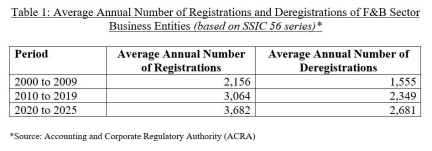
The Member may wish to refer to DOS’ website for the annual breakdown: https://tablebuilder.singstat.gov.sg/table/TS/M085641.
Population Records For Urban Birds In Singapore And Growth Rates For Pigeons, Sparrows, Mynas And Crows From 1980 To 2025
Assoc Prof Jamus Jerome Lim asked the Minister for National Development (a) whether NParks maintains a record of the population of urban birds in Singapore; and (b) if so, what has been the rate of growth in the population of (i) pigeons (ii) sparrows (iii) mynas and (iv) crows, between 1980 and 2000, and 2000 and 2025.
Mr Chee Hong Tat: The National Parks Board tracks the population of pest birds such as pigeons, mynas and crows in Singapore. Their annualised population growth rates of these bird species from 2000 to 2024 are shown in Table 1 below. Population studies prior to 2000 were conducted using fewer samples and different methodologies, limiting comparability with more recent studies.
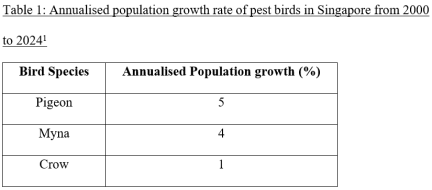
1Census data for pest birds not available for 1980 and 2025.
Mr Kenneth Tiong Boon Kiat
Assessing Tracetogether's Contribution To Covid-19 Contact Tracing, Total Programme Cost And Lessons For Future Digital Tracing
Mr Kenneth Tiong Boon Kiat asked the Coordinating Minister for Social Policies and Minister for Health (a) of all COVID-19 cases identified by contact tracing between March 2020 and 13 February 2023, how many (i) were identified with TraceTogether and (ii) would not have been identified through conventional contact tracing methods; (b) what was the total TraceTogether programme cost over its lifetime; and (c) whether the Ministry will publish a retrospective cost-effectiveness evaluation of TraceTogether to inform future digital tracing efforts.
Mr Ong Ye Kung: We no longer have detailed data on the TraceTogether Programme as records have all been deleted when we stood down the programme. We estimate that about 600,000 quarantine orders were issued, with TraceTogether supplementing conventional contact tracing methods. This would have a significant impact on suppressing the spread of COVID-19, preventing infections and saving lives.
Unlike SARS, where the reproduction number or R0 was two to four and spread was limited mostly to healthcare facilities, COVID-19 was transmitted more widely in the community with an R0 of five to 10 especially during the Delta and Omicron waves. It was not possible to conduct contact tracing for COVID-19 in the later stage of the pandemic through conventional, manual methods sufficiently quickly to control transmission in the community.
Fortunately, we were able to deploy technology to strengthen our contact tracing capabilities. Together with vaccination, safe management measures, and adaptive healthcare protocols that preserved hospital capacity, we were able to weather through the pandemic crisis with one of the lowest COVID-19 fatality rates globally, and enable a strong recovery.
The total cost of the TraceTogether Programme, including development of the TraceTogether App for handphones and the provision of TraceTogether Tokens, was about $180 million. Majority of the cost was incurred for the TraceTogether Tokens, which were made available to all residents on request.
Data On Approved Access Applications To Precise, Sg10k And Helios, Research Productivity And Outcomes, And Plans For Public Registry
Mr Kenneth Tiong Boon Kiat asked the Coordinating Minister for Social Policies and Minister for Health (a) how many applications to access PRECISE, SG10K and HELIOS data have been received and approved, broken down by public sector researchers, private-sector firms and local startups, and average time to access; (b) how many approved applications have produced publications, patents or commercial products; and (c) whether the Ministry will publish a public registry of approved projects and outcomes, as the UK Biobank does.
Mr Ong Ye Kung: PRECISE-SG100K and HELIOS are large-scale longitudinal cohort studies to drive research, improve disease understanding, and enable more targeted care. The majority of their datasets were accessible from 2025 through TRUST, our national health research and analytics platform supporting the analysis of anonymised data for health research.
Based on applications for data access on TRUST, there have been 40 approved applications to access PRECISE-SG100K and HELIOS data. Of these, 34 were from public-sector researchers and six were from private companies. Since then, one publication has resulted from these applications, with more in the pipeline as projects mature. Publicly available listings of approved projects are maintained on the TRUST website.
Mr Low Wu Yang Andre
Allocated Funding, Implementation Timeline And Existing Trained Workforce To Meet Palliative Care Competency Training Targets
Mr Low Wu Yang Andre asked the Coordinating Minister for Social Policies and Minister for Health (a) what funding has been allocated to meet the target of training 10,000 nurses and healthcare workers in palliative care competencies by 2030; (b) what is the implementation timeline and annual milestones; and (c) what is the current number of healthcare workers already trained to the requisite general palliative care competency standard.
Mr Ong Ye Kung: Public healthcare institutions have been progressively building up palliative care competencies amongst our nursing workforce. Institutes of Higher Learning have also incorporated palliative care training in their respective courses of study for healthcare. We have always emphasised skills upgrading and training and will tap on existing training budgets for palliative care training. As palliative care training has become increasingly embedded across the healthcare system and is no longer confined to palliative care specialists, The Ministry of Health (MOH) does not currently track the specific number of healthcare workers trained in palliative care. MOH will plan for and monitor progress towards equipping 10,000 nurses and healthcare workers with general palliative care competencies by 2030.
CPF Reduced Life Expectancy Scheme Awareness Levels Among Eligible End-Of-Life Patients
Mr Low Wu Yang Andre asked the Minister for Manpower (a) what is the Ministry’s assessment of the current level of awareness of the CPF Reduced Life Expectancy Scheme among eligible patients approaching end of life; (b) how many patients have applied for early CPF withdrawals under the scheme in each of the last three years; and (c) what concrete measures are planned to streamline referral and approval processes under this scheme.
Dr Tan See Leng: Information on the Reduced Life Expectancy (RLE) scheme is published on the Central Provident Fund (CPF) Board’s website. Patients applying for the RLE scheme can approach public healthcare institutions (PHIs) to complete the necessary medical assessment report, which PHIs will submit directly to CPF Board. CPF Board is working to raise awareness of the scheme among eligible patients in several ways, such as by providing informational brochures at relevant locations including PHIs. Between 2023 and 2025, CPF Board received an annual average of around 2,000 applications under the RLE scheme.
CPF Board and the Ministry of Health continuously review and streamline our processes. We will tap on existing clinical assessment records of palliative care patients’ prognosis, which will make the application process faster.
Ms Sylvia Lim
Plans To Extend Project Wolbachia To Kovan And Lorong Ah Soo Estates
Ms Sylvia Lim asked the Minister for Sustainability and the Environment when will Project Wolbachia be extended to estates in the Kovan and Lorong Ah Soo areas.
Ms Grace Fu Hai Yien: Site prioritisation for Wolbachia expansion is based on the assessed dengue risk of the area, which includes factors such as the historical dengue situation, current Aedes aegypti mosquito population and the size and landscape of the area. The National Environment Agency will continue to monitor the dengue situation and update stakeholders on any new release areas for Project Wolbachia.
Accuracy Benchmarks And Liability Frameworks For Intelligence Deepfake Detector Before Public Rollout And Integrating Real-Time Media Verification Into Scamshield
Ms Sylvia Lim asked the Minister for Digital Development and Information (a) what technical accuracy benchmarks or liability frameworks must the Intelligent Deepfake Detector (INDEPTH) meet before it is transitioned from public service use to public use; and (b) whether the Government will pilot a verification API within the ScamShield app to provide citizens with real-time risk scores for suspicious media.
Mrs Josephine Teo: INDEPTH is a deepfake detection platform designed specifically for Government agencies and is not intended for public use. It is not in the public interest to reveal its detection capabilities as malicious actors may exploit such information.
The ScamShield app was developed by Open Government Products (OGP) in collaboration with the National Crime Prevention Council (NCPC) and the Singapore Police Force (SPF) to protect the public from scams. It blocks scam calls from numbers verified by the authorities and filters scam SMSes. It also allows users to check and report suspicious calls, messages (SMS, WhatsApp and Telegram) and website links, including those that may show signs of digital manipulation such as deepfakes. The Government will continue to strengthen ScamShield’s existing scam detection capabilities and reporting channels and step up public education to better protect users from evolving scam tactics. There are no plans at this juncture to develop a verification API within the ScamShield app to provide real-time risk scores for suspicious media.
Ensuring Meaningful Human Accountability For Public Facing Autonomous AI Agents And Pathways To Mandatory Governance In High-Risk Sectors
Ms Sylvia Lim asked the Minister for Digital Development and Information following the launch of the Model AI Governance Framework for Agentic AI (a) how does the Ministry intend to ensure "meaningful human accountability" for autonomous AI agents that interact with the public in the absence of explicit disclosure requirements; and (b) what triggers would necessitate transitioning the Framework from a voluntary code to enforceable standards for high-risk sectors.
Mrs Josephine Teo: The Model AI Governance Framework for Agentic AI (Framework) sets out guidance for organisations to ensure meaningful human accountability in deploying agentic AI. They should not allow high stakes or irreversible actions to take place without human review. Appropriate actions therefore include identifying checkpoints or action boundaries that require human approval. The Framework also emphasises transparency towards users, such as declaring upfront that users are interacting with agents and the agents’ capabilities and data access. Agentic AI use cases and the appropriate safeguards are still evolving. Hence, together with sector regulators, we will continue to monitor how various sectors deploy agentic AI and put the above principles in practice, continue to consult and learn from best practices internationally, to make the adjustments to the framework as necessary.
Assessment Of AI-Generated Deepfake Political Videos And Regulatory Intervention Thresholds Under POFMA And OCHA
Ms Sylvia Lim asked the Minister for Digital Development and Information (a) whether the Government does testing on vulnerable groups before determining that AI-generated deepfake videos involving political office-holders are so obviously fabricated that directions under the Protection from Online Falsehoods and Manipulation Act 2019 are unnecessary; and (b) what threshold of public confusion arising from such videos must be met before a proactive intervention under the Online Criminal Harms Act 2023.
Mrs Josephine Teo: Under the Protection from Online Falsehoods and Manipulation Act (POFMA), a Minister can issue a Correction Direction if a false statement of fact has been communicated in Singapore, and it is in the public interest to issue the Correction Direction. This includes online falsehoods communicated via deepfake videos.
Under the Online Criminal Harms Act (OCHA), the Government can issue directions to online service providers to disable Singapore users’ access to an online content or activity, when there is reasonable suspicion that the online activity is in furtherance of a specified criminal offence under the First Schedule of OCHA, or when there is suspicion or reason to believe that the online activity is preparatory to the commission of a scam or malicious cyber activity. This includes deepfake images and videos.
The Government assesses harmful online content holistically and determines the appropriate response, based on a range of factors for each case and the legal conditions under the relevant legislation. As such, intervention is not determined by any single factor alone.
We recognise that there are segments of society who may be less confident in their ability to discern between fact and falsehood online. Public education initiatives are therefore as important as legislation to help our people become more vigilant and discerning when they go online. For example, the Digital Skills for Life framework, developed by the Infocomm Media Development Authority, equips Singaporeans with skills to identify and respond to false and misleading content. The SG Digital Office also runs Gen AI workshops for seniors, which cover how to stay safe and smart online against AI-generated misinformation.
Mr Chua Kheng Wee Louis
Assessment Of Age-Based Restrictions For Addictive Design Features On Social Media And Gaming Platforms
Mr Chua Kheng Wee Louis asked the Minister for Digital Development and Information whether the Government has assessed the potential to implement content and communications controls for users under the age of 16 for social media and gaming platforms across both designated social media services and non-designated services.
Mrs Josephine Teo: My response will cover the questions raised by Mr Vikram Nair, Mr Louis Chua, Miss Rachel Ong and Mr Abdul Muhaimin in today's Order Paper, as well as questions by Mr Chua, Ms Elysa Chen and Mr Victor Lye filed for subsequent sittings relating to the Government’s measures to enhance safeguards for children and adolescents when they go on social media platforms. If the MPs are satisfied with the response, they may wish to withdraw their questions after this session.
We share the concerns members have raised regarding online safety for children and youths on social media platforms. Today, the Code of Practice for Online Safety - Social Media Services already requires Designated Social Media Services to put in place systems and processes to minimise users’ exposure to harmful online content, especially younger users.
As the Ministry of Digital Development and Information (MDDI) announced during our Committee of Supply debate, we plan to extend age assurance requirements to Designated Social Media Services. Age assurance is a critical step in ensuring that Designated Social Media Services can identify young users and provide them with protective measures on their platforms. We will also consider similar safeguards for online gaming.
We are determined to go further to enhance safeguards for children on Designated Social Media Services. MDDI is carefully studying features on these services, such as direct messaging and autoplay, which can result in unwanted interactions with strangers or excessive use for children and adolescents.
To that end, MDDI is in active discussions with the Designated Social Media Services, to outline our expectations of the standards they must meet. We will also consult the public, including parents and youths, to better understand their experiences and perspectives across different age groups, to determine the safeguards that are necessary and appropriate. The outcome of these engagements will shape our policy response, which may include restricting access to services with age-inappropriate features.
Beyond regulatory measures, the Government has stepped up efforts to support parents in guiding their children’s digital use. For example, the Ministry of Education (MOE) has disallowed the use of smartphones and smartwatches during school hours, including during Co-Curricular Activities, in primary and secondary schools. The Ministry of Health updated its Guidance on Screen Use in Children aged below 12 years to provide parents with clearer and more actionable guidance on screen use practices in children. The Health Promotion Board, MOE and the Ministry of Social and Family Development jointly developed the Parenting for Wellness toolkit to equip parents with key knowledge and skills to parent effectively in the digital age, and prepare their children to navigate the digital environment safely. The Infocomm Media Development Authority has also launched a set of resources on the Digital for Life portal to empower parents to help their child develop healthy digital habits from young, with content tailored to children’s different developmental stages and key digital milestones.
Through these regulatory and public education efforts, we will continue to foster a digital environment where our children can grow and thrive safely.
Data On Wait Times Between Bto Application Closing And Flat Selection Or Booking Notification Over Past Five Years
Mr Chua Kheng Wee Louis asked the Minister for National Development for Build-To-Order (BTO) project launches in the last five years, what is the 25th percentile, median, average and 75th percentile of the number of months between the closing of the BTO application exercise and (i) the notification to select a flat and (ii) the booking of a flat.
Mr Chee Hong Tat: The 25th percentile, median, average and 75th percentile of the number of months between the closing of a Build-To-Order (BTO) exercise and the booking of a flat for 2021 to 2025 are set out in Table 1. Successful applicants are typically notified to book a flat about two weeks before their scheduled flat booking appointment.

Notes:
a) Figures are rounded to the nearest one decimal place. Ineligible and cancelled cases are excluded.
b) 2025 data comprise the February and July 2025 BTO exercises, for which flat booking has been completed. The October 2025 BTO exercise is excluded from the computation because flat booking is still ongoing.
Mr Gerald Giam Yean Song
Regulating Smart Glasses And AI Wearables To Prevent Covert Recording And Unconsented Data Collection
Mr Gerald Giam Yean Song asked the Minister for Digital Development and Information (a) whether the Ministry will introduce new regulations for visual indicator requirements for smart glasses to prevent surreptitious recording in public spaces; and (b) how the Ministry ensures that AI-enabled wearable devices used by individuals do not facilitate the mass collection of biometric or environmental data without the explicit consent of non-users in the vicinity.
Mrs Josephine Teo: Under the Personal Data Protection Act (PDPA), organisations, including individuals creating content for commercial purposes, are accountable for how personal data is collected and used. The taking of photographs or making of video or audio recordings is subject to the same rules and principles regardless of the form factor of the device.
While the PDPA generally does not require consent to be sought from persons for photography or recording in public spaces, organisations must ensure that any subsequent use or disclosure of the personal data, including for AI features, is for a reasonable purpose and complies with any other applicable laws.
Regardless of the capacity they are acting in, individuals should also note that non-consensual recording, sharing or other misuse of intimate or private content may constitute criminal offences under existing laws, including the Penal Code and the Protection from Harassment Act. Under the Online Safety (Relief and Accountability) Act, creators of online content may also be held accountable for harms caused to victims.
Singapore's Participation In Pisa Financial Literacy Assessment And Comparative Assessment Of Financial Literacy Of Singapore's 15-Year-Olds With Other Developed Nations
Mr Gerald Giam Yean Song asked the Minister for Education (a) whether Singapore has been participating in the Programme for International Student Assessment (PISA) for financial literacy and, if not, why not; and (b) whether the Ministry has assessed the financial literacy levels of 15-year-old students in Singapore compared to other developed nations.
Mr Desmond Lee: The Financial Literacy study is one of several optional instruments in PISA. Most PISA-participating systems, including Singapore, do not opt for it. We are mindful in our choice of PISA options to avoid overloading our schools and students with international benchmarking studies.
The Ministry of Education and MoneySense, our national financial education programme, regularly monitor our students' and youths' financial literacy levels. Our surveys show that most secondary school students have age-appropriate financial literacy, such as knowing the difference between needs and wants, understanding concepts like compound interest and inflation, and appreciating the importance of saving and budgeting.
Ms Eileen Chong Pei Shan
Breakdown Of Disciplinary Measures Used In Bullying Cases By Offender History, Age And Gender, And Rate Of Repeat Offences In Schools
Ms Eileen Chong Pei Shan asked the Minister for Education in each year from 2021 to 2025, for bullying-related disciplinary cases in schools (a) how many students received each type of disciplinary measure including (i) detention (ii) suspension (iii) caning and (iv) counselling, respectively, broken down by whether they were first-time, second-time or repeat offenders; and (b) what were the median age and gender breakdown of students in each category.
Ms Eileen Chong Pei Shan asked the Minister for Education in each year from 2015 to 2025 (a) how many male students were caned in schools; (b) what were the categories of offences for which students were caned; and (c) of those caned, what proportion were subsequently involved in repeat disciplinary offences.
Mr Desmond Lee: This question has been addressed by the Ministry of Education's answer to oral Parliamentary Question Nos 7 to 29 and written Parliamentary Question Nos 41 to 49 on 5 May 2026.
Ms He Ting Ru
Assessment Of AI Impact On Worker Competitiveness And Employability, And Targeted Support Interventions For Affected Workers
Ms He Ting Ru asked the Minister for Manpower (a) what is the Ministry's latest assessment of the salary premium for workers with AI skills in Singapore, including how it varies by sector and seniority; and (b) what further steps will be taken to ensure Singaporean workers acquire these skills and remain competitive in the labour market.
Ms He Ting Ru asked the Minister for Manpower (a) what is the Ministry's latest assessment of the top occupations at risk of displacement in Singapore; and (b) what targeted interventions are being considered to address concerns about employability, especially for workers in clerical, back-office, and entry-level knowledge roles.
Dr Tan See Leng: The Ministry of Manpower’s (MOM’s) data shows that Professional, Managers and Executives or PMETs in the Information & Communications, Financial Services and Professional Services sectors have seen relatively higher retrenchment incidence in recent years, compared to employees in other sectors and occupation groups. Higher incidence of retrenchment indicates ongoing restructuring rather than a contraction in PMET demand.
MOM does not have data on salary premiums for AI skills, as AI adoption by companies in Singapore is still in their early stages. Employee salaries depend on many factors beyond AI proficiency, including sector, experience, and market conditions.
To support Singaporeans in acquiring skills, including for AI, to remain competitive, the Government has taken several steps:
First, supporting access to good jobs and opportunities. WSG’s Career Conversion Programmes supports individuals, including those in clerical and back office roles, to pivot into new job roles with good longer-term prospects. For fresh graduates who have not found full-time jobs, the Graduate Industry Traineeship (GRIT) scheme provides structured, industry-relevant work experience to help them gain a foothold in the labour market.
To support workers specifically in building AI capabilities, we are strengthening access to AI-related training. SkillsFuture Singapore is making AI learning pathways easier to navigate, so that working adults can identify courses suited to their proficiency levels and sought by employers.
We are also encouraging broader adoption of AI tools. Later this year, Singaporeans who take up eligible AI training courses will receive six months complimentary access to premium versions of AI tools, to build familiarity and allow them to practice applying these tools in real-world contexts.
We will continue to monitor labour market trends closely and calibrate our support as jobs evolve, to help Singaporean workers build relevant skills, including AI capabilities, to remain competitive in an evolving labour market.
Mr Fadli Fawzi
Plans To Strengthen The Safeguarding Of Migrant Domestic Workers' Privacy Rights
Mr Fadli Fawzi asked the Minister for Manpower whether the Government has any plans to do more to safeguard the privacy rights of migrant domestic workers (MDWs), such as the right to privacy over their location on their off days.
Dr Tan See Leng: Migrant domestic workers (MDWs) are not required to reveal their location on their rest days, which are necessary to allow MDWs to recharge from work and form support networks.
At home, employers must provide their MDW with accommodation with adequate space and privacy. Employers must inform their MDW of the presence and location of any video recording devices in the home.
MDWs who have concerns about their privacy at home or on their rest days may call the Ministry of Manpower’s (MOM’s) MDW helpline to seek advice and support. They may also contact the helplines of Non-Governmental Organisations (NGOs), such as the Center for Domestic Employees (CDE) and Brahm Centre. There are currently no plans to introduce new provisions, and MOM will continue to monitor the situation closely.
Workers' Dormitory Per Room Occupancy Distribution And Meeting Interim Occupancy Standards Under Dormitory Transition Scheme By 2030
Mr Fadli Fawzi asked the Minister for Manpower (a) based on the Ministry's latest available data, what percentage of workers' dormitories house (i) 12 or fewer workers (ii) 13 to 14 workers (iii) 15 to 16 workers and (iv) more than 16 workers, per room respectively; and (b) whether the industry is on track to meet the interim occupancy standards under the Dormitory Transition Scheme by 2030.
Dr Tan See Leng: There are about 1,600 dormitories currently licensed under the Foreign Employee Dormitories Act, of which 30% are on the New Dormitory Standards (NDS) and house 12 or fewer residents per room. The remaining 70% are older dormitories that typically house between 12 and 16 residents per room.
Of the existing dormitories required to transition to the improved interim standards by 2030, 15% of the dormitories have either commenced works or indicated their transition plans to the Ministry of Manpower. These dormitories have a combined capacity of about 111,000 beds, which account for about half the number of beds that need to make this transition.
Mr Dennis Tan Lip Fong
Framework For Selective Acquisition Of Privately-Owned Hdb Shophouses And Data On Units Acquired
Mr Dennis Tan Lip Fong asked the Minister for National Development (a) since September 2025, whether the HDB has decided on any selective acquisition of privately-owned HDB shophouses where essential services are determined to be insufficiently supplied; (b) if so, how many units have been or are in the process of being acquired; and (c) whether formal and published acquisition criteria have since been established.
Mr Chee Hong Tat: The Housing and Development Board (HDB) has not acquired or identified any privately-owned HDB shops for acquisition since September 2025. As we explained previously, such acquisitions will be done selectively and only when it is necessary to do so.
The assessment will be made on a case-by-case basis, taking into account factors such as the overall supply of shops in the area, and whether there are sufficient essential services meeting residents’ needs.

