


Written Answers to WP's Oral Questions
Ms He Ting Ru
Impact Of Global Fertiliser Supply Chain Disruptions On Singapore's Food Security And Local Food Production
Ms He Ting Ru asked the Minister for Sustainability and the Environment given ongoing disruption to global fertiliser supply chains (a) what is the Government’s assessment of the impact on (i) Singapore’s food security, particularly for vulnerable households and (ii) local food production targets; and (b) what further contingency measures will be put in place to safeguard food security and mitigate price increases amid rising input costs.
Ms Grace Fu Hai Yien: The ongoing disruption to global fertiliser supply chains due to the Middle East conflict has not had any significant impact on our food supply yet.
Nonetheless, if the disruption continues, reduced application of fertilisers could translate to lower agricultural yield globally in future crop cycles. This may in turn adversely affect animal feed production, which are formulated from food crops such as corn and wheat, and lead to potential downstream global production constraints for animal proteins. We therefore cannot rule out some eventual disruption to global and local food supply.
The Government is monitoring our food supply situation closely. We stand ready to leverage our food security pillars of diversification, global partnerships, local production, and stockpiling efforts when required. In addition, since the start of this Middle East conflict, the Singapore Food Agency (SFA) has stepped up efforts to further strengthen our resilience. First, we have been engaging importers and retailers to share with them information on possible risks to food supply, so that they may ready alternative supply lines and prepare for possible disruptions. Second, we have recently approved new sources of meat and meat products such as from Latvia, Lithuania, Greece and Peru. Third, SFA has also been closely engaging local farms to understand the impact of the conflict on their operations and are looking at ways to support local farms in managing production costs and weathering this crisis, building on recently announced efforts like the Agri-Food Cluster Transformation Fund 2. At the same time, our supply resilience strategies cannot fully insulate us from food inflation caused by structural global factors. We must expect that the increase in energy, shipping and fertiliser costs due to the developments in the Middle East will translate to higher global prices for various commodities, including food. Last month, the Government announced broad-based support measures for households and businesses. These will help to cushion some of these cost pressures. We will continue to monitor developments and stand ready to do more if the situation worsens.
Mr Dennis Tan Lip Fong
Recourse For Healthcare Workers Under Tripartite Framework When Institutions Fail To Follow Up On Reports For Non-Police Cases
Mr Dennis Tan Lip Fong asked the Coordinating Minister for Social Policies and Minister for Health (a) what alternative recourse exists for healthcare workers under the Tripartite Framework for the Prevention of Abuse and Harassment in Healthcare when institutions fail to follow up on incident reports for non-police cases; and (b) whether the Ministry can consider centrally tracking the resolution and post incident management outcomes of all reported cases to ensure full institutional accountability.
Mr Ong Ye Kung: The Ministry of Health took the lead in developing the policy to protect healthcare workers against abuse and harassment, worked with Tripartite partners to develop the guidelines, and support healthcare institutions in executing the policy.
However, the Ministry does not centrally track the resolution and post-incident management outcomes of all abuse and harassment cases and does not plan to do so. It will not be helpful to create the impression that this is an exercise of setting, tracking and chasing numbers and KPIs. Healthcare institutions need to own and internalise the policy, carry them out, protect healthcare workers while being fair to patients, and know that the Ministry stands behind them.
We thank the Member for his concern for the welfare of healthcare workers and welcome him to let us know if there is any specific case that he wishes to bring to our attention.
Compliance With Code Of Practice For Advance Road Work Signs
Mr Dennis Tan Lip Fong asked the Acting Minister for Transport (a) how LTA ensures contractors comply with the Code of Practice for advance road work signs; (b) in the last three years, how many contractors were penalised for non compliance; and (c) whether LTA will introduce a dedicated public reporting mechanism, such as via the OneService app, for motorists to report inadequately marked work zones.
Mr Jeffrey Siow: The Code of Practice mandates all contractors to deploy qualified personnel to ensure the appropriate placement of barriers and advance warning signs for works. The Land Transport Authority (LTA) conducts regular checks and contractors who do not adhere to the guidelines will be penalised. On average, about 130 enforcement actions were taken against contractors annually over the past three years.
Members of the public may report instances of non-compliance through feedback channels, including the LTA website and the OneService application.
Mr Fadli Fawzi
Improving Employment Outcomes Of Graduates Of Local Private Educational Institutions
Mr Fadli Fawzi asked the Minister for Education how does the Ministry plan to work with local private educational institutions (PEIs) to improve the employment outcomes of PEI graduates, in view of the higher incidence of overqualification and lower rates of full-time employment after graduation among these graduates as compared to graduates from local publicly-funded institutes of higher learning.
Mr Desmond Lee: Private Education Institutions should work with industry to regularly review their curriculum and course offerings for relevance to potential employers. This positions their graduates to secure good jobs post-graduation. To help prospective students to make informed decisions on their education choices and pathways, SkillsFuture Singapore (SSG) conducts and publishes the results of the Private Education Institution (PEI) Graduate Employment Survey annually. However, SSG does not review or endorse the quality of PEIs and their programmes.
To support Singaporeans, including PEI graduates, in their job search, the Government provides a range of programmes, including career matching services through Workforce Singapore's Careers Connect and NTUC-e2i's career centres, SkillsFuture training and conversion programmes and government-funded traineeships.
Assessing Effectiveness Of Expanded Child Representative Panel Of Syariah Court In Quantitative And Qualitative Terms
Mr Fadli Fawzi asked the Acting Minister-in-charge of Muslim Affairs (a) whether the Government adopts any quantitative and qualitative measures to assess the effectiveness of the expanded Child Representative Panel of the Syariah Court; (b) if not, whether such measures will be adopted; and (c) whether parents will have access to reports by the Panel and, if not, why not.
Assoc Prof Dr Muhammad Faishal Ibrahim: The appointment of a Child Representative (CR) is one of several judicial tools available to the Syariah Court (SYC) to arrive at outcomes that serve the welfare of the child. Through a report submitted to the Court, the CR presents the child's views to the Court and provides insights into the child's relationships with parents and other relevant parties, supporting judges in making decisions that are in the child's best interests.
Since the CR scheme was introduced in November 2023, feedback from the bench has been positive. SYC Judges have indicated that CR reports have been helpful in their deliberations to serve the best interests of children. The expansion of the panel from 2 to 4 with effect from April 2026 will further enable the SYC to engage more children across family cases while ensuring a manageable caseload for each CR.
CR reports are not disclosed to parents as confidentiality is essential to their effectiveness. Children whose parents are undergoing divorce are particularly vulnerable and will only speak openly if they feel psychologically safe to do so. If children knew their views might be shared with their parents, they may be deterred from expressing themselves freely, defeating the very purpose of the CR process. Safeguarding this confidentiality ensures that the Court receives the most honest and authentic account of the child's views and needs.
The SYC will continue to review the CR scheme across both the reach of the Panel and the quality of its work in supporting judicial decision-making, to ensure that children's genuine voices continue to be heard and considered in proceedings that affect their lives.
Observable Trends In Companies' Submissions Of Mandatory Retrenchment Notifications
Mr Fadli Fawzi asked the Minister for Manpower (a) since June 2025, how many mandatory retrenchment notification (MRN) submissions have been received; (b) of these, how many have been submitted later than the requisite period of five working days after affected employees were notified; and (c) whether this represents an increase over previous years.
Dr Tan See Leng: From June 2025 to March 2026, the Ministry of Manpower (MOM) received around 6,100 Mandatory Retrenchment Notification (MRN) submissions. Of these, 1,170 were submitted later than the requisite period of five working days after affected employees were notified.
This represents a compliance rate of about 80%, which is an improvement from the 2022 to 2025 average of about 70%.
Mr Chua Kheng Wee Louis
Regulating Social Media Platforms Given Negligent Finding On Meta And Alphabet
Mr Chua Kheng Wee Louis asked the Minister for Digital Development and Information (a) whether the Ministry has assessed the implications of the US Court’s verdict in March 2026 that Meta and Alphabet are liable for negligently designing social media platforms that caused addiction on the regulation of social media platforms in Singapore; and (b) whether there is a timeline for implementing restrictions on social media features such as infinite scroll to protect against addiction.
Mrs Josephine Teo: My response will cover the questions raised by Mr Vikram Nair, Mr Louis Chua, Miss Rachel Ong and Mr Abdul Muhaimin in today's Order Paper, as well as questions by Mr Chua, Ms Elysa Chen and Mr Victor Lye filed for subsequent sittings relating to the Government’s measures to enhance safeguards for children and adolescents when they go on social media platforms. If the MPs are satisfied with the response, they may wish to withdraw their questions after this session.
We share the concerns members have raised regarding online safety for children and youths on social media platforms. Today, the Code of Practice for Online Safety - Social Media Services already requires Designated Social Media Services to put in place systems and processes to minimise users’ exposure to harmful online content, especially younger users.
As the Ministry of Digital Development and Information (MDDI) announced during our Committee of Supply debate, we plan to extend age assurance requirements to Designated Social Media Services. Age assurance is a critical step in ensuring that Designated Social Media Services can identify young users and provide them with protective measures on their platforms. We will also consider similar safeguards for online gaming.
We are determined to go further to enhance safeguards for children on Designated Social Media Services. MDDI is carefully studying features on these services, such as direct messaging and autoplay, which can result in unwanted interactions with strangers or excessive use for children and adolescents.
To that end, MDDI is in active discussions with the Designated Social Media Services, to outline our expectations of the standards they must meet. We will also consult the public, including parents and youths, to better understand their experiences and perspectives across different age groups, to determine the safeguards that are necessary and appropriate. The outcome of these engagements will shape our policy response, which may include restricting access to services with age-inappropriate features.
Beyond regulatory measures, the Government has stepped up efforts to support parents in guiding their children’s digital use. For example, the Ministry of Education (MOE) has disallowed the use of smartphones and smartwatches during school hours, including during Co-Curricular Activities, in primary and secondary schools. The Ministry of Health (MOH) updated its Guidance on Screen Use in Children aged below 12 years to provide parents with clearer and more actionable guidance on screen use practices in children. HPB, MOE and MSF jointly developed the Parenting for Wellness toolkit to equip parents with key knowledge and skills to parent effectively in the digital age, and prepare their children to navigate the digital environment safely. The Infocomm Media Development Authority (IMDA) has also launched a set of resources on the Digital for Life portal to empower parents to help their child develop healthy digital habits from young, with content tailored to children’s different developmental stages and key digital milestones.
Through these regulatory and public education efforts, we will continue to foster a digital environment where our children can grow and thrive safely.
Responsibility To Conduct Customer Due Diligence And Report Suspicious Transactions For Real Estate Transactions
Mr Chua Kheng Wee Louis asked the Minister for National Development under the current anti-money laundering and counter terrorism financing rules governing real estate transactions, whether the obligations to conduct customer due diligence and to report suspicious transactions rest on buyers and sellers themselves or only on the regulated intermediaries such as, but not limited to, the lawyers and accountants involved in the transaction.
Mr Chee Hong Tat: To guard against money laundering and counter terrorism financing, including in the area of real estate transactions, the Government has in place a legal and regulatory framework where gatekeepers – such as financial institutions, lawyers, accountants and real estate salespersons – have to comply with anti-money laundering requirements including the conduct of customer due diligence. Under the legal and regulatory framework, the financial institutions are under strict requirements to conduct rigorous Know Your Customer (KYC) processes when accounts are opened and Customer Due Diligence (CDD) on transactions. Lawyers will also be involved in real estate transactions. Some of these transactions also involve accountants. Lawyers and accountants also have strict KYC and anti-money laundering obligations and are required to perform CDD. Gatekeepers specific to the real estate sector, such as real estate salespersons, real estate agencies, and developers also have the duty to perform CDD on their customers and are required to file a Suspicious Transaction Report (STR) if they have reasonable grounds to suspect that any property may be connected to criminal conduct. Together, the obligations imposed on these gatekeepers as well as the supervision of these gatekeepers by the sectoral regulators ensure that Singapore has a strong anti money laundering and counter-terrorism financing regime. Buyers and sellers may also be obliged to file an STR if their knowledge or suspicion that a property or transaction is connected with criminal conduct had arisen in the course of their trade, profession, business or employment.
Assoc Prof Jamus Jerome Lim
Revision Of Earned Income Relief
Assoc Prof Jamus Jerome Lim asked the Prime Minister and Minister for Finance (a) whether the earned income relief of $1,000 has ever been revised historically; and (b) whether the Government will consider increasing this cap, given high inflation over the post-pandemic period.
Mr Jeffrey Siow: The Government regularly reviews the personal income tax system so that it remains progressive, keeping the overall tax burden low for middle and lower-income earners.
The earned income relief has been enhanced over the years. In addition to the base tier of $1,000, we have introduced higher relief tiers ranging from $4,000 to $12,000 for older workers and persons with disabilities.
The earned income relief should also be seen together with other tax reliefs and exemptions, such as the personal income tax exemption threshold of $20,000. Taken together, one in three resident workers do not pay any personal income tax today. Among those who do, about eight in 10 have an effective tax rate of less than 6%.
Mr Kenneth Tiong Boon Kiat
Assessing Utility Of Recommending And Subsidising Fertility Screening For Women Aged 30 And Men Aged 35
Mr Kenneth Tiong Boon Kiat asked the Coordinating Minister for Social Policies and Minister for Health (a) whether the Ministry has assessed the utility of recommending and subsidising fertility screening, including biomarkers such as the Follicle-Stimulating Hormone (FSH) and Anti-Müllerian Hormone (AMH), at age 30 for women and age 35 for men; and (b) whether the Ministry will add universal fertility screening to the Healthier SG screening programme, given that early detection enables less invasive interventions.
Mr Ong Ye Kung: AMH and FSH are fertility tests conducted prior to starting Assisted Reproduction Technology (ART) treatment. These are already recommended and subsidised after assessed by a medical doctor to be clinically indicated - for example, if the woman is less than 35 years of age and has tried to conceive naturally for one year.
AMH and FSH are not the same as general health screenings supported under Healthier SG for the whole population. Instead, the medical doctor needs to take into account the health and underlying medical conditions of the couple, before prescribing it.
Occupancy Rates At Biopolis And One-North Area, And Proportion Of Tenants Paying Subsidised Or Grant Supported Rent
Mr Kenneth Tiong Boon Kiat asked the Deputy Prime Minister and Minister for Trade and Industry (a) what is the current occupancy rates of Biopolis and the wider one-north area, compared with Biopolis' 2003 launch; (b) what proportion of Biopolis tenants pay subsidised or grant-supported rent versus market rent; (c) whether A*STAR has plans to relocate from Biopolis; and (d) what is the Ministry's assessment of Biopolis' long-term viability as a biomedical research hub.
Mr Gan Kim Yong: Biopolis was developed by JTC Corporation as a purpose built biomedical research hub. The occupancy of Biopolis has grown from 63% at the launch of Phase One in 2003 to more than 90% today, with its rental rates pegged to market. The Greater One-North area, comprising research, science, engineering, AI and infocomm technology and start-up clusters across Biopolis, Fusionopolis, Ayer Rajah and Science Parks, has a similarly high occupancy rate of over 80%. PM had announced during Budget 2025 that we would refresh A*STAR’s biomedical research infrastructure by extending it into the Greater One-North area. This refresh builds on the strong foundation established in Biopolis and brings A*STAR closer to key ecosystem partners like the National University Health System (NUHS) clinical community and venture builders in the Greater One-North area, strengthening the translation of research into commercial and public health solutions. More information on the refresh will be announced in due course. Biopolis and the Greater One-North remain a key node in our biomedical research ecosystem, given its proximity to NUHS and NUS.
The Government will continue to invest in R&D to build long-term, strategic capabilities for our country.
Adequacy Of $81 Monthly Transport Pass For Full-Time National Servicemen
Mr Kenneth Tiong Boon Kiat asked the Coordinating Minister for Public Services and Minister for Defence (a) what proportion of full-time national servicemen (NSFs) are in stay-out postings without lodging or meals; (b) whether the Ministry considers the current purchasable $81 monthly transport pass adequate for NSFs earning $790 per month; and (c) whether the Ministry will provide by default free public transport for NSFs, as Austria does for their conscripts.
Mr Chan Chun Sing: The vast majority of Full-time National Servicemen (NSFs) in the SAF are deployed to roles where their lodging and meals are provided. Only around 12% of NSFs in the SAF are stay-out personnel who are not provided lodging.
All NSFs, including stay-out personnel, are provided with the same monthly base allowance that is sized for their basic personal upkeep. In doing so, the transportation needs of NSFs have been considered, including the cost of the public transport concession card.
The cost of providing free transport for NSFs would need to be cross-subsidised by other commuters through higher fares, or by taxpayers. Some countries choose to provide conscripts with a national travel pass to cover their travel expenses. In Singapore, we have included the cost of public transport for NSFs in their NS allowances. Either way, the costs are funded by the Government, and ultimately, by taxpayers.
We choose to take care of our NSFs by providing them with cash through their monthly NS allowance, rather than directly prescribing specific provisions for them. In this way, we give NSFs the agency to purchase items according to their needs.
Mr Gerald Giam Yean Song
Safety Risks Of Audible Notification Alerts On SG Alert Broadcast System
Mr Gerald Giam Yean Song asked the Coordinating Minister for National Security and Minister for Home Affairs (a) whether the SG Alert system allows users to opt for vibration-only notifications instead of audible tones; and (b) whether the Ministry has assessed the safety risks of audible alerts for individuals in active shooter or hostage situations.
Mr K Shanmugam: SG Alert is designed to expeditiously alert the public during time-sensitive and life-threatening emergencies, such as major fires, chemical incidents or terror attacks, so that they can take immediate action to protect themselves. Given the use cases, SG Alert does not allow users to opt for vibration only notifications. SG Alert is in fact designed to override the phone’s silent mode and emit a distinctive alert tone to attract the user’s attention. It also displays a pop-up message that overrides whatever is on the phone screen.
For certain public security incidents such as the ones mentioned by the Member, the Singapore Police Force may withhold the activation of SG Alert if it could endanger lives or hinder operations.
Criteria For Invoking Section 11(3)(B) Of POFMA 2019 To Mandate Print Correction Notices
Mr Gerald Giam Yean Song asked the Minister for Digital Development and Information (a) what are the criteria for invoking section 11(3)(b) of the Protection from Online Falsehoods and Manipulation Act 2019 to mandate print correction notices; and (b) how does the Ministry ensure that this remains a remedial tool rather than a way to financially penalise online platforms by forcing them to buy newspaper advertisements.
Mrs Josephine Teo: The Member’s question has been addressed in the reply to Question No. 28 on the Order Paper for 8 April 2026.
Mr Low Wu Yang Andre
Protocols Governing Third-Party Construction Activities Near Netlink Trust's Fibre Infrastructure
Mr Low Wu Yang Andre asked the Minister for Digital Development and Information (a) whether IMDA has reviewed the protocols governing third-party construction activities near NetLink Trust's fibre infrastructure; (b) what mandatory notification or supervision requirements apply before excavation commences near the Nationwide Broadband Network backbone; and (c) what enforcement action has been taken against the contractor responsible for the 18 April 2026 outage affecting approximately 5,000 households across Ang Mo Kio, Bishan, Sengkang, and Punggol.
Mrs Josephine Teo: My response will address the questions filed by Mr Fadli Fawzi and Mr Low Wu Yang Andre in today’s Order Paper, as well as the question filed by Ms He Ting Ru for tomorrow’s sitting, as they relate to the same incident. If the MP is satisfied with the response, she may wish to withdraw her question after this session.
On 18 April 2026, a subcontractor conducting boring works along Marymount Road for the North-South Corridor project struck and damaged 25 underground telecommunication cables owned by NetLink Trust and Singtel. This disrupted broadband services to approximately 5,000 subscribers in parts of Ang Mo Kio, Bishan, Sengkang and Punggol. Broadband services were progressively restored, with full recovery taking approximately 20 hours. A disruption of this duration and scale is a significant service disruption.
We have rules in place to minimise the risk of telecommunication cable cuts due to construction activity and earthworks. In 2019, the Infocomm Media Development Authority (IMDA) introduced the Earthworks Requirements for Prevention of Damage to Telecommunication Cables, under the Telecommunications Act. They set out a multi-step process that earthwork contractors must comply with before commencing any earthworks near underground telecommunications cables. Measures include engaging licensed cable detection workers, verifying cable locations through trial holes, and obtaining approval from relevant telecommunications operators before commencing earthworks. IMDA conducts regular dialogues with earthworks contractors to ensure that they are aware of these requirements and can take necessary precautions to prevent cable damage.
Contractors that fail to comply with the Earthworks Requirements, and damage telecommunications cables face serious penalties. A contractor who damages telecommunications cables is liable, on conviction, to a fine of up to $1 million or imprisonment of up to five years, or both.
The Government's role is to raise awareness and introduce safety measures to prevent damage to telecommunication cables. When cable cuts still occur despite the best efforts to prevent them, IMDA will investigate and, where necessary, commence legal proceedings against the errant parties. The recovery of repair costs and losses is a commercial matter for the affected operators to pursue against the responsible parties.
Besides protecting our underground telecommunication cables from accidental cuts, IMDA also requires NetLink Trust to ensure that its network is resilient to outages. This includes investing in projects through a dedicated Capital Expenditure Reserve Fund, to enhance the capacity and resilience of its network. NetLink Trust has built in redundancy and path diversity in its cable routes, especially near its network core. However, nearer to homes, underground space constraints in a densely built-up city do not allow for the same degree of route duplication. Should service disruptions still occur, the Telecom Service Resiliency Code requires telecommunications operators to recover their services as quickly as possible.
Finally, we recognise the need to do more to prevent such incidents in future. IMDA is working with the Ministry of National Development (MND) and relevant infrastructure agencies to improve processes, raise the industry’s capabilities, and promote the adoption of advanced non-invasive technologies to detect and avoid damaging underground cables.
Policy On Exclusivity Arrangements Between Singapore Sports Hub Venue Operator And Ticketing Companies, And On Transparency Requirements For Booking Fees Charged
Mr Low Wu Yang Andre asked the Acting Minister for Culture, Community and Youth in view that the Singapore Sports Hub is under Government ownership, what is the Government's policy on (i) exclusivity arrangements between the venue operator and ticketing companies at the precinct and (ii) transparency requirements for booking fees charged to consumers at events held there.
Mr David Neo: The Kallang Group (TKG), which operates The Kallang, does not have an exclusive arrangement with any ticketing service provider (TSP). Through a fair and transparent open tender process, TKG selects a panel of TSPs for events at The Kallang. Selected TSPs are required to maintain robust systems with capabilities such as effective queue management, bot protection, scalability, and secure ticket delivery.
Event hirers at The Kallang may choose any TSP from the panel. As is international standard practice, hirers have the commercial discretion to decide on the booking fee charged by the TSP, just as they do with ticket prices. For transparency, booking fees are stated on the event page and throughout the ticket purchase journey.
Competitive Conditions In Singapore's Live Events And Ticketing Industry
Mr Low Wu Yang Andre asked the Deputy Prime Minister and Minister for Trade and Industry whether the Competition and Consumer Commission of Singapore has assessed the competitive conditions in Singapore's live events and ticketing industry, including the effects of vertical integration by dominant players across concert promotion and ticketing, in light of the recent US federal jury finding that Live Nation and Ticketmaster operated as a monopoly.
Mr Gan Kim Yong: The Competition and Consumer Commission of Singapore (CCS) regularly monitors developments across sectors to identify potential anti competitive risks that may affect the efficient functioning of markets in Singapore. In 2008, CCS found that a dominant ticketing company had abused its market position by entering into exclusive arrangements with large venue providers. It took action and directed the company to stop and remove these arrangements. The CCS also imposed financial penalties on the company. Since then, the industry has seen increased competition with multiple ticketing service providers and a variety of venues operated by different entities, as well as a diverse range of event promoters. In recent years, the CCS has not received complaints on competition concerns in the live events and ticketing industry. It will continue to monitor Singapore’s ticketing market to ensure it remains competitive and that the live events and concert scene stays vibrant.
Ms Sylvia Lim
Guidelines For Media On Photography Or Video-Taping Of Suspects Escorted By Law Enforcement Officers To Public Places
Ms Sylvia Lim asked the Coordinating Minister for National Security and Minister for Home Affairs (a) whether any guidelines are given to media organisations regarding the taking of photographs or videos of suspects escorted by law enforcement officers to public places; and (b) how are the integrity of the investigation process and the presumption of innocence safeguarded in such situations.
Mr K Shanmugam: The general approach we take is not to disclose the identities of suspects before they are charged in Court. However, when suspects are escorted by law enforcement officers to public places, it is inevitable that photographs or videos of the suspects may be taken.
Law enforcement agencies do give guidelines to the media on their expected conduct at locations to where the suspect may be brought. Cordons are put in place, where necessary.
Respectable media organisations are aware that a person is not considered guilty until proven so in a court of law. That principle guides their reporting. Should any media organisation cross that line, they may be held liable for contempt of court.
Mr Pritam Singh
Singaporeans Receiving Medical Benefits Under Medical Benefits Scheme (Blood Transfusion Service)
Mr Pritam Singh asked the Coordinating Minister for Social Policies and Minister for Health (a) how many Singaporeans and/or Permanent Residents have received medical benefits under the Medical Benefits Scheme (Blood Transfusion Service) or any other scheme arising from blood donation to date; and (b) how many Singaporeans continue to receive these benefits as of the year 2025.
Mr Ong Ye Kung: The Medical Benefits Scheme (MBS) was introduced in 1965 as a means of expressing appreciation to regular blood donors. It was discontinued on 1 July 2002 for all new and lapsed donors as Singapore moved to a fully non remunerated voluntary blood donation system, in line with recommendations from the World Health Organisation, Red Cross and Red Crescent Federation.
Regular blood donors who started donating blood before the discontinuation of the MBS in 2002 continue to receive benefits under the scheme. There are currently 652 such individuals.
Mr Abdul Muhaimin Abdul Malik
Regulating Online Sale Of Components And Services For Illegal Modification Of Personal Mobility Devices
Mr Abdul Muhaimin Abdul Malik asked the Acting Minister for Transport (a) since January 2023, how many online listings for illegal modification parts, kits or services of personal mobility devices have been taken down in cooperation with local online platform operators; (b) whether any sellers of such parts or services have faced enforcement action; and (c) whether the Government intends to regulate the online sale of components enabling illegal modification of such devices.
Mr Jeffrey Siow: Since January 2023, the Land Transport Authority (LTA) has worked with major e-commerce platforms like Carousell, Lazada, and Shopee to take down around 200 listings of non-compliant devices and illegal modification services. Earlier this year, an individual was caught publicising illegal device modification services online, and is currently under investigation. We are studying how to further tighten legislation to deter illegal modification, including on the sale of components.
Multiple
Assessment On Public Response To Beverage Container Return Scheme
Mr Gerald Giam Yean Song asked the Minister for Sustainability and the Environment (a) what is the total number of Return Points deployed under the Beverage Container Return Scheme to date; (b) what are the total capital costs and average monthly electricity consumption of these machines; and (c) whether the Ministry has conducted a life cycle assessment to ensure the carbon footprint of operating these machines does not outweigh the recycling benefits.
Mr Dennis Tan Lip Fong asked the Minister for Sustainability and the Environment following the first month of the Beverage Container Return Scheme (a) what are the total collection volume and contamination rate; and (b) what measures are being taken to improve the average uptime and maintenance response times for Return Right machines that have experienced frequent technical malfunctions and offline periods since the April 2026 launch.
Assoc Prof Jamus Jerome Lim asked the Minister for Sustainability and the Environment whether the Ministry will consider accepting all returned bottles under the Beverage Container Return Scheme, regardless of whether they possess the deposit mark and for an interim period, to encourage recycling behavior.
Ms Grace Fu Hai Yien: I thank Members for their sustained interest in the Return Right Beverage Container Return Scheme, which commenced on 1 April this year. All 1,070 reverse vending machines (RVMs) that were planned for the initial roll out have been deployed and are operational. This will increase to around 2,000 RVMs within the first year of implementation. Each machine has an energy consumption rate that is lower than a drink vending machine.
As the scheme was launched just over a month ago, it is premature to draw any conclusions on the performance and effectiveness of the scheme. As there is a six month transition period, the volume of containers returned in April is expectedly small. We anticipate the volume to increase significantly in July and August, when more labelled regulated beverages are introduced into the market.
There are no plans for the RVMs to accept non-labelled containers during the transition, as this could lead to greater confusion among the public. In the meantime, we encourage everyone to recycle beverage containers without the deposit mark using our blue bins.
We will continue to work with the scheme operator, BCRS Ltd., to fine-tune and improve the implementation of the scheme.
Written Questions
Mr Low Wu Yang Andre
Reviewing Position On Anti-Scalping Legislation And Regulating Against Automated Bulk Ticket Purchases By Bots
Mr Low Wu Yang Andre asked the Deputy Prime Minister and Minister for Trade and Industry given that concert ticket scam losses exceeded $1.1 million in 2023 to 2024 and consumer surveys show nearly 50% of Singaporeans identify scalping as a significant concern, whether the Ministry (i) has reviewed its 2019 position that anti-scalping legislation is not warranted and (ii) will consider legislation targeting the use of automated bots to purchase event tickets in bulk.
Mr Gan Kim Yong: Government policy does not prohibit the resale of goods and services in Singapore, including that of concert tickets. Rather, the Government’s approach is to safeguard consumers from unfair trading practices and scams, including false and misleading claims.
The Police step up public education efforts ahead of high-demand concerts with an elevated risk of ticketing scams, to warn concertgoers against purchasing fraudulent tickets on secondary resale platforms. The Police have also worked with these platforms to remove resale listings that are suspected scams. We encourage consumers to check the terms and conditions carefully when they buy resale tickets, and to validate the legitimacy of the tickets they are about to buy with the official event organisers. The Government is also looking into other solutions to further address concert ticket scams.
International experience has shown that anti-botting legislation are difficult to enforce effectively, as bot technologies evolve rapidly to bypass technical and legal barriers, and operators frequently reside outside national jurisdictions. Instead, major ticketing service providers are increasingly adopting technical safeguards, such as virtual waiting rooms and human verification tools such as CAPTCHA, to help ensure tickets are purchased by legitimate buyers.
Impact Of AI Adoption On Junior Lawyer Training Pipelines And Addressing Developmental Gaps Through One-Year Practice Training Framework
Mr Low Wu Yang Andre asked the Minister for Law (a) whether the Ministry has assessed the risk that widespread AI adoption in law firms will reduce the volume of routine work, such as research and drafting, through which junior lawyers have traditionally developed professional judgment; and (b) whether the new one-year practice training framework under the revised admission process is designed to address this risk specifically.
Mr Edwin Tong Chun Fai: The Ministry of Law will provide an oral reply to this Parliamentary Question (PQ) together with other PQs which have been filed on this topic at the next available opportunity.
Mr Pritam Singh
Breakdown Of Singapore Citizenship And Permanent Residency Granted By Age And Gender From 2015 To 2025
Mr Pritam Singh asked the Coordinating Minister for National Security and Minister for Home Affairs for all individuals granted Singapore citizenship and Permanent Residency respectively for each year from 2015 to 2025, how many were between 18 and 45 years of age with a breakdown by gender.
Mr K Shanmugam: The average number of individuals granted Citizenship and Permanent Residency annually from 2015 to 2025 for the ages between 18 and 45, with a breakdown by sex is reflected in the table below.

Breakdown Of Singaporeans And Permanent Residents Recruited For SAF Volunteer Corps By Gender From 2015 To 2025
Mr Pritam Singh asked the Coordinating Minister for Public Services and Minister for Defence for each year from 2015 to 2025, how many (i) Singaporeans and (ii) Permanent Residents signed up to the SAF Volunteer Corps, with a breakdown by gender.
Mr Chan Chun Sing: Since SAFVC was established in 2014, over 1,500 men and women have completed training and served as SAFVC Volunteers (SVs). Presently, there are about 1,100 in-service SVs comprising 52% male and 48% female. About seven in 10 of our in-service SVs are new citizens or PRs.
Interest in joining the SAFVC has grown significantly over the years. In the past five years, we have received an annual average of around 900 applications, with about 1,300 applications received in 2025, compared to an annual average of around 600 from 2014 to 2020.
Mr Fadli Fawzi
Data On Reported Missing Persons Found Within A Month And Feasibility Of SG Alert Location-Based Notifications For Search And Recovery
Mr Fadli Fawzi asked the Coordinating Minister for National Security and Minister for Home Affairs (a) since 2021, how many missing persons have been reported and how many have been found within a month; and (b) whether the Government has assessed the feasibility of using the new SG Alert system to send location-based notifications of missing persons to mobile phone users in the vicinity of the missing person report, and if not, why not.
Mr K Shanmugam: From 2021 to 2025, there were around 1,300 missing persons reported annually. The Police do not track the time taken to locate a missing person. This can vary significantly from case to case. When the Police receive a missing person report, investigations will be launched to locate the person. The Police will accord priority to vulnerable missing persons, including young children, elderly persons and persons with intellectual disabilities. The large majority of vulnerable missing persons are found within the day.
SG Alert is designed to expeditiously alert the public to time-sensitive and life threatening emergencies. When the public receives a SG Alert, it is a trigger to them to immediately take protective and life-preserving actions. Frequent and overuse of the SG Alert for a wide variety of scenarios, including to achieve objectives for which it is not designed, like notifications of missing persons, would desensitise the public to its alerts and the sense of urgency associated with it, and reduce its effectiveness as a national emergency communication capability.
The Police have well-established procedures to locate missing persons, including appealing for information from the public where appropriate. Such appeals are published through various channels, including social media.
Defining Significant Telecommunication Outages To Hours Disrupted And Consumers Affected And Pursuing Third Party Damages And Restitution For Disruption On 18 April 2026
Mr Fadli Fawzi asked the Minister for Digital Development and Information (a) how is a significant outage to telecommunication services defined in terms of the number of hours disrupted or consumers affected; (b) whether the current regulatory framework allows the Government to pursue third parties who damage the fibre
network; and (c) if so, whether the Government will claim any financial restitutions for the damages caused by the disruption on 18 April 2026.
Mrs Josephine Teo: My response will address the questions filed by Mr Fadli Fawzi and Mr Low Wu Yang Andre in today’s Order Paper, as well as the question filed by Ms He Ting Ru for tomorrow’s sitting, as they relate to the same incident. If the MP is satisfied with the response, she may wish to withdraw her question after this session.
On 18 April 2026, a subcontractor conducting boring works along Marymount Road for the North-South Corridor project struck and damaged 25 underground telecommunication cables owned by NetLink Trust and Singtel. This disrupted broadband services to approximately 5,000 subscribers in parts of Ang Mo Kio, Bishan, Sengkang and Punggol. Broadband services were progressively restored, with full recovery taking approximately 20 hours. A disruption of this duration and scale is a significant service disruption.
We have rules in place to minimise the risk of telecommunication cable cuts due to construction activity and earthworks. In 2019, the Infocomm Media Development Authority (IMDA) introduced the Earthworks Requirements for Prevention of Damage to Telecommunication Cables, under the Telecommunications Act. They set out a multi-step process that earthwork contractors must comply with before commencing any earthworks near underground telecommunications cables. Measures include engaging licensed cable detection workers, verifying cable locations through trial holes, and obtaining approval from relevant telecommunications operators before commencing earthworks. IMDA conducts regular dialogues with earthworks contractors to ensure that they are aware of these requirements and can take necessary precautions to prevent cable damage.
Contractors that fail to comply with the Earthworks Requirements, and damage telecommunications cables face serious penalties. A contractor who damages telecommunications cables is liable, on conviction, to a fine of up to $1 million or imprisonment of up to five years, or both.
The Government's role is to raise awareness and introduce safety measures to prevent damage to telecommunication cables. When cable cuts still occur despite the best efforts to prevent them, IMDA will investigate and, where necessary, commence legal proceedings against the errant parties. The recovery of repair costs and losses is a commercial matter for the affected operators to pursue against the responsible parties.
Besides protecting our underground telecommunication cables from accidental cuts, IMDA also requires NetLink Trust to ensure that its network is resilient to outages. This includes investing in projects through a dedicated Capital Expenditure Reserve Fund, to enhance the capacity and resilience of its network. NetLink Trust has built in redundancy and path diversity in its cable routes, especially near its network core. However, nearer to homes, underground space constraints in a densely built-up city do not allow for the same degree of route duplication. Should service disruptions still occur, the Telecom Service Resiliency Code requires telecommunications operators to recover their services as quickly as possible.
Finally, we recognise the need to do more to prevent such incidents in future. IMDA is working with the Ministry of National Development and relevant infrastructure agencies to improve processes, raise the industry’s capabilities, and promote the adoption of advanced non-invasive technologies to detect and avoid damaging underground cables.
Mr Gerald Giam Yean Song
Internal Security Audit Protocols For Corruption Cases Involving Staff Members In Defence-Related Organisations
Mr Gerald Giam Yean Song asked the Coordinating Minister for Public Services and Minister for Defence (a) whether there is an established protocol to conduct internal security audits whenever a staff member at a defence related organisation is charged with corruption; (b) if so, whether such audits specifically investigate if national security secrets or sensitive operational data have been compromised; and (c) what additional oversight measures are taken for procurement involving sensitive facilities.
Mr Chan Chun Sing: The Ministry of Defence has established protocols to audit sensitive areas and corruption cases for security breaches. Appropriate scrutiny and governance measures are in place. We cannot share further details for security reasons.
Impact Of Indonesia's Proposed Overflight Access For US Military Aircraft On Singapore-Jakarta FIR Agreement And Civilian Air Traffic Management
Mr Gerald Giam Yean Song asked the Acting Minister for Transport (a) whether the Ministry has assessed the potential impact of Indonesia's proposed overflight access for US military aircraft on the 2022 Agreement on the Realignment of the Boundary between the Jakarta and Singapore Flight Information Regions (FIR); and (b) how the Ministry will ensure that such military transit arrangements do not disrupt civilian air traffic management within the Singapore FIR.
Mr Jeffrey Siow: This is a bilateral matter between Indonesia and the United States.
Mr Kenneth Tiong Boon Kiat
Age-Of-Diagnosis Trends For Key Cancers Over Past 10 Years And Reviewing Subsidised Screening Age Thresholds For Younger Singaporeans
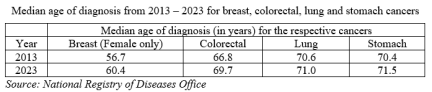
Mr Kenneth Tiong Boon Kiat asked the Coordinating Minister for Social Policies and Minister for Health (a) what is the trend in age-of-diagnosis for colorectal, breast, lung and stomach cancers among Singapore residents over the past 10 years; (b) whether the refresh by the Screening Test Review Committee 2026 explicitly reviewed these age-of-diagnosis trends; and (c) whether the Ministry will consider lowering subsidised screening age thresholds in light of rising incidence among Singaporeans below current threshold ages.
Mr Ong Ye Kung: Between 2013 to 2023, the median age at which individuals were diagnosed with breast, colorectal, lung and stomach cancer has increased for all four cancers.
The Screening Test Review Committee (STRC) in consultation with relevant clinical experts considers local epidemiological data, the available evidence for effectiveness of specific screening tests, and relevant international and local guidelines in developing its recommendations.
The Ministry of Health’s screening policies take reference from these recommendations.
Rationale For 12-Month Disqualification Cap Of Animals And Birds Act 1965 And Strengthening Disqualification Penalties For Serious Offences
Mr Kenneth Tiong Boon Kiat asked the Minister for National Development (a) what is the rationale for the 12-month disqualification cap under Section 43B of the Animals and Birds Act 1965 (ABA); (b) whether the Ministry will raise the maximum and introduce lifetime disqualification for the most serious cases; and (c) when the ongoing ABA review will be completed.
Mr Chee Hong Tat: The disqualification order regime under Section 43B of the Animals and Birds Act (ABA) was introduced via the 2014 amendments to ABA, following the Animal Welfare Legislation Review Committee (AWLRC)’s recommendations to strengthen animal welfare enforcement in 2013.
The National Parks Board (NParks) is undertaking a review of the ABA, including the disqualification order regime and penalties, to ensure that our regulatory framework remains effective in deterring animal cruelty. NParks has been engaging stakeholders as part of the review, and details of the public consultation on the draft amendments will be shared later this year.
Assoc Prof Jamus Jerome Lim
Consideration To Release Water Sales Statistics By Industry
Assoc Prof Jamus Jerome Lim asked the Minister for Sustainability and the Environment whether the Ministry will consider releasing water sales statistics by industry, instead of the current disaggregation only into domestic and non-domestic use.
Ms Grace Fu Hai Yien: We have no plans to release water sales statistics by industry.
Data On Prevalence Of Playground Use Among Children And Efforts To Encourage More Playground Use
Assoc Prof Jamus Jerome Lim asked the Minister for National Development whether the Ministry has plans to (i) collect data on the prevalence of playground use among children and (ii) encourage children to spend more time at playgrounds.
Mr Chee Hong Tat: The Housing and Development Board (HDB) and the National Parks Board (NParks) develop playgrounds based on the Play Values Framework and Design Guidelines for Nature Playgardens respectively to provide more engaging and diverse experiences at playgrounds within our housing estates and parks. Agencies also implement measures to enhance the thermal comfort of playground users, such as using materials suited for our tropical climate. Through these measures, HDB and NParks would like to encourage children to spend more time at playgrounds.
HDB tracks data on the usage of estate facilities including playgrounds in the five-yearly Sample Household Survey (SHS). SHS findings in 2018 and 2023/24 show that the satisfaction and overall usage levels of HDB playgrounds among households with young children (aged 12 and below) remain high.
Mr Abdul Muhaimin Abdul Malik
Review Of Current Regulations And Protection Measures For Children And Teenagers Against Social Media Addiction
Mr Abdul Muhaimin Abdul Malik asked the Minister for Digital Development and Information whether the Government will consider mandating daily usage time limits and restricted access hours on social media platforms for users under 14 years old, noting that China's Douyin currently imposes a 40-minute daily limit and restricts access to between 6am and 10pm for such users.
Mrs Josephine Teo: My response will cover the questions raised by Mr Vikram Nair, Mr Louis Chua, Miss Rachel Ong and Mr Abdul Muhaimin in today's Order Paper, as well as questions by Mr Chua, Ms Elysa Chen and Mr Victor Lye filed for subsequent sittings relating to the Government’s measures to enhance safeguards for children and adolescents when they go on social media platforms. If the MPs are satisfied with the response, they may wish to withdraw their questions after this session.
We share the concerns members have raised regarding online safety for children and youths on social media platforms. Today, the Code of Practice for Online Safety - Social Media Services already requires Designated Social Media Services to put in place systems and processes to minimise users’ exposure to harmful online content, especially younger users.
As the Ministry of Digital Development and Information (MDDI) announced during our Committee of Supply debate, we plan to extend age assurance requirements to Designated Social Media Services. Age assurance is a critical step in ensuring that Designated Social Media Services can identify young users and provide them with protective measures on their platforms. We will also consider similar safeguards for online gaming.
We are determined to go further to enhance safeguards for children on Designated Social Media Services. MDDI is carefully studying features on these services, such as direct messaging and autoplay, which can result in unwanted interactions with strangers or excessive use for children and adolescents.
To that end, MDDI is in active discussions with the Designated Social Media Services, to outline our expectations of the standards they must meet. We will also consult the public, including parents and youths, to better understand their experiences and perspectives across different age groups, to determine the safeguards that are necessary and appropriate. The outcome of these engagements will shape our policy response, which may include restricting access to services with age-inappropriate features.
Beyond regulatory measures, the Government has stepped up efforts to support parents in guiding their children’s digital use. For example, the Ministry of Education (MOE) has disallowed the use of smartphones and smartwatches during school hours, including during Co-Curricular Activities, in primary and secondary schools. The Ministry of Health updated its Guidance on Screen Use in Children aged below 12 years to provide parents with clearer and more actionable guidance on screen use practices in children. The Health Promotion Board, MOE and Ministry of Social and Family Development jointly developed the Parenting for Wellness toolkit to equip parents with key knowledge and skills to parent effectively in the digital age, and prepare their children to navigate the digital environment safely. The Infocomm Media Development Authority has also launched a set of resources on the Digital for Life portal to empower parents to help their child develop healthy digital habits from young, with content tailored to children’s different developmental stages and key digital milestones.
Through these regulatory and public education efforts, we will continue to foster a digital environment where our children can grow and thrive safely.
Partnering Private Sports Academies Run By Former National Athletes For Youth Sports And National Talent Development
Mr Abdul Muhaimin Abdul Malik asked the Acting Minister for Culture, Community and Youth (a) whether the Ministry has information on the number of private sports academies currently run by former national athletes; (b) whether SportSG has a framework for partnering with these academies to identify and develop young sporting talent for national representation; and (c) what support is available to retired national athletes who wish to contribute to youth sports development through their own academies.
Mr David Neo: We encourage former national athletes to contribute back to the sport ecosystem and groom the next generation of athletes. There are many ways to do so – from serving as coaches, sport administrators, sport scientists and doctors, to managing sports academies.
The Ministry of Culture, Community and Youth and SportSG do not track the number of private sport academies run by former national athletes. Private academies form part of the larger sporting ecosystem – including schools, grassroots, ActiveSG Academies and Clubs, National Sport Associations (NSAs) and private sport academies operated by individuals and businesses. Collectively, they contribute to increased community participation and talent pipeline and pathway towards our national teams.
SportSG works with NSAs, private academies and clubs to expand opportunities for children and youth in our communities to play and compete. For example, under the Associate Partner Scheme (APS), SportSG engages qualified private academies to conduct quality and affordable programmes at ActiveSG and the Ministry of Education schools’ Dual-Use Scheme (DUS) facilities.
For both active and retired athletes who are interested in setting up private academies and clubs, Sport Excellence Singapore (SpexSG) has programmes to support their ambitions. Athlete life management consultations help athletes better understand the support they need, and where to get them, to prepare themselves for post-sporting careers. The spexEntrepreneurship programme – a collaboration with ACE (Action Community for Entrepreneurship) – provides mentorship opportunities, access to essential resources and networking opportunities with entrepreneurial individuals and communities. Athletes can also tap on the spexBusiness Network’s partners to seek entrepreneurship advice and practical assistance to set up their businesses.
Mr Dennis Tan Lip Fong
Review Of Personal Data Protection Act 2012 To Address Use Of Inferred Or Derived Data Generated By AI
Mr Dennis Tan Lip Fong asked the Minister for Digital Development and Information (a) whether the Ministry intends to review the Personal Data Protection Act 2012 to address the use of inferred or derived data, including behavioural profiles generated by artificial intelligence systems; and (b) if so, what principles will guide such a review.
Mrs Josephine Teo: Under the Personal Data Protection Act, data about an identifiable individual is considered personal data, and an organisation has obligations to safeguard such data in its possession or control. This also covers data about the individual that an organisation derives in the course of business from such personal data.
The Personal Data Protection Commission has published Advisory Guidelines on the Use of Personal Data in AI Recommendation and Decision Systems. It sets out principles to guide organisations and consumers on the responsible collection and use of personal data in AI systems, such as using data only for legitimate business purposes, and limiting data collection to what is needed.
Conducting Spot Checks And Public Engagements At Active Mobility Device Hotspots To Encourage Safe Night Riding Practices
Mr Dennis Tan Lip Fong asked the Acting Minister for Transport (a) whether Active Mobility Enforcement Officers (AMEOs) conduct spot checks and public engagements at active mobility device hotspots to encourage safe riding practices at night, which practices include (i) wearing helmets and (ii) for electric bikes and bicycles to have front white lights and rear red lights for road-use; and (b) if not, whether LTA will consider requiring AMEOs to do so.
Mr Jeffrey Siow: Yes, they do.
Mr Chua Kheng Wee Louis
Disciplinary Framework Against Bullying In Schools
Mr Chua Kheng Wee Louis asked the Minister for Education (a) what specific criteria and processes govern how a student's special educational needs (SEN) or mental health condition is assessed and weighed when determining disciplinary measures, including the decision to impose caning for a student offender; and (b) what structured support and follow-up protocols are in place for victims of bullying or misconduct who have SEN or mental health vulnerabilities.
Mr Desmond Lee: My response will address the questions raised by members in relation to the Ministry of Education’s (MOE’s) Comprehensive Action Review against Bullying. My response will also cover related oral and written Parliamentary Questions set down for today’s and subsequent sittings.
MOE, with the support of the COMPASS Council, completed the Comprehensive Action Review against Bullying and announced the recommendations on 15 April. These span four key areas and nine measures, forming a comprehensive whole-of society approach.
Let me briefly outline the four areas:
First, we will strengthen values education. Prevention must start upstream. We will place greater emphasis on shaping students’ character and social-emotional skills, so they not only know what is right, but understand why it matters. Our schools will also foster a pro-social peer culture where students look out for one another, stand together against hurtful behaviour, and support those who are affected.
Second, we will strengthen the school environment. Every school must be a safe, caring, and enabling environment where every student can learn and grow, where bullying and hurtful behaviour have no place. We will deepen a culture of kindness and respect, and promote empathy and kindness. At the same time, we will take more proactive action – through early identification, better reporting channels, timely intervention, and firm discipline for serious cases.
Third, we will strengthen school capacity. We will provide schools with additional resources to procure additional manpower, where needed, to support our teachers in student management processes. We will also enhance professional development for our educators and tap on technology to improve case management and facilitate timely communication and intervention when incidents happen.
Finally, we will strengthen partnerships with parents, families and the community. Parents and families can reinforce positive values and character at home and partner schools to support their child’s development and well-being. We will also work with community partners to promote mutual kindness and respect across all sectors of society.
Members asked about the methodology and findings of the Review. MOE looked at research and drew on resources from local and international experts. These included mental health professionals, developmental and educational psychology researchers, sociology researchers, and professional mediators. As part of the review, we also engaged various stakeholders, including professionals such as researchers, counsellors and psychologists, as well as School Leaders, school staff, parents and students.
We engaged or received feedback from over 2,000 stakeholders in total. There was broad agreement that addressing bullying holistically requires a collective, sustained response involving schools, families and the wider community.
Members have asked questions relating to specific areas and recommendations of the Review. I will address these questions by focus areas. Let me start with values education.
A key goal of our education system is to develop character and social-emotional skills. As I shared in this House last September, the Character and Citizenship Education (CCE) curriculum already covers these areas, including respectful behaviour online and offline. CCE equips our students to disagree appropriately, cope with negative behaviour, and overcome challenges. Schools also have peer support systems, where students learn to support and stand up for one another.
Following the Review, we have strengthened CCE lessons with more interactive learning strategies and real-life scenarios. This better equips students to respond when they witness or experience bullying. We have also updated cyber wellness lessons to better address evolving online risks. These changes strengthen students’ character and well-being whilst creating a more caring and supportive school environment.
Many members have asked about our schools’ disciplinary measures arising from the Review. Our schools’ approach to bullying and other forms of student misconduct is fundamentally an educative process. Schools follow a structured process to ensure students’ safety and well-being while addressing root causes in a timely and consistent manner. This includes making a police report for cases which warrant police attention. Throughout this process, schools work closely with parents, keeping them informed, collaborating on safety measures, and prioritising the well-being of the students involved.
When incidents are reported, schools investigate before deciding on the appropriate disciplinary and restorative actions. Actions are tiered based on severity— from reflection and detention to suspension or caning for egregious or repeated serious offences. Disciplinary measures are always complemented with counselling and restorative actions, with the aim of helping students learn, change their behaviour, and repair their relationships.
Safety plans for affected students can include separating the students, removing hurtful online content and arranging for peer support. Where affected students require additional support to manage their emotions, they may be referred to School Counsellors, Special Educational Needs Officers, or to the REACH (Response, Early intervention and Assessment in Community mental Health) teams for more specialised support, particularly when persistent distress is identified.
We recognise the need for greater consistency in the management of bullying across schools. MOE has provided schools with clearer guidelines on establishing offence management processes and disciplinary measures. As circumstances differ for each case, schools will assess and take appropriate action aligned to these guidelines. All schools will also develop an anti-bullying policy by the end of 2026, based on MOE’s guidelines.
To ensure case management processes remain calibrated across all schools, MOE will conduct regular focus group discussions, school engagements and reviews. Cluster Superintendents, who oversee a group of schools, will provide further guidance and support to schools on the implementation of these processes.
Another important aspect pointed out by Members is parent engagement. When a case is reported to the school, the school will maintain timely communication with parents, keeping them informed and partnering them to ensure the safety and well being of their child. However, schools will require time to look into the incident andestablish facts. The time taken will vary based on the complexity of the situation. Nonetheless, when an incident is reported, schools will prioritise immediate safety measures for all students involved.
In some cases, students may not report incidents to the school but may share them with their family or friends instead. In such situations, we encourage parents to report the incident to the school and work with the school to support their child. Should parents have concerns about how an incident is managed, they should share their concerns with the school to better understand the school’s approach, and work with the school to resolve those concerns. Beyond that, parents can also provide feedback through MOE’s online and offline feedback channels.
Some Members asked about caning as a disciplinary measure. Studies show that poorly administered and frequent corporal punishment, particularly in unregulated home settings, is associated with negative outcomes.
We recognise this, and I want to emphasise that the context in our schools is quite different. Our schools use caning as a disciplinary measure, if all the other measures are inadequate given the gravity of the misconduct. They follow strict protocols to ensure safety for the student. For instance, caning must be approved by the Principal, and administered only by authorised teachers.
Schools will consider factors such as the maturity of the student, and if caning will help the student learn from his mistake. In MOE’s framework, schools exercise discretion on whether to use caning as a disciplinary consequence after assessing the circumstances of the offence committed. If it is used, it is never administered in isolation but always as part of a suite of restorative and disciplinary measures. Schools will monitor the student's well-being and progress after caning and counsel the student to reflect and learn, while supporting the student's rehabilitation.
Importantly, this approach is part of a framework of disciplinary measures which provides certainty of consequences, even as we support the student perpetrator to learn from the experience. This approach is based on research which shows that children and youth learn to make better choices when there are clear boundaries enforced by firm, meaningful consequences. This has a positive impact on reducing bullying and enables the school community to feel safe to learn in an orderly environment.
Caning is meted out for boys only, and as I said earlier, is only for egregious violations. This is aligned to the Education (Schools) Regulations, which only allows caning for male students. This takes reference from the Criminal Procedure Code which states that women shall not be punished with caning. Nonetheless, this does not mean that girls who bully others are less culpable. Our schools adopt a tiered approach to discipline that ensures all students face consequences corresponding to the severity of their actions. Girls could receive consequences such as detention and/or suspension, adjustment of their conduct grade, and other school-based consequences.
MOE regularly reviews our discipline guidelines, to ensure that our disciplinary measures remain appropriate. We will continue to refine our approach based on ground wisdom and research.
I will now address the questions on reporting channels. I shared in this House last September about the various reporting channels available in our schools. The Review reinforced the importance of providing safe and accessible platforms for reporting student well-being concerns.
From 2027, each school will have an online reporting platform available for students and parents. A school-based platform ensures that the platform is age appropriate, accessible and familiar for students and parents to use. Schools will be provided with guidelines on managing reports received through the different reporting channels. However, urgent cases should still be reported directly to teachers and School Leaders rather than through the online reporting platform, so that prompt action will be taken.
Some Members have expressed concern on cyber incidents. MOE recognises the seriousness of cyber incidents, ranging from online harassment to obscene and inappropriate images that may be AI-generated. MOE will continue to provide schools with guidance on managing all cyber-related incidents, including fact-finding processes and supporting students in reporting online harms.
When the Online Safety Commission (OSC) becomes operational by end-June 2026, victims of certain online harms, such as online harassment, doxxing and intimate image abuse, will be able to seek timely assistance. Schools will support the wellbeing of students who encounter negative cyber incidents and guide them to report to the OSC.
Questions were also raised by Members about incidents involving students with special educational needs (SEN) or mental health conditions. While schools uphold disciplinary standards, schools also take into consideration each student’s specific needs and circumstances.
For students with SEN or mental health conditions who have been hurt, schools will first address the immediate safety concerns. Trained school personnel will also look out for signs of distress that may not be immediately visible or explicitly communicated, and provide timely and appropriate support. The broader intent is always to enable affected students to regain their confidence and restore their sense of safety and belonging.
For students with SEN or mental health conditions who have hurt others, it is especially important to help them understand that such hurtful behaviour may affect others negatively. The consequences are educative, restorative, and focused on helping the student learn and behave appropriately.
Members have raised concerns about the impact of these recommendations on staff workload.
Our intent is to go upstream – to reduce the incidence of bullying and hurtful behaviours, while strengthening and streamlining current practices. In the near term, workload may increase as our schools implement the changes. MOE will therefore provide funding for schools, on a needs-basis, to hire additional manpower to provide support while managing teacher workload. This manpower could include youth workers, pastoral care officers, or parent liaison officers. MOE will also bolster support for our school counsellors when managing complex cases. Over time, as process and norms become clearer, workload should stabilise. And if the measures succeed in reducing bullying upstream, the overall burden on our school staff should ease.
To streamline case management, MOE is also exploring technological solutions to help reduce the administrative load. For a start, MOE is developing an offence management system to support case investigation, documentation and monitoring.
We received suggestions for MOE to set up a centralised anti-bullying unit to support schools in managing egregious cases. We considered this carefully. Our schools are best placed to manage such cases. Our teachers know their students well and understand the dynamics of their school communities. Where additional expertise and support is needed in specific areas or to deal with complex cases, schools can tap on the needs-based funding to hire additional manpower or seek support and advice from their respective Cluster Superintendents.
On community partners, MOE recognises that the cultivation of values such as kindness, empathy and respect in our children requires efforts beyond the school environment. We are grateful for community partners who share this commitment. For example, the Singapore Kindness Movement partners schools through programmes, such as Friends of Singa, Kindsville initiatives, and Kindness Day SG, which encourage students to lead kindness initiatives.
The Centre for Fathering works with fathers to strengthen family bonds so that children feel secure turning to their parents when they face difficulties. We encourage community partners to share their expertise and initiatives as part of this society-wide effort against bullying.
Members have also asked about data, outcome indicators and measures of effectiveness. First, we will keep track of the implementation of these recommendations through regular engagements with educators and parents, as well as focus group discussions. Second, we will continue to watch student management outcomes. In terms of data on bullying incidence, as a baseline, bullying incidents in the last five years averaged three incidents per 1,000 primary school students and eight per 1,000 secondary school students per year. We will study these outcomes and review if more needs to be done.
I thank Members for their interest in this issue. While schools play a central role in creating a safe, caring and enabling environment for our students, addressing hurtful behaviours and bullying takes a whole of society effort. MOE will work with our schools, families and the wider community to create environments where every child feels safe, valued and supported to reach their full potential.
Uptake Of CPF Investment Scheme And Proportion Of Members Outperforming The OA Interest Rate In Past 10 Years
Mr Chua Kheng Wee Louis asked the Minister for Manpower in each year over the last 10 years (a) what is the number and proportion of CPF members who have invested under the CPF Investment Scheme and (b) of those who have invested their CPF-OA savings, the number and proportion of members who have outperformed the 2.5% interest rate (i) each year and (ii) cumulatively across 10 years.
Dr Tan See Leng : The Central Provident Fund (CPF) Board (CPFB) regularly publishes data on the CPF Investment Scheme (CPFIS) participation and CPFIS Ordinary Account performance. The data requested by the member can be found on CPFB’s website.1
Note(s) to Question No(s) 58:
1 https://www.cpf.gov.sg/member/infohub/reports-and-statistics/cpf-statistics/investment-statistics
Ms Sylvia Lim
Community Orders And Sentences Under Part 17 Of Criminal Procedure Code In 2024 And 2025 And Top Five Offence Types
Ms Sylvia Lim asked the Minister for Law for the years 2024 and 2025 respectively (a) in how many criminal cases handled by the State Courts were community orders or community sentences under Part 17 of the Criminal Procedure Code made; and (b) what were the top five offence types for which such orders or sentences were made.
Mr Edwin Tong Chun Fai: In 2024, community sentences under Part 17 of the Criminal Procedure Code 2010 (CPC) were imposed in 86 criminal cases handled by the State Courts. The top five offences for which such sentences were imposed were: (a) theft; (b) hurt offences; (c) Road Traffic Act 1961 offences such as driving without licence; (d) driving without insurance offences under the Motor Vehicles (Third-Party Risks and Compensation) Act 1960; and (e) criminal trespass.
In 2025, community sentences under Part 17 of the CPC were imposed in 112 criminal cases handled by the State Courts. The top five offences for which such sentences were imposed were: (a) theft; (b) Road Traffic Act offences such as driving without licence; (c) hurt offences; (d) driving without insurance offences under the Motor Vehicles (Third-Party Risks and Compensation) Act; and (e) voyeurism and sexual exposure offences under sections 377BB to 377BF of the Penal Code 1871.
Ms He Ting Ru
Ensuring Affordable Public EV Charging At HDB Carparks Through Energy Cost Monitoring And Safeguards
Ms He Ting Ru asked the Acting Minister for Transport in relation to EV chargers installed at HDB carparks (a) whether the Ministry monitors pass-through energy costs to public charging tariffs; and (b) what safeguards exist beyond competition and initial tender evaluation to keep HDB charging affordable.
Mr Jeffrey Siow: While the Government does not intervene in pricing set by EV Charging Operators (EVCOs), we ensure users have multiple options from a range of EVCOs, where feasible. For instance, TD116, the first large-scale tender for the supply of EV chargers in the Housing and Development Board (HDB) carparks, selects two EVCOs to deploy and operate EV chargers in HDB carparks in each region. After the award of tenders, we expect EVCOs to be transparent in publishing prices as a means of keeping charging competitive.
Data On HDB Carparks Without EV Chargers And Access To Alternative Chargers
Ms He Ting Ru asked the Acting Minister for Transport (a) how many HDB carparks remain without EV chargers as at end Q1 2026; (b) whether LTA has assessed if residents in these carparks have convenient access to alternative nearby chargers; and (c) what milestone and parliamentary update mechanism governs completion.
Mr Jeffrey Siow: As of March 2026, 139 Housing and Development Board (HDB) carparks (7% of the total) lack EV chargers due to technical constraints like insufficient power or community requests to delay installation. EV owners who use these carparks can transfer their season parking to nearby HDB carparks with EV chargers at the same season parking rate.
We have deployed around 30,500 charging points, and are on track to meet our target of 60,000 charging points by 2030. The public can track the rollout of EV chargers online through the Land Transport Authority’s DataMall, which is updated every month.

