


Written Answers to WP's Oral Questions
Multiple
Coffee Shops, Hawker Centres And Food Courts Participating In Return Right F&B Scheme
Mr Chua Kheng Wee Louis asked the Minister for Sustainability and the Environment (a) what criteria does the NEA apply in granting exemptions from the Beverage Container Return Scheme (BCRS) deposit, such as for the Singapore Grand Prix; and (b) whether (i) eligibility for exemption from the BCRS or (ii) inclusion into the Return Right F&B Scheme for dine-in outlets will be extended to select locations such as airport transit areas.
Mr Dennis Tan Lip Fong asked the Minister for Sustainability and the Environment (a) how many coffeeshops, hawker centres and food courts currently participate in the Return Right F&B Scheme; (b) whether the Ministry has assessed the effectiveness of operator-led collection and return arrangements in increasing beverage container return rates and reducing inconvenience to diners; and (c) if so, whether it will consider requiring larger food and beverage premises to participate in such arrangements.
Ms Grace Fu Hai Yien: This response addresses Question Nos 19 and 20 on today’s Order Paper.
The Return Right F&B Scheme (RRFS) is open to all F&B operators that hold a valid licence from the Singapore Food Agency, have dine-in arrangements, and sell beverages regulated under the Beverage Container Return Scheme (BCRS). Under the RRFS, participating F&B outlets bear the cost of the deposits on BCRS-regulated beverages sold and consumed at their premises, and retain the empty beverage containers without charging customers the deposit.
Close to 3,000 F&B outlets are participating in the RRFS. These include food courts and restaurants located in airport transit areas. Coffeeshops and hawker stalls currently form a small minority of the participating outlets.
For the 2026 Formula 1 Singapore Airlines Singapore Grand Prix, the event organiser and its permitted F&B operators were treated the same as the RRFS outlets with the exemption from having to collect the deposit from consumers. They were required to pay the 10-cent deposit to their beverage suppliers. Similar to the arrangements at RRFS outlets, the event organiser also put in place a system for patrons to return their beverage containers for recycling.
As the scheme has just been fully implemented on 1 October 2026, it is still too early to gauge the overall effectiveness of operator-led collection and return arrangements. NEA will consider applying the RRFS to other large-scale events if they are able to comply with the conditions.
COE Affordability And Re-Categorisation Considerations In Review
Mr Kenneth Tiong Boon Kiat asked the Minister for Transport (a) whether the Government will review COE affordability before setting the next vehicle growth rate, as COE prices are not a subject of LTA's review; (b) what is the current ratio of COE prices to median monthly household income, on the basis that it was 11-to-one in 2013 and nine-to-one in 2023; and (c) whether this ratio will be published yearly.
Assoc Prof Jamus Jerome Lim asked the Minister for Transport regarding the proposed COE categorisation changes involving rebates and surcharges based on vehicles' open-market values (OMV) (a) whether the Ministry has studied the expected revenue differences between the three-band and five-band systems; and (b) whether the rebate and surcharge amounts will be adjusted over time as the median OMVs evolve.
Assoc Prof Jamus Jerome Lim asked the Minister for Transport regarding the proposed COE categorisation changes based on open-market value (OMV) and possible removal of Category E (a) which COE category will supply quotas for taxis; (b) whether taxis will continue paying the Category A prevailing quota premium and be subject to the proposed rebates or surcharges; and (c) whether similar arrangements have been considered for private-hire vehicles.
Mr Jeffrey Siow: These questions have been addressed at the 3 November 2026 Parliamentary Sitting.
Mr Kenneth Tiong Boon Kiat
Data On National Servicemen In SAF, SPF And SCDF Who Died While In Service
Mr Kenneth Tiong Boon Kiat asked the Coordinating Minister for Public Services and Minister for Defence (a) how many national servicemen in the SAF, SPF and SCDF died while in service, of any cause, in each year since 2003; (b) how many of these deaths were not "due to service", unlike the figure of 42 given to the House in January 2023, and how many were suicides; and (c) whether the Government will publish these figures yearly.
Mr Chan Chun Sing: Mr Fadli Fawzi filed a related question on national servicemen deaths, and the Ministry has responded to the queries of both members in the written response. The Member may refer to the reply circulated on 3 November 2026.
Training Limits And Haze Protocols For National Servicemen
Mr Kenneth Tiong Boon Kiat asked the Coordinating Minister for Public Services and Minister for Defence at a 24-hour PSI of 101 to 200 (a) what training limits apply for servicemen, given that runs and marches were limited to five kilometres and eight kilometres respectively in 1997; (b) whether servicemen with pre-existing lung or heart conditions will be exempted from all outdoor physical activities; and (c) whether SAF haze guidelines, including for IPPT and ICT, will be published.
Mr Chan Chun Sing: The health and well-being of all our servicemen and women are of utmost importance to the Singapore Armed Forces (SAF). We ensure this even while we continue training and conducting operations to ensure Singapore’s defence and security.
With due regard for health and safety, the SAF continues all our operations regardless of the haze conditions as these are critical to the defence of Singapore. Servicemen are issued with protective equipment, such as N95 masks, in order to conduct their duties.
For training, we take into account national guidelines and medical advice to ensure that training continues to be conducted. In ‘Unhealthy’ or ‘Very Unhealthy’ conditions, we moderate prolonged or strenuous outdoor training by adjusting intensity and duration of activities. Should haze conditions reach hazardous levels, the SAF will cancel all non-essential outdoor activities.
We ensure that the activities our servicemen undertake, whether training or operations, are appropriate to their medical conditions.
Mr Dennis Tan Lip Fong
Singapore's Stance On Inclusion Of Net Zero Emissions Scenario At 9th ASEAN Energy Outlook
Mr Dennis Tan Lip Fong asked the Minister for Energy, Trade and Industry (Energy and Industry) (a) whether Singapore supported the inclusion of a carbon neutrality or net-zero emissions scenario in the 9th ASEAN Energy Outlook; (b) what position Singapore took regarding the omission of such a scenario from the final report; and (c) whether Singapore will support its inclusion in future editions.
Dr Tan See Leng: The ASEAN Energy Outlook (AEO) is a report developed by the ASEAN Centre for Energy to support regional energy modelling and planning. The scenarios presented in the report are developed for analytical purposes and should not be taken as reflecting policy positions or commitments of individual ASEAN Member States.
Singapore remains committed to achieving net-zero emissions by 2050, contingent on the maturity of decarbonisation technologies and effective international cooperation. We will continue to work closely with our ASEAN partners to advance regional decarbonisation efforts, including through relevant ASEAN initiatives and cooperation platforms.
Common Point Of Failure For Healthcare Clusters' 13 October 2026 It Systems Disruption
Mr Dennis Tan Lip Fong asked the Coordinating Minister for Social Policies and Minister for Health (a) whether the Ministry has identified any common point of failure that contributed to the 13 October 2026 IT systems disruption affecting all three public healthcare clusters; and (b) what enhancements to the redundancy, resilience and business continuity of shared healthcare IT systems will be implemented to reduce the risk of future system-wide disruptions.
Mr Ong Ye Kung: This question has been addressed in Oral Questions 41 to 44 at the 3 November 2026 sitting.
Ms He Ting Ru
Ensuring Training And Curriculum Rigour Given Accelerated Clinical Psychology Pathway
Ms He Ting Ru asked the Coordinating Minister for Social Policies and Minister for Health on the new accelerated clinical psychology pathway (a) how does the Ministry ensure training rigour and quality, including through registration under upcoming legislation; (b) what competency standards must graduates meet before practising independently with complex mental health conditions; (c) how are supervised clinical placements monitored; and (d) how is the curriculum updated to keep pace with advancements in clinical practice and mental health treatment.
Mr Ong Ye Kung: There is no change to the curriculum and rigour of the training for clinical psychology under the new accelerated pathway. What has changed is that psychology undergraduates who are clear that they want to pursue clinical psychology, instead of other areas such as marketing or human resources, can now take a more efficient pathway. Time is saved because the students would not be required to work for a number of years to gain exposure before deciding their professional path and enrolling in the Master of Psychology (Clinical). They can also directly enter the two-year Master’s programme after completing three years of undergraduate psychology studies, instead of the usual four years. This is achieved by replacing elective modules during undergraduate studies that are not central to clinical psychology, with more profession-relevant modules and a clinical internship.
Clinical psychologists will be regulated under the Allied Health Professions Act, with requirements to be announced in early 2027. All new graduates, including those from the accelerated training pathway, must undergo supervised practice and be assessed to meet the competency standards before they can qualify for full registration and are allowed to practise independently. These standards are developed by a panel convened by the Ministry of Health, comprising psychology experts from the Singapore Psychological Society, public and private sectors and academia. The Ministry also works closely with the healthcare institutions and Institutes of Higher Learning to ensure that their training programmes are aligned with evolving care models and the related competencies that students need to attain.
Review Of Tripartite Guidelines On Wrongful Dismissal
Ms He Ting Ru asked the Acting Minister for Manpower (a) how are the Ministry and the Tripartite Alliance for Dispute Management applying Tripartite Guidelines to no-reason terminations in light of recent Employment Claims Tribunal decisions; (b) whether the Ministry and the tripartite partners are reviewing the Guidelines or the Employment Act’s wrongful dismissal provisions; and (c) what guidance the Ministry will give employers and employees on giving reasons for dismissal in the meantime.
Ms Jasmin Lau: The Employment Claims Tribunals case on wrongful dismissal which the Member referred to is currently on appeal before the High Court. As such, it would not be appropriate for the Ministry of Manpower to comment on the matter at this juncture.
In the meantime, employers should adhere to all relevant employment laws, tripartite guidelines, advisories and standards as well as maintain good HR practices, including ensuring fair processes and proper documentation for their employment decisions.
Mr Abdul Muhaimin Abdul Malik
Investigation Into Disclosure Of Nric Numbers Of 600 SG Youth Forum Participants
Mr Abdul Muhaimin Abdul Malik asked the Minister for Culture, Community and Youth in respect of the disclosure of about 600 SG Youth Forum participants’ NRIC numbers to a private e-mail address on 25 August 2026 (a) whether the recipient is a known individual or entity; (b) what further steps have been taken to contact the recipient since earlier attempts were unsuccessful; and (c) whether the matter has been referred to the Police.
Mr David Neo: A National Youth Council (NYC) staff made an error in typing an email address, resulting in the data being sent to an incorrect email. There is no response despite repeated attempts by NYC to the email to contact and request to delete the information. It is therefore not known if the email is in use, or if it belongs to an individual or entity. As the incident resulted from human error and there was no indication of data misuse, NYC did not make a police report.
On 3 September 2026, NYC emailed all affected participants to notify them of the incident, apologise for the error, and offer to follow up with them on the incident. NYC has counselled the staff involved and strengthened data handling processes.
ACRA's Measures Against Overseas Subcontracting To Circumvent Corporate Service Provider Registration Under Act
Mr Abdul Muhaimin Abdul Malik asked the Prime Minister and Minister for Finance since the Corporate Service Providers Act 2024 came into force (a) whether the Accounting and Corporate Regulatory Authority (ACRA) has identified any Singapore entities that contract with clients for corporate services but subcontract all substantive work to overseas entities without registering as corporate service providers; and (b) what steps ACRA is taking to ensure that such arrangements are not used to circumvent the registration requirements under the Act.
Ms Indranee Rajah: Section 7 of the Corporate Service Providers Act 2024 (“CSP Act”) requires entities which carry on a business in Singapore of providing any corporate service to register with the Accounting and Corporate Regulatory Authority (“ACRA”) as Corporate Service Providers (“CSPs”). This requirement applies regardless of whether the entities perform the services themselves or subcontract work to overseas entities.
Only CSPs registered with ACRA can lodge transactions through Bizfile. Since the CSP Act came into force on 9 June 2025, ACRA has not identified any cases of Singapore entities which did not register as CSPs, but provided corporate services and subcontracted all substantive work to overseas entities.
ACRA adopts a risk-based approach to supervising the CSP sector, including conducting compliance reviews and inspections. ACRA will investigate and take appropriate enforcement action against entities which do not comply with the Corporate Services Providers Act.
Cross-Agency Analytic Tools To Flag Infants Brought To Hospitals With Repeated Unexplained Injuries
Mr Abdul Muhaimin Abdul Malik asked the Minister for Social and Family Development in relation to the infant who died in September 2024 after prolonged parental abuse (a) whether the infant was assessed for or enrolled in KK Women's and Children's Hospital's Anchor programme; (b) if not, why earlier hospital presentations did not trigger a referral to Anchor or the Protective Service despite existing coordination; and (c) whether cross-agency analytic tools will flag infants with repeated unexplained injuries.
Mr Masagos Zulkifli B M M: The passing of Trevor Neo is a tragic incident. KK Women’s and Children’s Hospital’s (KKH) Anchor Programme supports children aged three and below with suspected abuse or neglect concerns who are assessed to have moderate to high needs. Referrals may be made by KKH, the Ministry of Social and Family Development (MSF) Protective Service or Child Protection Specialist Centres. Under the programme, a multi-disciplinary team of paediatricians, psychiatrists, psychologists, medical social workers and home visitors supports the child and family mainly through regular home visits. This support includes developmental and health screenings, guidance to strengthen parenting and the parent child relationship, caregiver mental health screening and support, and coordination of care with other agencies.
When Trevor was first presented to KKH, the clinicians performed a detailed physical examination, a brain scan, eye examination and whole-body X-rays. There were no signs of any bruises, fractures, nor abnormal findings from the physical examination and imaging tests. KKH also interviewed the parents, who gave explanations on Trevor’s conditions.
The physical findings, together with the parents’ accounts, did not indicate any concern that the child had been a victim of abuse, but suggested that the parents might face common challenges coping with a young child. The hospital therefore did not refer the case to the Anchor Programme, and instead facilitated care arrangements and made referrals to parenting and child development support following Trevor’s discharge.
It is not always easy to detect abuse. Although doctors are trained to look for clues suggesting child abuse had taken place, they are not always evident, particularly if parents and caregivers avoid providing any information to the hospital staff to raise their suspicions. While in hindsight, we wish we had somehow detected the case, KKH could only act based on the information available to them at the time. We must continue to learn from serious cases and try to make detection sharper and more accurate. Cross-agency analytic tools may provide us with a more holistic view of the families that may be at risk. MSF is looking into incorporating relevant information from healthcare agencies into Sensemaking Alerts for Frontline Engagement and Response (SAFER) to provide a fuller picture of families who may be at risk. However, we recognise that patient and medical information are highly sensitive. Any inclusion of such information would need to be proportionate and subject to appropriate data governance safeguards. The presence of a healthcare encounter or other link identified by SAFER may not, upon assessment, indicate that further action is required.
Mr Chua Kheng Wee Louis
Patients At Public Healthcare Institutions Prescribed GLP-1 Medicines For Weight Management
Mr Chua Kheng Wee Louis asked the Coordinating Minister for Social Policies and Minister for Health (a) how many patients at public healthcare institutions were prescribed GLP-1 medicines for weight management in each of the past three years; (b) whether the Agency for Care Effectiveness will evaluate these medicines for subsidy; and (c) whether obesity will be included under the Chronic Disease Management Programme given the World Health Organization’s recognition of obesity as a chronic disease.
Mr Ong Ye Kung: Public Healthcare Institutions (PHIs) have been prescribing Glucagon-like Peptide-1 (GLP-1) receptor agonists medication approved for weight management to about 1,000 patients every year. These GLP-1s have been prescribed for weight management as well as other approved conditions, such as Type 2 Diabetes Mellitus.
As pharmaceutical companies prices drugs differently across geographies and countries, the Agency for Care Effectiveness is currently reviewing the cost effectiveness of GLP-1 medicines indicated for weight management. The findings will help determine any subsidy decisions when ready.
If GLP-1 medicines are deemed cost-effective and eligible for subsidies, the Ministry of Health would then further consider if its use can be expanded to more conditions under the Chronic Disease Management Programme (CDMP), taking into account factors such as disease burden, potential benefits of early interventions to patient outcomes, and cumulative cost to patients from long-term treatment.
Singapore’s Position And Plans On Oecd Mcaa On Automatic Exchange Of Readily Available Information On Immovable Property
Mr Chua Kheng Wee Louis asked the Prime Minister and Minister for Finance (a) what is the Government's position on the OECD Multilateral Competent Authority Agreement on Automatic Exchange of Readily Available Information on Immovable Property; (b) whether Singapore intends to implement it; (c) if so, by when; and (d) if not, why.
Mr Jeffrey Siow: The OECD Multilateral Competent Authority Agreement on Automatic Exchange of Readily Available Information on Immovable Property is not an agreed international standard. Singapore has no plans to implement this framework at present as our existing arrangements already provide sufficient avenues for information exchange with other jurisdictions.
Mr Gerald Giam Yean Song
Monitoring Promotions And Leadership Succession For Singaporeans And Work Pass Holders In Foreign Firms
Mr Gerald Giam Yean Song asked the Acting Minister for Manpower (a) how does the Ministry monitor internal promotion rates and leadership succession for Singaporeans vis-à-vis work pass holders in foreign firms; and (b) what post-hire metrics does the Ministry use to assess whether these firms prioritise and provide pathways for career advancement for Singaporeans and groom local successors for mid-to-senior roles before renewing foreigners’ work passes.
Ms Jasmin Lau: While the Ministry of Manpower (MOM) does not collect company-level promotion rates or leadership succession plans, we have a range of measures to ensure that Singaporeans have fair access to career advancement opportunities and that foreign firms are held accountable for their employment practices.
All employers, including foreign firms, are required to practise fair and merit based employment under the Tripartite Guidelines on Fair Employment Practices and the upcoming Workplace Fairness Act. This extends beyond hiring to performance assessments, training, and promotion opportunities. Where MOM and TAFEP observe indications of discriminatory practices, employers will be scrutinised and required to make improvements. Employers that breach fair employment requirements may have their work pass privileges curtailed, including at the point of renewal.
At the point of work pass renewal, MOM takes into account the employer's overall local workforce profile. The Complementarity Assessment Framework, which assesses the local PMET share in a company relative to its sector, applies at both the initial application and renewal stages. This means that companies which do not make meaningful efforts to develop and retain Singaporeans in PMET roles over time will find it progressively harder to renew work passes for their foreign hires. We also regularly update Employment Pass and S Pass qualifying salaries, benchmarked to local wages, to ensure that foreign workers do not undercut locals on the basis of cost.
We also support Singaporeans in building the capabilities and networks needed to access leadership roles. This includes overseas exposure through the Overseas Markets Immersion Programme and cross-sector leadership development through the Singapore Leaders Network.
Promotions and succession planning are business and people decisions that are specific to each company’s business needs and circumstances. Companies have an interest to make good and fair decisions in order to remain talent-competitive and to build a strong leadership pipeline.
Mr Pritam Singh
Impact Of Narrow Ranges In PSLE's Upper Achievement Level Bands On Education And Tuition Arms Race
Mr Pritam Singh asked the Minister for Education in relation to the ongoing review of education policy and efforts to curb an education “arms race”, what is the Ministry’s assessment of (i) the impact of the PSLE scoring system, where upper Achievement Level bands have comparatively narrow ranges and (ii) whether these narrow bands encourage excessive competition and tuition-seeking among students and parents.
Mr Desmond Lee: Compared to the previous T-score system, the PSLE Achievement Level (AL) scoring system has reduced fine differentiation of students and recognises students’ individual performance, rather than their performance relative to their peers. This is part of the Ministry of Education's (MOE’s) ongoing efforts to reduce the overemphasis on academic achievement and strengthen students’ holistic development.
Nonetheless, excessive competition persists among some students and parents. As highlighted through the Education Conversations and the 2026 Institute of Policy Studies Survey on Singapore’s Education System, this is driven by a complex set of factors beyond the PSLE scoring system, including parents’ aspirations for their children, and concerns about their future opportunities.
Through the Education Conversations, we have also received various suggestions on how to moderate excessive competition, including adjusting the AL scoring bands. While such adjustments could help in some way, they cannot address the broader drivers of competition on their own. MOE will study these suggestions carefully as part of our ongoing review.
Assoc Prof Jamus Jerome Lim
Proposal To Consider Allowing Unmarried Siblings Aged 35 And Above To Form Family Nucleus To Jointly Apply For Three-Room Or Larger BTO Flats
Assoc Prof Jamus Jerome Lim asked the Minister for National Development whether HDB will consider reviewing its eligibility criteria to allow unmarried siblings aged 35 and above to form a family nucleus when jointly applying for three room or larger BTO flats, instead of being limited to two-room Flexi flats.
Mr Chee Hong Tat: As shared at the Ministry of National Development's (MND’s) Committee of Supply debate 2026, and more recently on gov.sg’s ‘Let’s Table It’ podcast in September, MND is reviewing our schemes to better meet the needs of singles who may wish to buy a bigger flat with their family members.
Mr Fadli Fawzi
Leadership In Preventing Recurrence Of Haze Episodes And Assistance To Hawkers' Whose Incomes Were Affected By 2026 Haze Situation
Mr Fadli Fawzi asked the Minister for Sustainability and the Environment whether any support will be provided to hawkers who have suffered a reduction in footfall at hawker centres during the October 2026 haze episode.
Ms Grace Fu Hai Yien: Question No. 80 (PQ*3415) has been addressed in the Ministry of Sustainability and the Environment's (MSE’s) oral answer to Question No 53 on 3 November 2026.
Question No. 81 (PQ*3356) has been addressed in MSE’s oral answer to Question Nos. 45 to 48 on 3 November 2026.
Liability Of Company Running Johor Bahru-Singapore RTS Link For Compensation Due To Delay In Commencement Of Operations
Mr Fadli Fawzi asked the Minister for Transport (a) whether the company appointed to run the cross-border rail line will be liable for any compensation for the delay in the commencement of operations for the Johor Bahru-Singapore Rapid Transit System (RTS) Link; and (b) what steps will the Government take, independently or in conjunction with the Malaysian authorities, to prevent further delays in the commencement of passenger service.
Mr Jeffrey Siow: All parties involved in the Johor Bahru-Singapore Rapid Transit System (RTS) Link project are now focused on working towards the safe commencement of passenger service as soon as possible. Beyond that, the obligations and rights of the parties are set out in various agreements, and will be resolved accordingly.
RTS Operations Pte Ltd (RTSO), the operating company for the RTS Link, is carrying out its testing and commissioning activities. It will then obtain safety certification from an independent safety assessor and the required licences from the regulatory authorities of each country. Both Governments will monitor RTSO’s progress and provide support to facilitate the smooth and safe delivery of the project.
Ms Eileen Chong Pei Shan
Cases Of Wage Or Leave Deductions After Outdoor Work Was Suspended Due To Recent Haze Episode
Ms Eileen Chong Pei Shan asked the Acting Minister for Manpower since September 2026 (a) how many employees reported wage or leave deductions after their employers suspended outdoor work due to haze; (b) whether and how will the Ministry's haze worksite inspections check payroll and leave records for such deductions; and (c) whether and how it will enforce the tripartite advisory against such deductions for short-term suspensions.
Ms Jasmin Lau: The Ministry of Manpower (MOM) does not track whether complaints received on wage deductions or leave are attributable to haze-related work stoppages. Where there are disputes over the deduction of employees’ wages or leave due to haze-related work stoppages, employees are encouraged to first raise the matter with their employer and may contact MOM for further assistance if needed.
Should an employer deviate from an advisory without good reason, MOM will verify the facts with the employer and advise the employer to follow the advisory. MOM will continue to work with our tripartite partners to review and strengthen the tripartite advisory as necessary.
Written Questions
Ms He Ting Ru
Retaining Age Of Majority At 21 Compared To Asean Member States And Plans To Conduct Age Review
Ms He Ting Ru asked the Prime Minister and Minister for Finance (a) what are the reasons for maintaining the age of majority at 21 years old, given that most other ASEAN member states set it at 18 years old; (b) whether the Government has reviewed the age of majority in recent years; and (c) if so, what were the findings and what considerations weighed against lowering it.
Mr Chan Chun Sing (for the Prime Minister): The reasons for maintaining the age of majority at 21 years old were provided in my reply to a Parliamentary Question from Dr Lim Wee Kiak in August 2019. The reasons remain valid. We currently have no plans to review the age criterion.
Surrender Process Of HDB's Community Care Apartments, Subsequent Reallocation Timeline And Informed Decision Support For Eligible Senior Buyers And Their Families
Ms He Ting Ru asked the Minister for National Development (a) what happens to a Community Care Apartment (CCA) once it is surrendered to the Housing and Development Board (HDB); (b) whether and how quickly is a CCA reallocated to eligible seniors; and (c) what information will HDB make available to enable seniors and their families to make informed decisions about whether to purchase a surrendered CCA unit.
Mr Chee Hong Tat: Community Care Apartment (CCA) units that are returned to the Housing and Development Board (HDB) will be spruced up as necessary, and offered for sale in a future Sale of Balance Flats (SBF) exercise.
For CCA units offered through SBF exercises, the completion status of the offered units will be clearly indicated. For units that were previously occupied, HDB will provide photographs of their internal condition to facilitate decision-making by potential buyers.
Mr Kenneth Tiong Boon Kiat
Data On Undischarged Bankrupts Listed As Directors Of Live Companies And Official Assignee Notification To ACRA
Mr Kenneth Tiong Boon Kiat asked the Prime Minister and Minister for Finance (a) how many of the 11,642 undischarged bankrupts as at end-August 2026 are listed as directors of live companies; (b) how many of them have obtained permission under section 148 of the Companies Act 1967 to act as a director; and (c) whether the Official Assignee will notify ACRA of each bankruptcy order, as how ICA provides its records to ACRA.
Ms Indranee Rajah: When a person is made a bankrupt, he is disqualified from acting as a director under section 148 of the Companies Act. However, under the law the order of bankruptcy does not automatically terminate an individual’s existing directorships. Disqualified directors are required to inform their companies of their status, and the company may decide if it wishes to withdraw or replace the director. Nevertheless, such individuals who remain as directors are not allowed to manage the companies or take actions in their capacity as directors while they remain an undischarged bankrupt.
As of 31 August 2026, around 1,700 of the 11,642 undischarged bankrupts were listed in the Accounting and Corporate Regulatory Authority’s (ACRA's) records as company directors of live companies.
14 of the 11,642 bankrupts had been granted permission by the Official Assignee under section 148 of the Companies Act 1967 to act as company directors, and in all these cases, the permission had lapsed before 31 August 2026.
Bankruptcy orders are transmitted from the Ministry of Law’s Insolvency and Public Trustee’s Office to ACRA through an automated interface. Information on the disqualification status of such directors is reflected in the company’s register of directors maintained by the Registrar of Companies and ACRA’s information products such as the company’s Business Profile and the individual’s People Profile which are publicly accessible.
Data On Foreign Buyer Share Of Strata Commercial And Shophouse Properties Since 2023, Rental Growth By Segment, ABSD Differential Effect On Retail Rents And Targeted Duty Consideration
Mr Kenneth Tiong Boon Kiat asked the Minister for National Development as foreigners pay 60% Additional Buyer's Stamp Duty on homes but none on commercial property (a) whether the Ministry has data on the share of strata commercial and shophouse buyers since 2023 who are foreigners; (b) how rental rates have grown by segment; (c) whether the differential's effect on retail rents has been assessed; and (d) whether a targeted duty on commercial property investors will be considered.
Mr Chee Hong Tat: In the three years since the Additional Buyer's Stamp Duty (ABSD) rates for foreigners purchasing residential properties were raised in April 2023, foreigners make up about 16% of buyers of strata commercial properties and shophouses. This is similar to the percentage for the three-year period preceding the ABSD changes. The increases in rents of strata commercial properties and shophouses have been modest, at an average of 1.3% and 3.1% per annum respectively over the last three years, lower than nominal Gross Domestic Product (GDP) growth of around 8.6% per annum over the same period.
Based on these trends, we do not think it is necessary at this point to impose a targeted duty on commercial properties.
Mr Abdul Muhaimin Abdul Malik
Senior Access To Manned Police Counters And Targeted Face To-Face Assistance Amid Progressive Roll-Out Of Self-Help Kiosks And Counter Closures
Mr Abdul Muhaimin Abdul Malik asked the Senior Minister, Coordinating Minister for National Security and Minister for Home Affairs with the progressive roll out of self-help kiosks and closure of manned counters (a) what proportion of police reports lodged at self-help kiosks since 2023 were by seniors aged 65 and above; (b) what is the maximum distance a senior needs to travel to reach a manned counter; and (c) what targeted assistance is available to seniors requiring face-to-face help from an officer.
Mr K Shanmugam: The Police do not track the requested statistics. We have explained several times, including in this House, that the Police face severe manpower constraints. The Police have to devote resources to crime-fighting. This means the Police have to increase the use of technology, in other areas, to free up Police manpower.
We have explained in this House that there are multiple avenues for members of the public, including seniors, to lodge Police reports. Manned Police service counters continue to be available at a number of locations across Singapore. At self-help kiosks, persons who require assistance can speak to a Police officer through video call. The officer will guide the caller through the report-lodging process and remotely lodge the report on their behalf if necessary.
Eligibility Criteria For 3-Room Flats Under ComLink Rental Scheme, Direct Application Options Through FSC Referrals, And 3-Year Allocation And Vacancy Data
Mr Abdul Muhaimin Abdul Malik asked the Minister for National Development (a) what are the eligibility thresholds for three-room public rental flats under the ComLink Rental Scheme, including minimum number of children and income ceiling; (b) whether families may apply for such flats directly or only through Family Service Centre referral; (c) how many have been allocated annually over the last three years; and (d) how many are currently vacant and for how long.
Mr Chee Hong Tat: The Housing and Development Board (HDB) has around 200 3- room public rental flats, of which about 40 units are currently available for allocation. HDB works closely with the Ministry of Social and Family Development and its Family Service Centres to identify large families with children for 3-room public rental flats on a case-by-case basis. We assess their situation holistically, taking into account household size, financial situation, and family circumstances. HDB has supported 13 such families over the past three years under this arrangement.
Mr Chua Kheng Wee Louis
Obesity Rates Among Singapore Residents By Age Group And Patient Enrolment In Structured Weight Management Programmes Under Healthier SG
Mr Chua Kheng Wee Louis asked the Coordinating Minister for Social Policies and Minister for Health (a) what is the prevalence of obesity among Singapore residents by 10-year age group; (b) how many patients are currently enrolled in structured weight management programmes at public healthcare institutions and under Healthier SG; and (c) what is the median waiting time to enter such programmes.
Mr Ong Ye Kung: Based on the National Population Health Survey 2023/2024, 12.7% of Singapore residents aged 18 to 74 years had obesity, defined as a Body Mass Index of 30 kg/m² or higher. See prevalence broken down by age below:
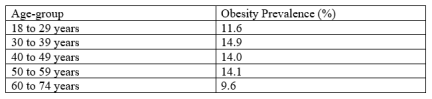
Structured weight management programmes which provide support such as dietary management, physical activity and behavioural modification are available at public healthcare institutions and in the community. Beyond that, medical and surgical interventions may also be offered for those who are eligible. For those enrolled under Healthier SG, their family doctor will work with them to develop a Health Plan, including referral to these structured weight management programmes, where needed. The Ministry does not have data on the number of patients currently enrolled in these programmes or their median waiting time. That said, the most effective ways of managing obesity are often diet and exercise, which is accessible to everyone.
Preschool Compliance With Healthy Meals In Preschools Programme Guidelines And Proposed Restrictions On Processed Foods
Mr Chua Kheng Wee Louis asked the Minister for Social and Family Development (a) whether the Early Childhood Development Agency (ECDA) or Health Promotion Board assesses preschools' compliance with the Healthy Meals in Preschools Programme guidelines; (b) if so, how many have been found non-compliant in each year over the last three years; and (c) whether ECDA intends to issue guidelines restricting or setting limits on processed or ultra-processed food in meals and snacks served to preschool children.
Mr Masagos Zulkifli B M M: During compliance inspections, the Early Childhood Development Agency and the Health Promotion Board check that preschools provide nutritious, balanced and varied food to children based on the Healthy Meals in Preschools Programme (HMPP) guidelines.
In the past three years, there have been less than a handful of preschools that did not meet nutritional guidelines. The preschools rectified their menus after being informed. Under the HMPP guidelines, processed food is not recommended to be served in preschools. However, processed products that meet the Healthier Choice Symbol criteria may be served for children aged 18 months and above within prescribed serving sizes. The HMPP guidelines also stipulate that sauces and condiments must not be used in meals for children aged below 12 months.
Mr Gerald Giam Yean Song
Update On Construction Progress And Completion Timeline, And Interim Healthcare Initiatives For Eastern General Hospital Campus
Mr Gerald Giam Yean Song asked the Coordinating Minister for Social Policies and Minister for Health (a) what is the updated construction progress and completion timeline for the Eastern General Hospital Campus; and (b) what specific interim healthcare initiatives will be implemented ahead of its physical opening to support healthcare capacity in the eastern region.
Mr Ong Ye Kung: Construction of the Eastern General Hospital (EGH) Campus is progressing. The campus is scheduled to open progressively from 2029. Even before its physical opening, EGH has already started delivering healthcare services to residents in the East. EGH is working with Changi General Hospital (CGH) to offer Mobile Inpatient Care @ Home (MIC@Home), allowing clinically suitable patients to receive hospital-level care in their homes. EGH specialists also support primary care doctors through Virtual Professional Consultation, enabling more patients to be managed in the community without unnecessary referrals to hospitals.
We are also expanding healthcare capacity in the East ahead of EGH’s opening. St Andrew’s Community Hospital in Bedok has been operating 100 community hospital beds and 140 Transitional Care Facility beds since end-2025. CGH is also undertaking infrastructural works to add about 160 acute hospital beds by 2027.
Resourcing, Co-Creating And Measuring Disability Inclusion In Schools Following Taskforce On Assurance For Families With Persons With Disabilities Report
Mr Gerald Giam Yean Song asked the Minister for Education with reference to the Taskforce on Assurance for Families with Persons with Disabilities Report (a) what resources will be provided to schools to integrate disability inclusion into students’ experience; (b) to what extent persons with disabilities will be involved in developing such resources; and (c) what metrics will track attitude changes of students over time and across institutions.
Mr Desmond Lee: Through Character and Citizenship Education (CCE) lessons and peer support structures in all mainstream schools, our students develop mutual respect and appreciation of diverse needs, including those of persons with disabilities and students with special educational needs (SEN).
Beyond CCE lessons, there are many opportunities for meaningful interactions between students with disabilities and their peers, such as Values in Action projects, and partnerships between mainstream and special education (SPED) schools which have enabled joint learning experiences between students and exchange of good practices between teachers.
The Ministry of Education (MOE) has also curated resources for schools, including good practices from schools and materials from SG Enable, to raise awareness of disability and SEN, and foster a culture of inclusion. These were developed with inputs from disability organisations, parent groups and allied professionals who work with persons with disabilities.
As part of MOE’s continued efforts to support student development, schools and teachers monitor and nurture students’ attitudes and interactions with their peers, including those with disabilities and SEN. This provides useful insights on the lived experiences of all students in our schools. MOE will continue to improve and strengthen these efforts.
Mr Dennis Tan Lip Fong
Rationale For Differing Remedies Under Sections 126A And 126B Of Women's Charter 1961 And Assessing Effectiveness Of Section 126A
Mr Dennis Tan Lip Fong asked the Minister for Social and Family Development (a) what policy considerations justify the differing remedies under sections 126A and 126B of the Women's Charter 1961; and (b) given that section 126A application data is not captured, how will its effectiveness be assessed, including whether data will be collected from the courts, Family Service Centres and Divorce Support Specialist Agencies.
Mr Masagos Zulkifli B M M: The differing remedies under sections 126A and 126B of the Women’s Charter reflect the distinct circumstances that these provisions address. Where the child has left or been removed from the physical custody of the parent holding custody or care and control of the child, the priority is to return the child to that parent to protect the child’s welfare and restore stability. Section 126A of the Women's Charter therefore allows the Court to order the child’s return.
On the other hand, Section 126B addresses the specific difficulties faced by parents seeking to enforce child access orders. There is thus a broader range of measures to address the underlying issues and facilitate compliance with access orders.
While applications under Section 126A are not captured separately in the Courts’ existing data, the Ministry of Social and Family Development (MSF) will continue to work with the Family Justice Courts and relevant social service agencies to monitor and assess the challenges faced by families in securing the return of children.
Annual Usage Data On Recreational Diving At Pulau Hantu And Pulau Jong, Impact Assessment By Western Islands Studies, Alternative Site Assessment And Affected Operator Compensation And Assistance
Mr Dennis Tan Lip Fong asked the Minister for National Development regarding recreational diving at Pulau Hantu and Pulau Jong (a) how many dive operators and divers use these sites annually; (b) whether impacts on them will be assessed as part of the western islands studies; (c) whether alternative diving and training sites have been assessed; and (d) whether affected operators will be compensated or assisted if access is restricted.
Mr Chee Hong Tat: The data on the number of recreational dive operators or divers who use diving sites at Pulau Hantu and Pulau Jong is not available. Detailed implementation plans for a new western island to meet strategic national needs, including in security, energy, and industry, are still under review. Studies will be conducted to better understand the potential implications for existing activities in the area, including recreational diving.
Assoc Prof Jamus Jerome Lim
Breakdown Of DSA Admissions Across Secondary Schools By PSLE Cut-Off Score Quartile And Ten-Year Time Periods
Assoc Prof Jamus Jerome Lim asked the Minister for Education what is the share of students admitted through Direct School Admission (DSA) in (i) secondary schools within the lowest quartile of PSLE cut-off scores and (ii) other secondary schools, with a breakdown for periods 2005 to 2014 and 2015 to 2024 respectively.
Mr Desmond Lee: Direct School Admission for secondary schools (DSA-Sec) is based on several factors, including the talent areas and vacancies each school has set aside for DSA, as well as parental and student preferences.
The Ministry of Education (MOE) does not track the distribution of students admitted through the DSA-Sec exercise based on schools’ Primary School Leaving Examination cut-off points.
Designating Public Road Bridges As Overnight Parking For Tall Commercial Vehicles Owned Or Operated By Residents In Space-Constrained Towns
Assoc Prof Jamus Jerome Lim asked the Minister for Transport whether, in dense towns such as Sengkang with limited open-air carparks, the Ministry will consider designating suitable public road bridges for overnight parking of tall commercial vehicles owned or operated by residents of these towns.
Mr Jeffrey Siow: The Government will consider the suggestion bearing in mind disamenities to nearby residences, road safety, traffic conditions and structural capacity.
Mr Fadli Fawzi
Projected Adult And Senior Commuters Exceeding Monthly Transport Spending Thresholds After December 2026 Fare Increase, And Potential Monthly Transport Pass Take-Up Promotion
Mr Fadli Fawzi asked the Minister for Transport (a) based on current travel patterns, how many adults and senior citizens are projected to spend more than $122 and $55 a month respectively on public transport following the fare increase in December 2026; (b) whether the Government will consider using agencies such as the People's Association to encourage take-up of monthly transport passes; and (c) if not, why not.
Mr Jeffrey Siow: Approximately 87,000 adults and 74,000 senior citizens are expected to spend more than $122 and $55 a month respectively on public transport. This is in addition to the approximately 24,000 adult and 42,000 seniors who use monthly passes and would be spending more without the passes.
The Public Transport Council actively promotes the monthly passes to encourage take-up. It is working with SimplyGo to notify commuters who may benefit from the monthly passes based on historical travel patterns. They will also work with government agencies such as the People’s Association to promote the passes.
Safeguarding Kusu Island Pilgrimage As Part Of Singapore's Intangible Cultural Heritage Inventory
Mr Fadli Fawzi asked the Minister for Culture, Community and Youth what actions, if any, will be taken by the National Heritage Board and other related agencies to safeguard the traditional pilgrimage to Kusu Island as a recognised element in relation to Singapore's Intangible Cultural Heritage inventory.
Mr David Neo: The Government recognises the cultural significance of the annual Kusu Island pilgrimage, a longstanding tradition that forms part of Singapore’s rich and diverse heritage.
The Singapore Land Authority (SLA) supports the pilgrimage through logistical arrangements, including event guides, tentage, lifeguards and medics. To raise awareness and appreciation of Kusu Island’s heritage, including among younger Singaporeans, the National Heritage Board (NHB) included the pilgrimage in Singapore's Inventory of Intangible Cultural Heritage in 2018. NHB and the National Library Board (NLB) have also published online resources documenting the history and traditions associated with the pilgrimage. Most recently, NHB featured the legends of Kusu Island in its programming and art installations in the 2026 Singapore Night Festival.
There are also community-led efforts to sustain and transmit Kusu Island’s cultural heritage, such as Siong Leng Musical Association's annual Nanyin performances during the pilgrimage season. NHB will continue to partner different community stakeholders to enhance the outreach and awareness of the Kusu Island pilgrimage.
Ms Eileen Chong Pei Shan
Inspections On Worksite Haze Measure Compliance, Non Compliance By Employers By Type Of Haze-Related Lapses And Resulting Enforcement Actions Since September 2026
Ms Eileen Chong Pei Shan asked the Acting Minister for Manpower since September 2026 (a) how many worksite inspections the Ministry has conducted on haze measures; (b) how many have found employers not following the haze guidelines, broken down by type of lapse; and (c) how many enforcement actions, including stop-work orders and composition fines, the Ministry has taken for haze-related lapses.
Ms Jasmin Lau: Since September this year, the Ministry of Manpower (MOM) has conducted more than 500 worksite inspections on haze safety. As of 20 October 2026, a total of 48 enforcement actions have been taken across 46 worksites.
The most common lapse was the absence of, or incomplete, risk assessments to identify haze-related hazards. This accounted for 90% of the enforcement actions issued. Other lapses included failing to implement reasonably practical measures to mitigate safety and health risks from haze exposure such as not maintaining a sufficient supply of N95 masks, failing to maintain risk assessment records, and failing to establish a hazard communication system to provide workers with information on haze-related risks and controls. MOM has followed up the employers concerned to ensure that the lapses were rectified.

